

The Mae Hong Son Motorbike Loop starts and ends in Chiang Mai. It’s is a 600 kilometer circuit through the mountains of northern Thailand, snaking through verdant jungles and sleepy villages, past the highest point in the country and up along the Burmese border. It’s famous for its curves. Estimates vary because the route differs, but one source puts the total at 4088 turns.
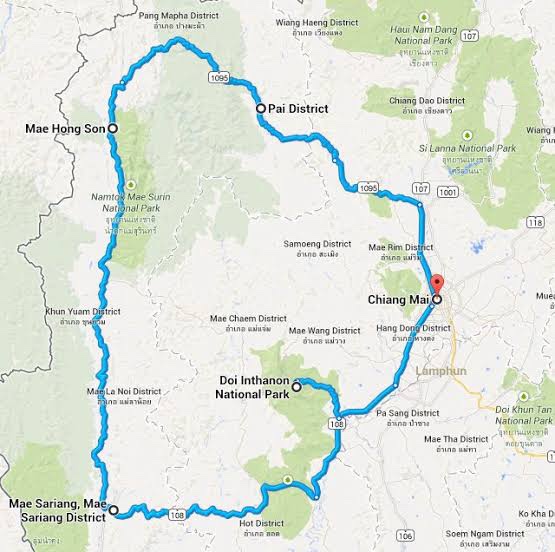
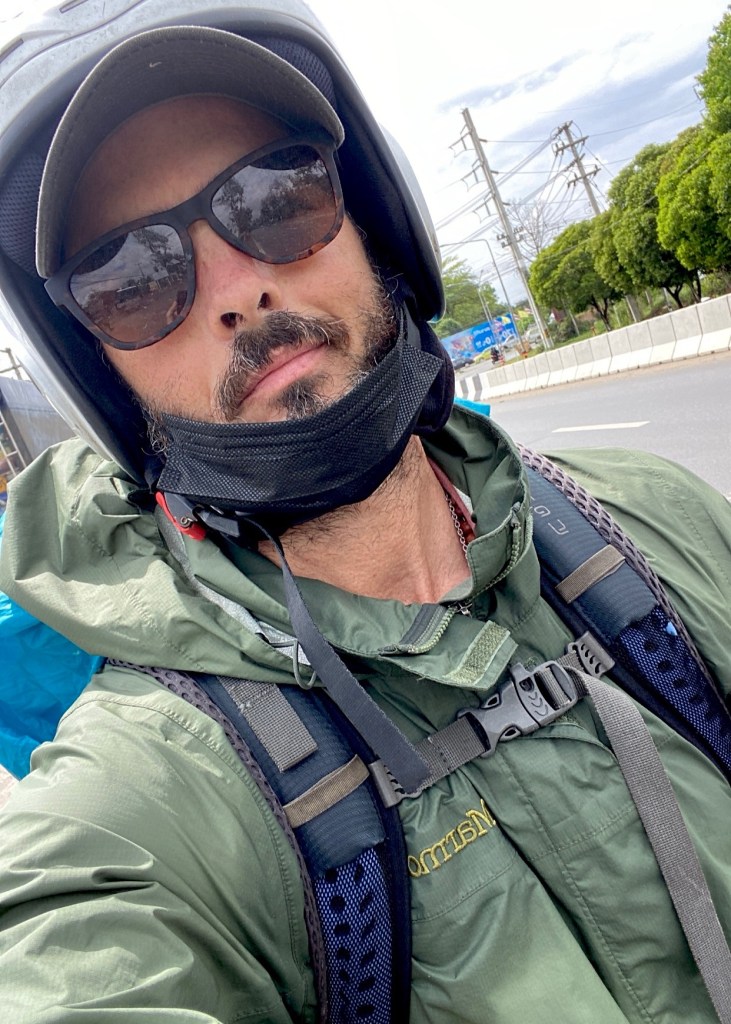
I arrange for a bike through the owner of my guesthouse in Chiang Mai. For about $5/day (180 THB), I get a relatively new bike with 125cc engine. Anything less and you’re going to just crawl up these hills. You can take the Loop clockwise or counterclockwise out of Chiang Mai. I clockwise, which starts out mostly flat and straight, and gives me time to catch my bearings on the bike.
Chiang Mai to Mae Chaem
It’s overcast when I set out and I feel a few drops before I’m even out of the city. In the tropics, it’s never just a few drops. About 45 minutes in, the sky opens up. I don my rain gear and continue at a snail’s pace. After wreck in Kanchanaburi a few years back, I have a healthy fear of the pavement.

By lunch, conditions dry but the sky is still questionable. At 8415 feet, Doi Inthanon is the highest point in Thailand. It’s located in a national park of the same name, about 65 miles outside of Chiang Mai. There’s not much to see before you get to the park, but once inside, the ride gets interesting. The road gets curvy and starts to climb through pine forest and then into tropical jungle. I stop at Wachirathan Waterfall, my first cascade of the trip.

Doi Inthanon is an incredible viewpoint – apparently. Pictures of its grand vistas and temples grace the covers of tourist guidebooks and travel brochures worldwide. And I can’t wait to see it.
I take a six mile spur from the main road through the park towards the summit when the fog starts to close in. And as I climb, it just gets thicker until I can barely see 50 feet ahead. I think to myself, for a moment, that it probably can’t rain much up here since I’m already in the clouds. No sooner does this cross my mind than the torrents begins. Sheets of rain lash downward and sideways and even splash upwards from the pavement. The whole roadway turns into a rushing stream.
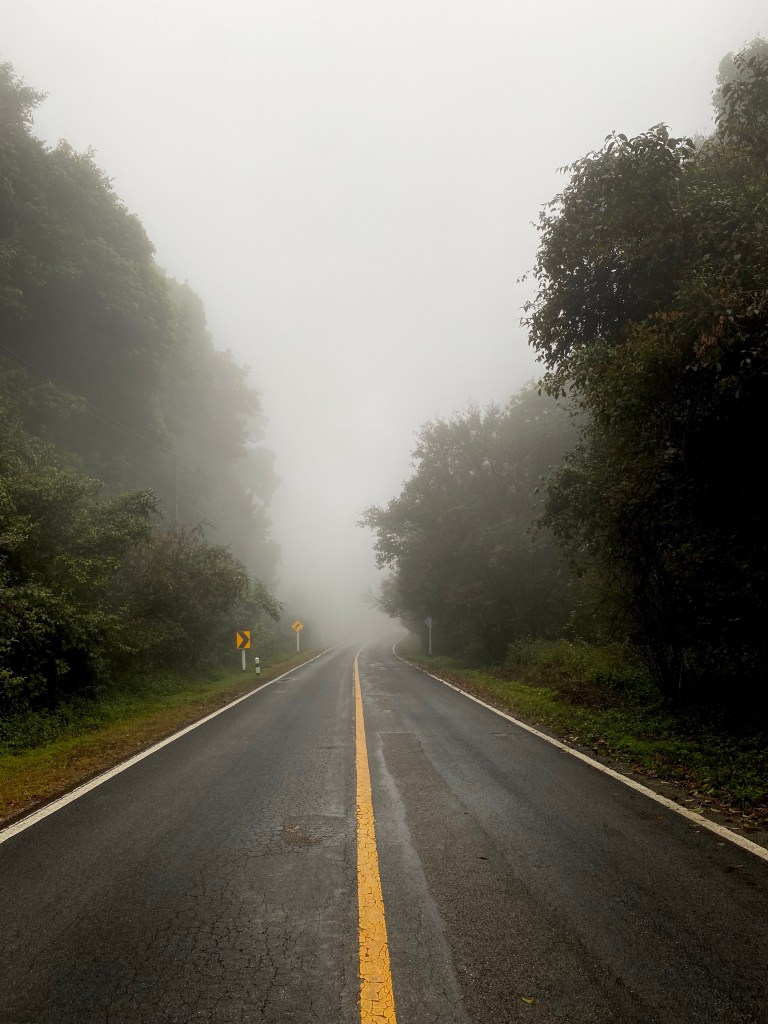
And the higher I climb, the lower the temperature. It was 80°F when I left Chiang Mai. When I reach the top of Doi Inthanon, it’s 54°F – a very wet 54°F . I’m thoroughly soaked and chilled when I reach the precipice. Luckily there’s a little coffee shop where I can get a hot cup of joe and add some layers under my raincoat.
Instead of gazing out over temple spires and rolling mountains to the horizon, I’m treated to a wall of grey and rain thick enough for a snorkel. It’s exhilarating nonetheless.


As I make my descent, the weather clears. Even in dry conditions, the roads here pose a challenge: steep downward grades and lots of switchbacks. After the rain, the roadway is covered with a layer of pine needles as slick as ice. Taking a turn too quickly could prove disastrous, so I proceed down the mountain slower than ever. The scenery is stunning, but it’s hard to appreciate as I’m mostly focused on staying upright and alive.
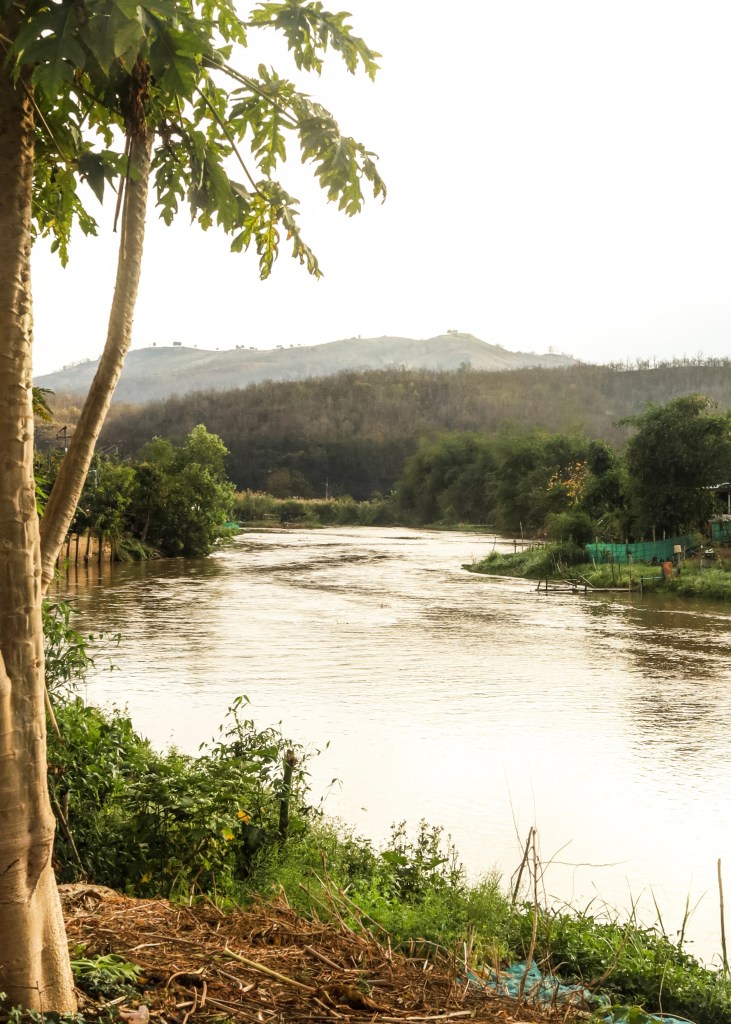
I make a pit stop for the night in Mae Chaem, about an hour outside of the national park. Waterlogged, I arrive at Kwanlah Homestay in the late afternoon. A hot shower works wonders and the owner offers his drier for my clothes peel off my wet. I’ve never never felt so chilly in Thailand. Mae Chaem is a charming little village. It sits in the valley astride a little river, completely off the tourist circuit. After a hot shower, I grab some skewered meat and poke around the village.
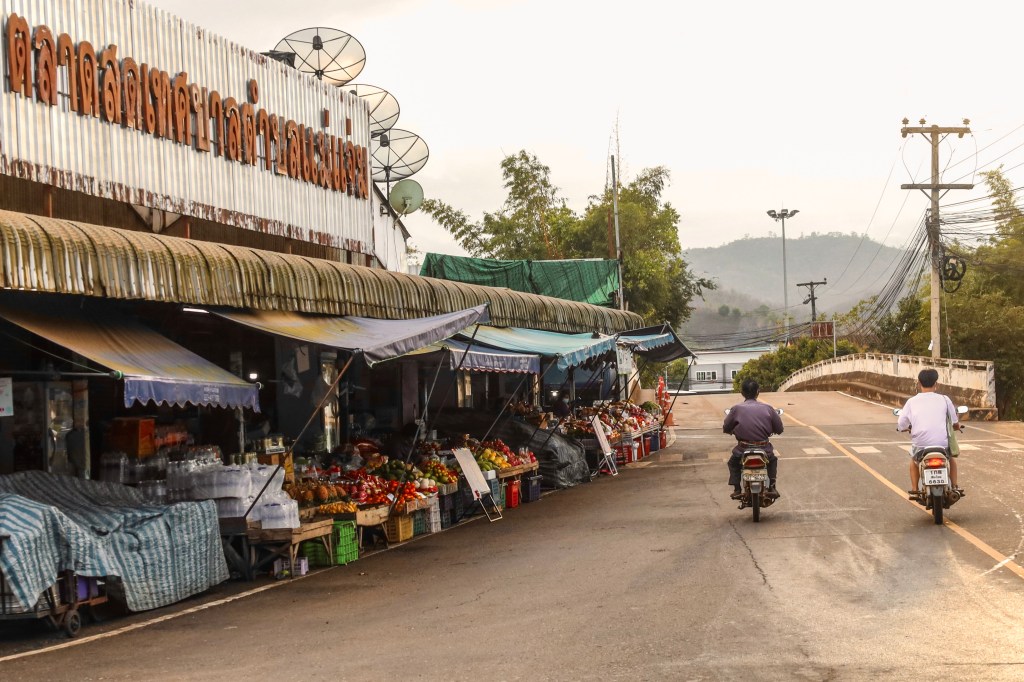
Mae Chaem to Mae Hon Song
Much to my delight, the morning is clear. I motor out of Mae Chaem through rice paddies and jungle. As the elevation increases, jungle turns to deciduous forest. It reminds me a lot of outstate Missouri, albeit a bit hillier. The switchbacks today are less intense and the sun is out, which makes for easy going.

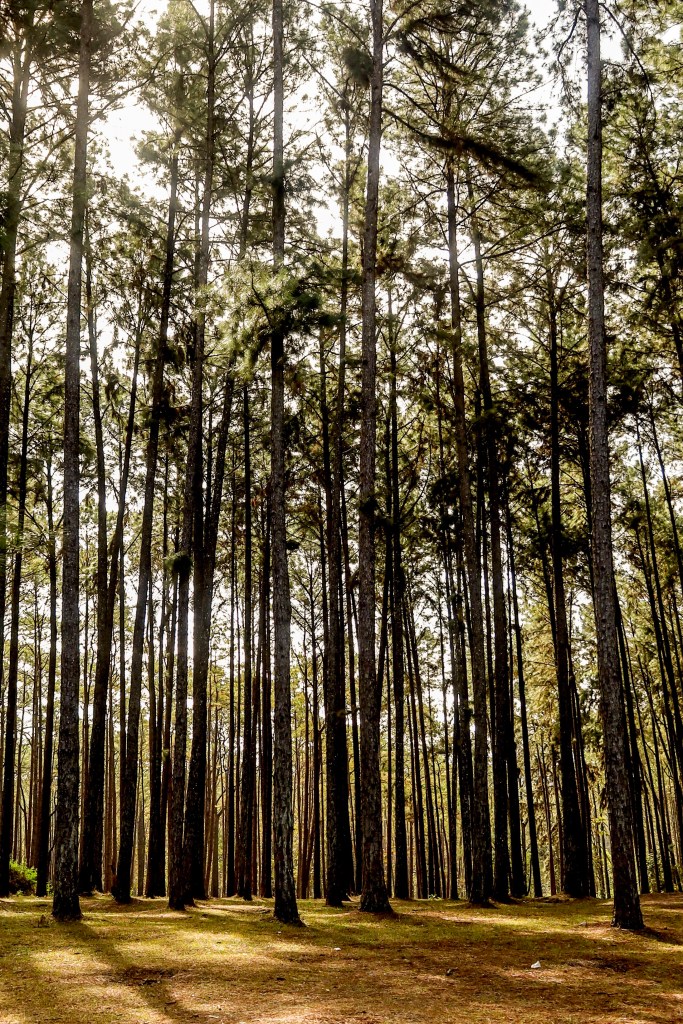
When the wind picks up, I stop at Bo Kaeo Pine Tree Garden to add an extra layer of clothing and sip some strong Thai coffee. Bo Kaeo is a park with stands of giant pine trees that edge right up to the roadway. It’s beautiful and not like any forest I’ve every encountered in Thailand.
By lunchtime I’m in Mae Sariang. This would’ve been my pit stop last night if not for the rain. Smoke wafts from open barbecues and into the street like a siren song. Pork, beef, chicken, and sausage sizzle over hot coals. The smell is incredible. Locals crowd around the few indoor tables. English isn’t so common in the smaller towns and villages, but I’ve never gone hungry. I manage a plate of beef, pork sausage, and sticky rice, all slathered in a piquant Thai chili sauce.
After lunch, I really hit my groove. I’ve made friends with the bike and start feeling the road more than thinking about it. The fair weather helps and I’m getting used to the vagaries of motorbiking in Asia again.

One phenomenon I’ll never get used to is the method of merging here. At home, it’s incumbent upon the person entering a roadway to scan the oncoming traffic for an opening before pulling out. Here not so much. Without hesitation, people just pull haphazardly into a solid stream of vehicles. It’s the responsibility everyone else on the road to make room or get out of the way. It’s maniacal. You’re just scooting along enjoying the scene when, out of nowhere, another motorbike or car careens into the mix. You only ever see the back of their heads. It keeps you on your toes, that’s for sure.
Motorbikes are also expected to hug the left side of the road or use the shoulder. The roads here are remarkably good – for Asia – but the shoulders come with certain obstacles. They’re usually pockmarked and often covered with a thin layer of sand or gravel. They double as parking lanes and roadside markets. People are always stopping or darting out, loading or unloading. It’s like riding through a crowded produce aisle at 40 mph. Throw in few chickens and an errant dog, and you get the picture.
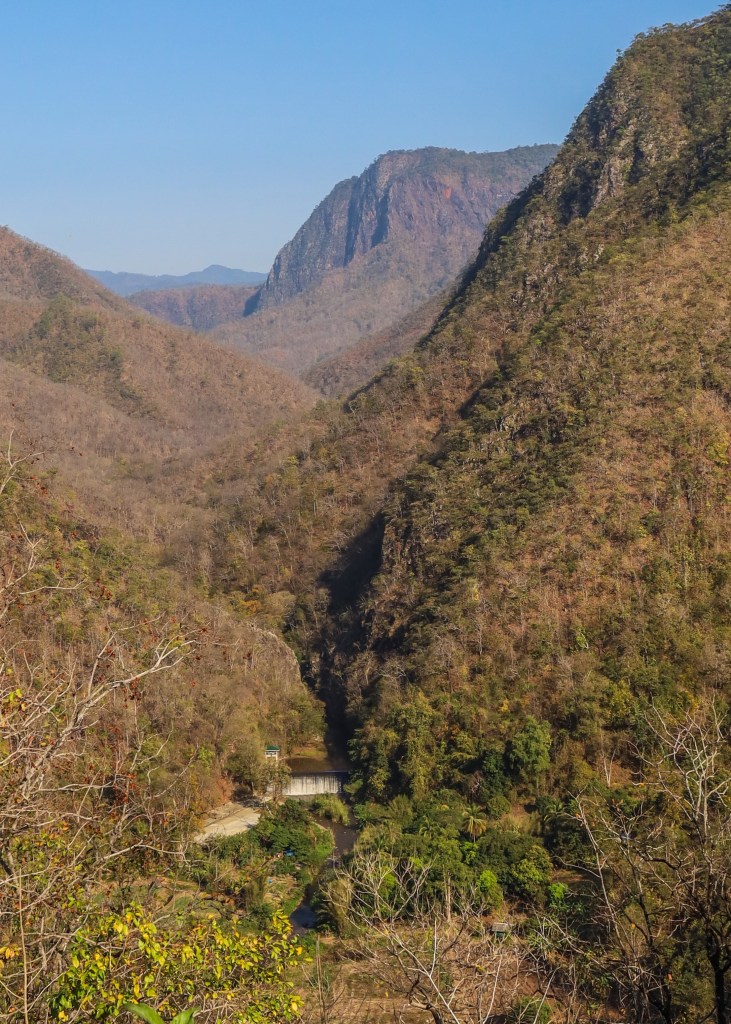
I arrive in Mae Hong Son in the late afternoon. I spent a night here in the fall of 2018 and get a room at the same guesthouse. It’s strange how much has changed in the past 4 years, yet everything here remains pretty much the same.
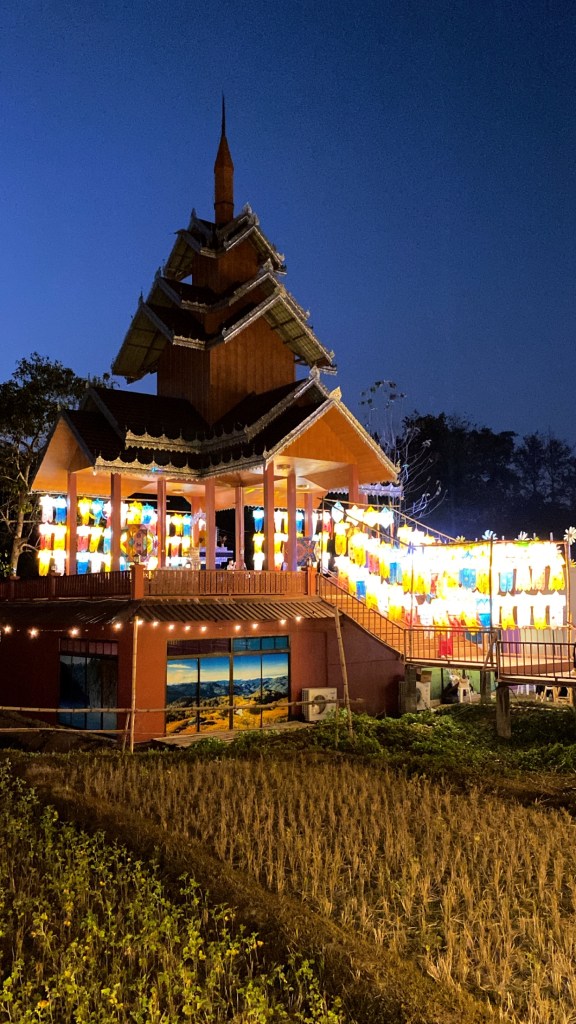
Mae Hong Son is pretty typical Thai town. There are scores of Buddhist temples and the hilltops are covered with stupas. I find a festival at one of the temples. There are local artisans, musicians, and dancers. The grounds are decorated with hundreds of colorful paper lanterns. The excitement is palpable. It’s been almost two years since this kind of celebration has been possible.
And the food! Dozens of stalls are set up in a few plazas to dish out the local cuisine. I’m pretty familiar with Thai food, but in smaller ethnic communities, it can be completely different. I usually try to find the longest line. If the locals are lining up for something to eat, it’s always a good sign. I simple gesture and smile will suffice. Whoever is making the food is usually excited to share their specialty with an outsider.
I graze my way through the evening but can’t tell you the name of a thing I ate. The standout is a spicy Thai “spaghetti” – noodles with some sort of tomato chutney, fish sauce, sugar, lime, cilantro, and LOTS of Thai chili.
Mae Hong Son to Pai
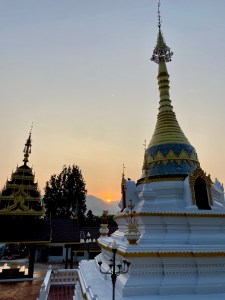

In the morning, I head due north out of Mae Hong Son. At the northwestern-most point of the Loop, you can take a detour to Ban Rak Thai, a traditional Chinese village set on the Thailand/Myanmar border It was settled by refugees fleeing the communist takeover of China. The streets are lined with cottages, restaurants and guesthouses, all built in the traditional Yunnan style.
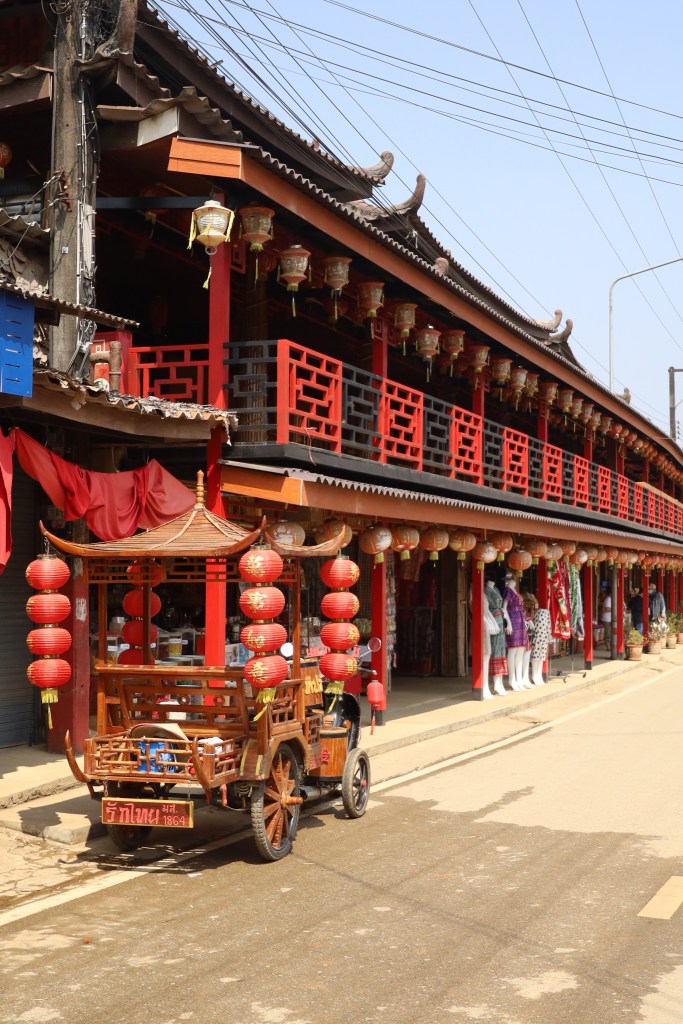
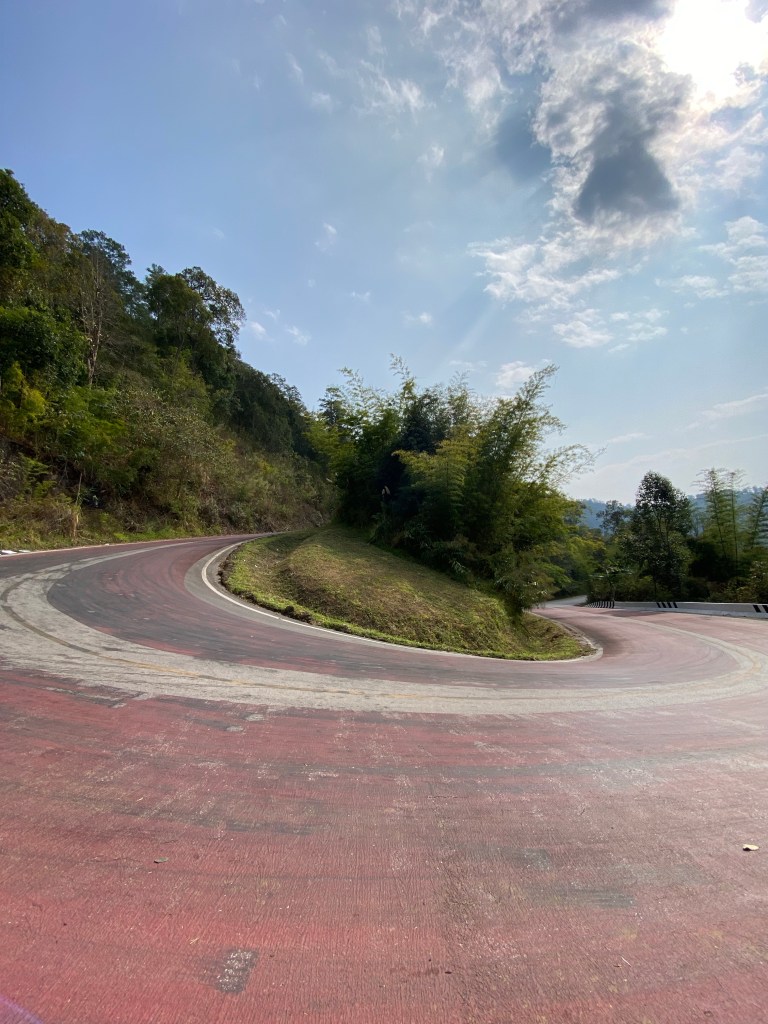
The spur adds another 35 miles to the trip, but it’s totally worth it. The town is nice, but the road there and back is extraordinary. It’s an extra hour and a half of voluptuous curves and inclines through virgin jungle.

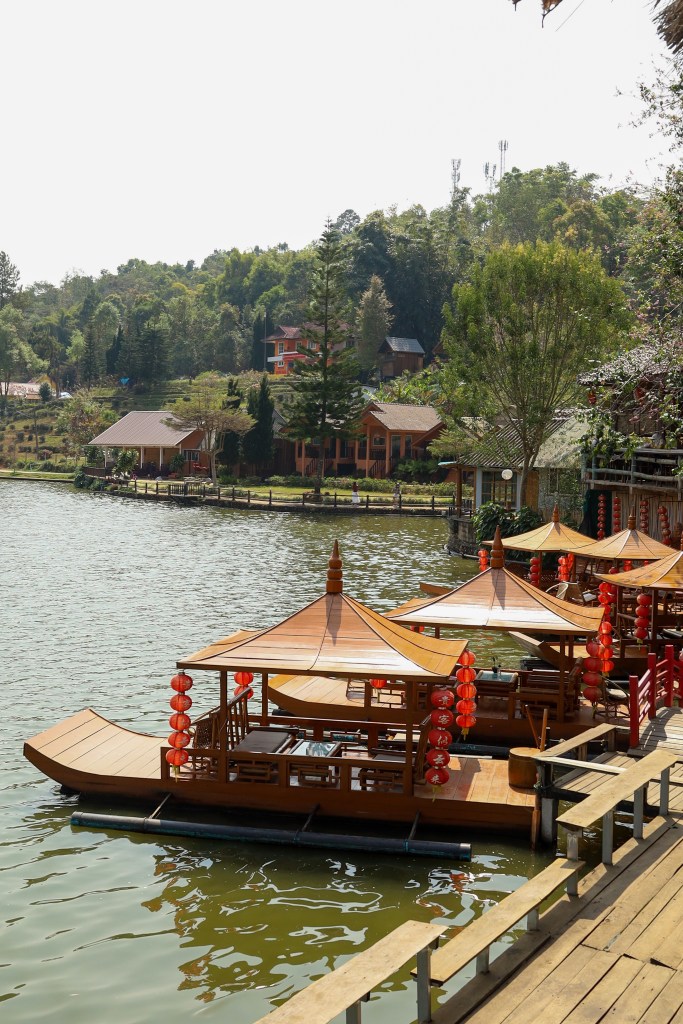
Ban Rak Thai is known for its tea, which grows all over the surrounding countryside. In the center of town is a reservoir, edged by tea shops and little wooden piers. Paddle boats stand at the ready and red paper lanterns blow in the breeze. The town seems geared towards tourism, but it’s a pretty quiet afternoon and it makes a great lunch stop.

As I near Pai, the scenery starts to look familiar. I’ve biked west of Pai a
few times to visit the waterfalls and caves. Doi Kiew Lom Viewpoint is a
mountain pass about a half hour outside of Pai. From the top, there is
normally a 360° view to the horizon. This time not so much. The vistas
were shrouded in thick haze – a sign that burning season has clearly
begun. At the end of the dry season, before the rains begin, farmers
burn anything left to clear the land. And though it’s supposed to be
banned in Thailand, it still occurs. Conditions get so bad in Chiang Mai
in the month of March that actually leave. A combination of the haze
and the lack of foliage put a damper on the views this time around.

Pai
I arrive into Pai in the late afternoon and find a room near Walking
Street, the nightly open air market. At about 5pm every evening, the food hawkers and merchants line the street with their carts and lay out their wares. When dinner time hits, you basically amble from cart to cart until you’ve had your fill.
This is my third time in Pai. On my first visit, I was totally enamored. It’s this little hippie village in the valley frequented by the backpacking set. It’s sort of a Peter Pan town – full of jungles, waterfalls, and caves – that you never want to leave. You can catch the sunset at an open-air bar in a rice paddy or sip a psychedelic “shake” to live music and a fire show.

This time though, the scene is muted. There’s a buzz that’s just missing. It doesn’t help that it’s the dry season. I go to the famous bamboo bridge that usually spans emerald rice paddies, only to find dusty furrows and crumbling bamboo. The restaurant and coffee shop are both closed.


A nearby waterfall used to be a hidden gem. Now there’s a staircase over the forested trail, a concrete block of restrooms and a hut to collect an entrance fee. My favorite waterfall, Mo Paeng, is the saddest of all. They’d already stripped the jungle and built a series of walkways across its face. During pandemic neglect, the walkways were left to the elements. Now they sit, cantilevered and splintered, unsafe to walk on and unsightly to look at. It being the dry season, the waterfall is just a trickle between stagnant pools.


The formerly bustling Walking Street is just a trickle as well. At the cart that sells some of my favorite Pad Thai, there’s no line. The hawker just stares down at his phone. Around the corner at Bar Street, the center of nightlife in Pai, all is dark and silent.
There is still some incredible food. The aforementioned Pad Thai cart, the Thai “empanadas”, and the coconut banana pancakes are not to be missed.

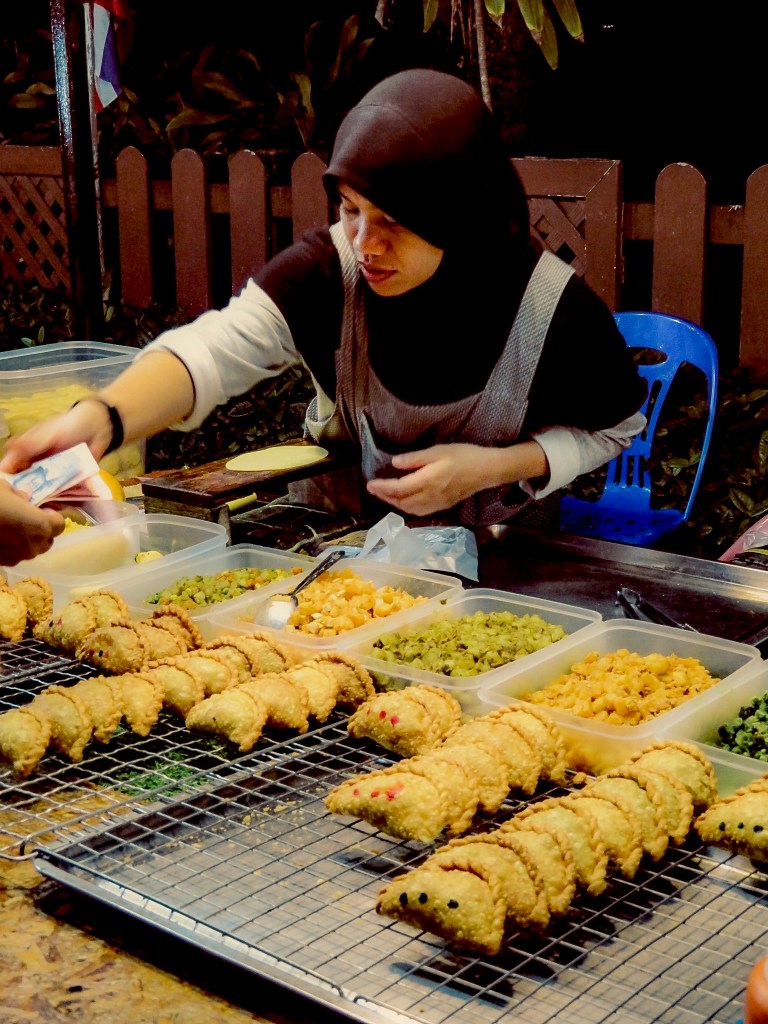
Issan Kitchen 100% has killer grilled meat and other Thai food. P’Aew’s Shake & Coffee is open early for good coffee, and be sure to catch a sunset at 10 Rai Pai.


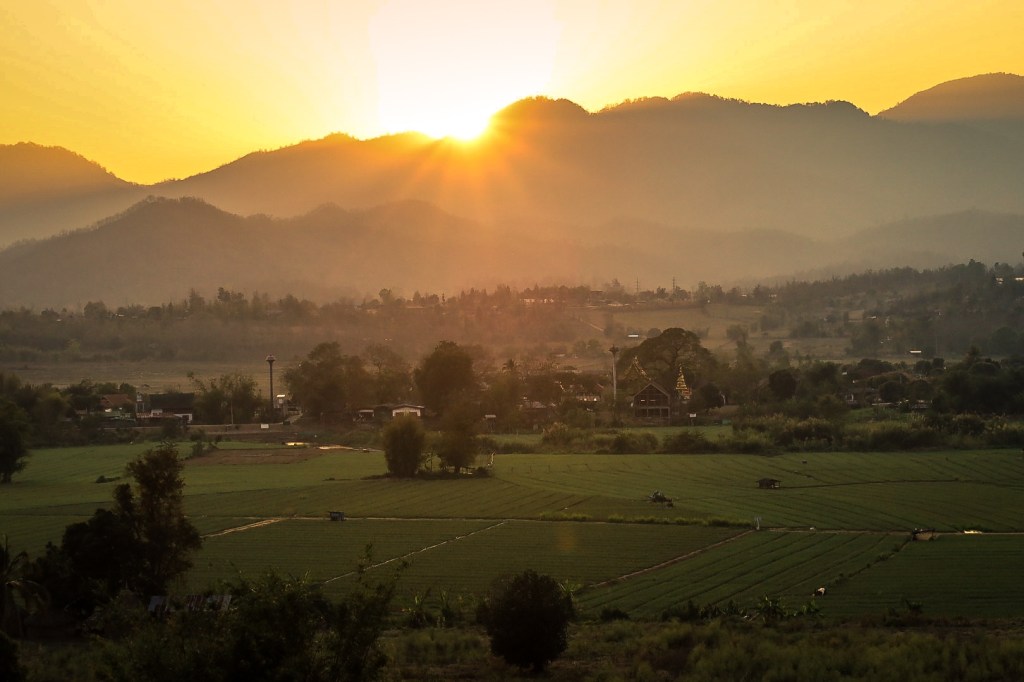
There’s a phenomenon they call the “Pai-hole”. It’s very easy to come to Pai and just stay. I remember thinking on my last visit that it was too crowded, that maybe I needed to find the next Pai. But I’m reconsidering. I’d happily welcome more of that 20-something gap year set, elephant pants and all.

Pai to Chiang Mai
After a few days in Pai, I head back to Chiang Mai. The last stretch is 81 miles and doesn’t disappoint. Coming out of the Pai Valley, I’m quickly back onto the switchbacks. I love to hit a steep incline, punch the throttle and swoop through the curves, using just my body weight to guide the bike.
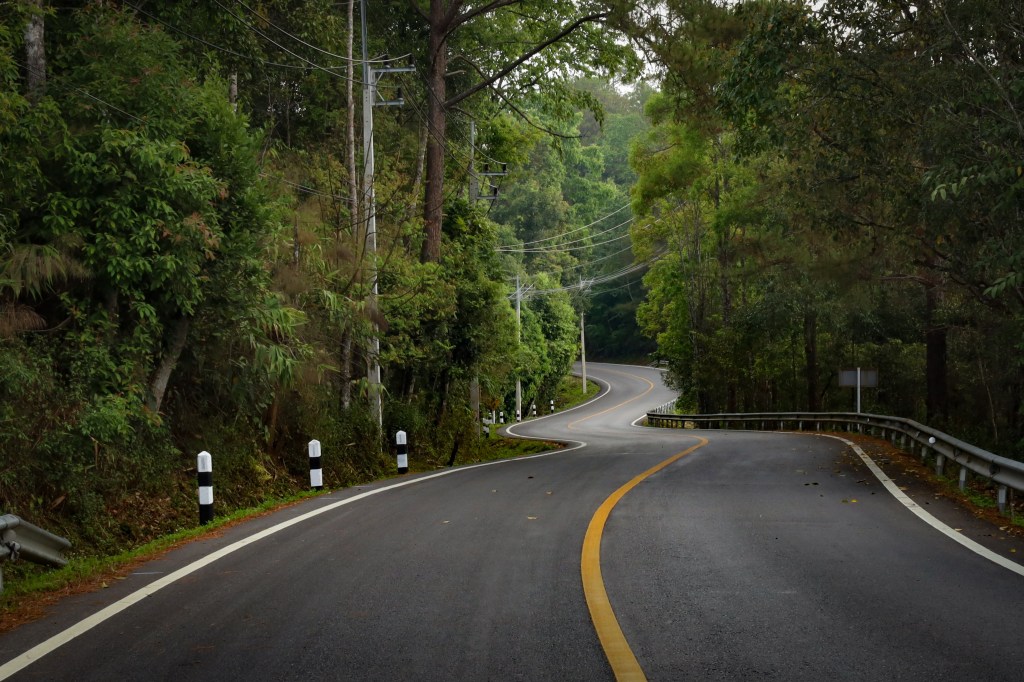
In the mountain pass between Pai and Chiang Mai, the jungle is once again incredible. It’s every shade of green: palms, ferns, bamboo, and banana trees. The roadway is shaded and cool.
I reach the valley on the Chiang Mai side, a little sad that it’s all over with. I console myself over a bowl of Khao Soi and head back to the Rose of the North.
 Christopher’s Travels