

AirIndia Flight 333 descends like a rock, nose first. towards Indira Gandhi International Airport. Like everything else in India, it’s a little extreme. But to the few passengers around me, all of them Indian, it’s just business as usual.
Ten days ago, in the zen of a palm-shaded courtyard in Chiang Mai, Thailand, I pulled the trigger on an airline ticket. Even as the payment processed, I felt a twinge of anxiety. Delhi isn’t for the weak of heart…or stomach, or the weak of anything for that matter. It’s hot, dirty and chaotic; loud, obtrusive and intense.
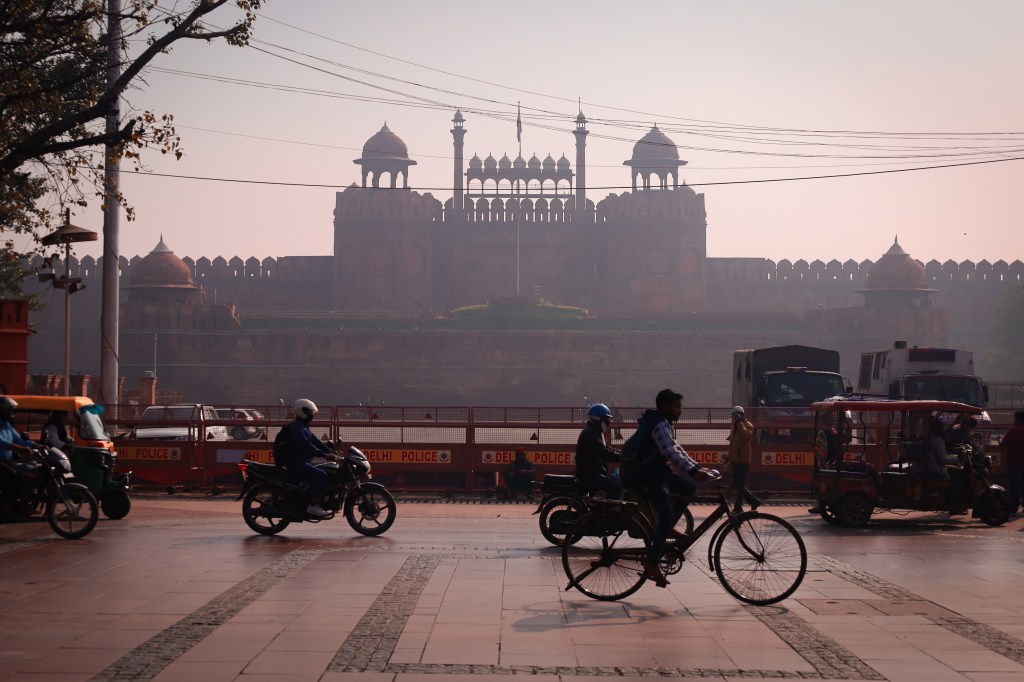
As international flights to India haven’t officially resumed post-pandemic, the plane is mostly empty. We’re issued plastic face shields to wear over our masked faces before boarding the plane, discard them once we’re confined in the cabin together, and then put them on again to parade into the open airport terminal because, well…science.

I have an entire sector of the plane to myself, a rarity on transportation anywhere near the subcontinent, where everything is crowded. There’s only one other “gora”, or light skinned person, on the entire flight. Immigration is a ghost town and I breeze through in record time.
With luggage in hand and an Indian SIM card in my phone, I hop on the metro from the airport. A taxi or tuk tuk would be easier, but here’s no surer way to get swindled. The Delhi metro is clean and efficient – an anomaly in this city of 32 million where nothing is orderly. Armed with an offline map, I track my progress through the underground network, changing lines until I reach Paharganj.
Pro Tips:
1. Download an offline map of your destination before you get there. You can do this on Google Maps, or an app like Maps.Me that work completely offline. Bookmark your accommodations or other points of interest. Your cell service my not be immediate!
2. Don’t buy your SIM card at the airport. The kiosk looks official enough, but they sell them all day and only activate them sometime in the evening. You’re better off finding a little bodega near your hotel that will activate it immediately. There are several companies to choose from, but Airtel seems to have the best service across India.
3. Utilize ride hailing apps. You can book directly on Uber in most major cities or Ola, the Indian counterpart, which also offers motorbike and tuk tuk pickup. I often use the apps to get a realistic idea of what a ride should cost before booking a taxi. It’s a great bargaining tool.
I don’t really feel like I’m in India until I get off of the metro and onto the street. I grab a cup of chai on my way out of the station and tt hits me like a punch in the face – a full barrage to the senses. Cattle root through piles of trash, crippled beggars lay splayed across the pavement and merchants tend to their vegetable stalls.
The smell is a pungent mix of manure, incense, garbage, and human waste, all baked together in the afternoon sun. Devotional music trumpeting from a nearby temple competes with the cacophony of traffic horns. I savor the sweet, creamy milk tea as all around, me a vortex of cars, motorbikes, tuk tuks, pedi cabs and push carts swerve dangerously close.
I feel like I’ve been reunited with a long lost lover and I’m completely enveloped. With India, people either love it or hate it – there’s very little in between. It’s like life on high definition. Everything is just more intense and more extreme here. I find it absolutely intoxicating.

Paharganj is the neighborhood to hit if you’re traveling on a budget. It’s where the backpacking set stays. It’s full of cheap hotels and bazaar-lined streets.
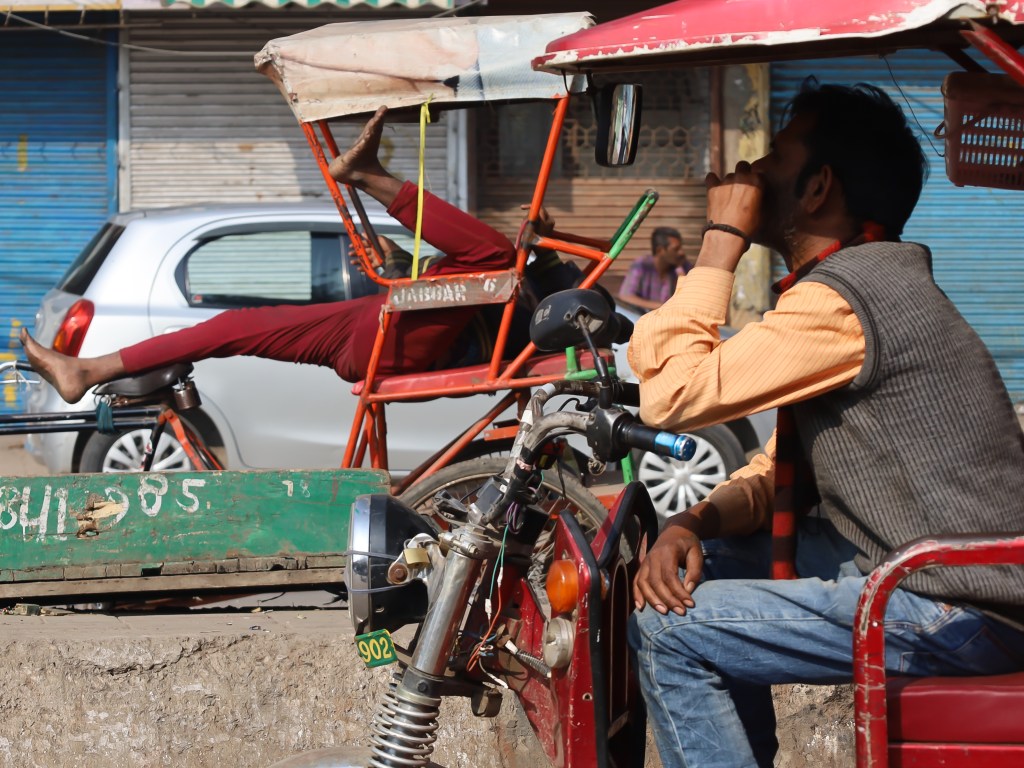
There’s all manner of shops: t-shirts, linens, luggage, electronics, leather goods, jewelry, cookware, books, bongs. You name it you can find it here. Hindi music crackles from shitty stereo systems and a different flavor of incense wafts from each stall. There’s someone out front of each one to try and lure you in.
“Hey friend!” is their mantra. “Where you from?,” or “Where you going?,” ad infinitum
None of them really care. They just want to lighten your wallet by a few rupees and the hustle gets old pretty quickly. Sometimes I go incognito with pair of earbuds, sunglasses, and my hat pulled low. I keep a thousand yard stare and pretend that my music is too loud to hear their calls. It’s quite effective.


Walking through the bazaar in the early evening, I meet Gulzar. It takes some effort on his part to convince me that he’s not selling anything, but he does and we grab some chai in an small alley off of the main bazaar. He’s a short, rather stubby man with a twinkle in his eye, a trekking guide from Kashmir who’s been out of work since before the pandemic. He doesn’t have much, but he doesn’t seem to lack. He’s happy, in that special way of truly spiritual people.
He invites me to his mosque to listen to traditional raga music. I honestly just want a meal, a shower, and some sleep, but I recognize when adventure rears its head. As the sun sets and the temperature drops, Gulzar and I jostle across the city in the back of a tuk tuk through the infamous Delhi traffic.
Hazrat Nizamuddin is an 800-year-old mosque and the mausoleum of a couple of famous Sufi saints. It’s surrounded by narrow streets lined with Mughal restaurants and stalls selling nuts and dates.
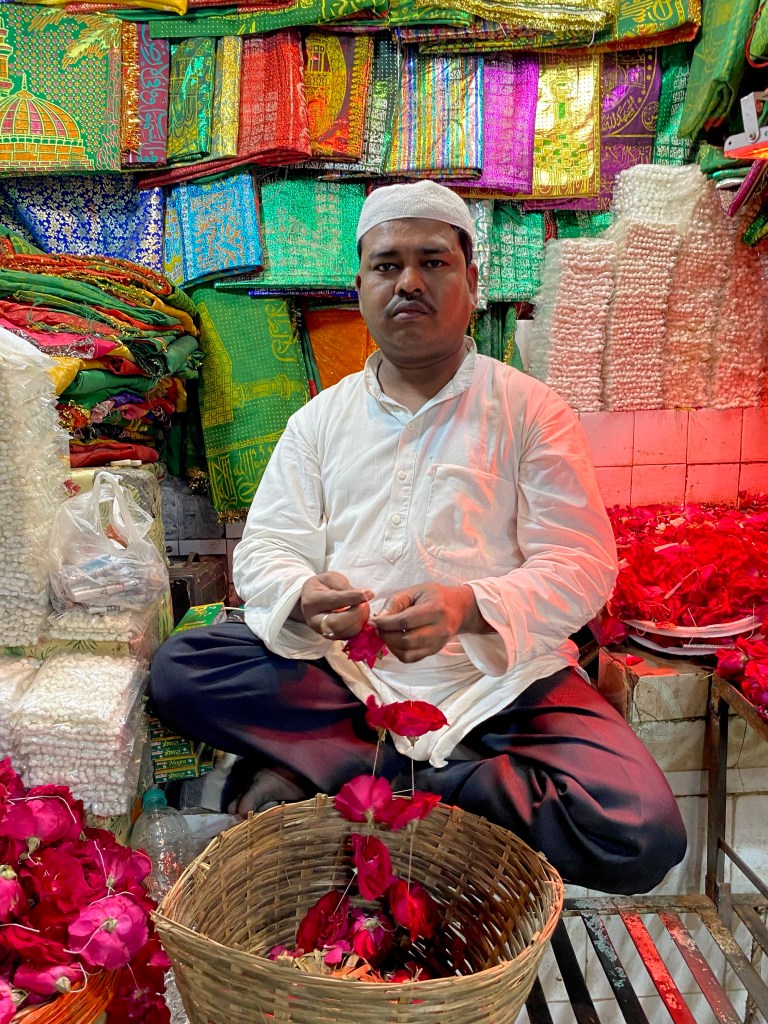
At the entrance, we remove our shoes and pass through a cavelike labyrinth. Men sell flowers and other offerings to devotees from little alcoves cut into the walls. It’s a flurry of activity, crammed full of people on a Monday night and I’m the only foreigner. At first it seems strange, almost voyeuristic, that I should pass into this holy place as an infidel. But I soon realize that I go mostly unnoticed, and where I am, I’m greeted with a gracious smile.
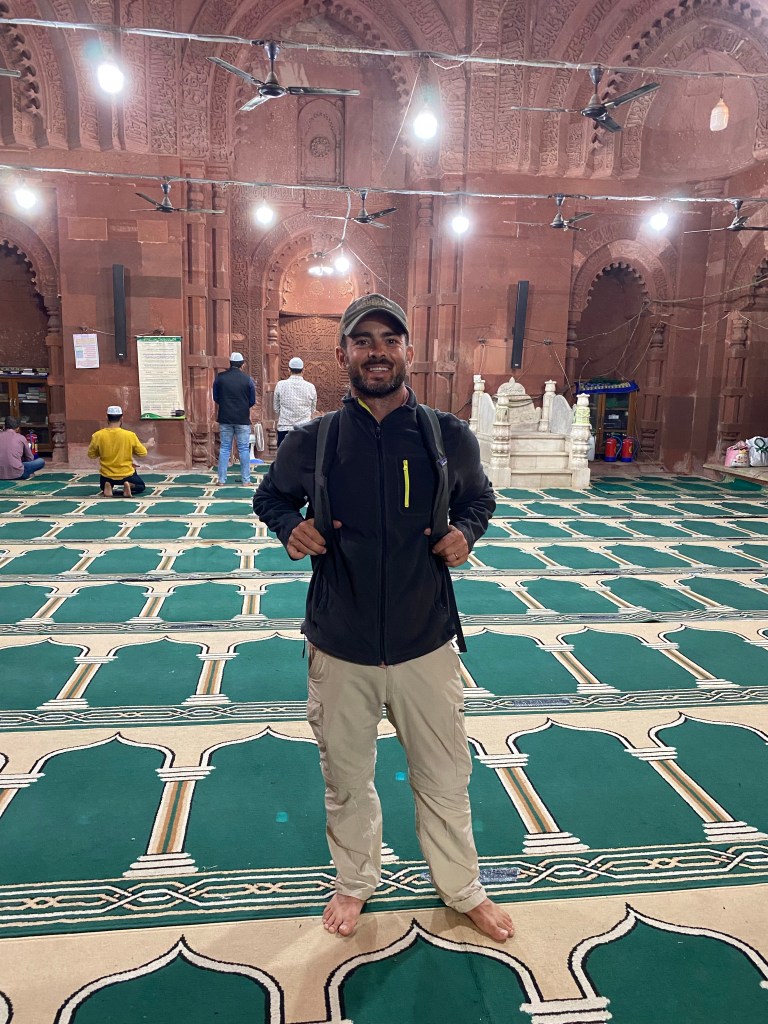
I pass through a flower-laden mausoleum and join a stream of male devotees into the inner sanctum. Behind the burial chamber, a group of Sufi musicians play ragas to a large crowd sprawled across the marble floors.

I step into the ancient dome of the original mosque before Gulzar leads me to an interior lake. The water is inky with just a few rippling reflections of light from somewhere above. At its center, the lake is 80 feet deep. It’s fed by a vast underground stream and purported to have mystical powers. If you ask anything here – from your heart – it will definitely come true, he tells me. Not one to toy with the gods, I make my wish.
In an alcove overlooking the dark water, he talks about living a spiritual existence; about being a good human and spreading that goodness and that love. He’s a Muslim, and I myself, a lapsed Catholic turned Hindu-Buddhist. But in reality, there is only one truth.
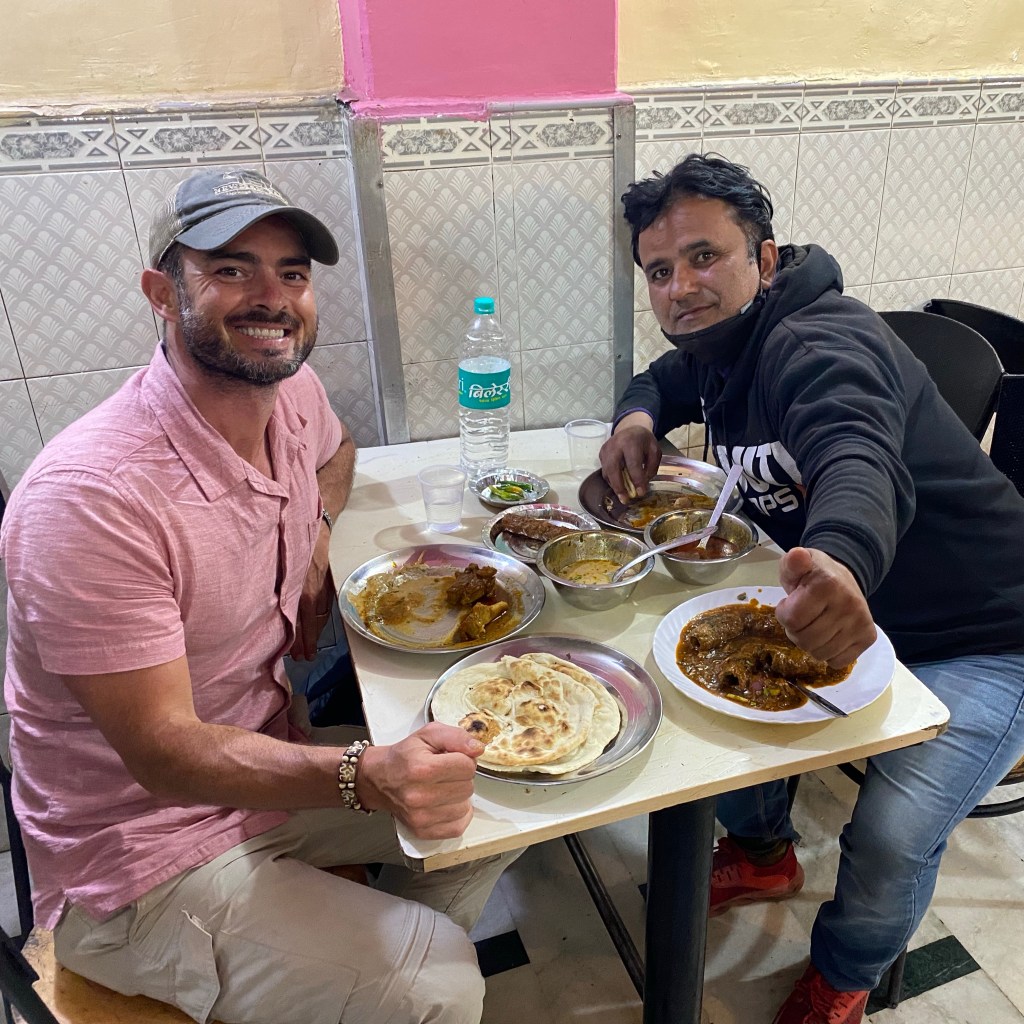
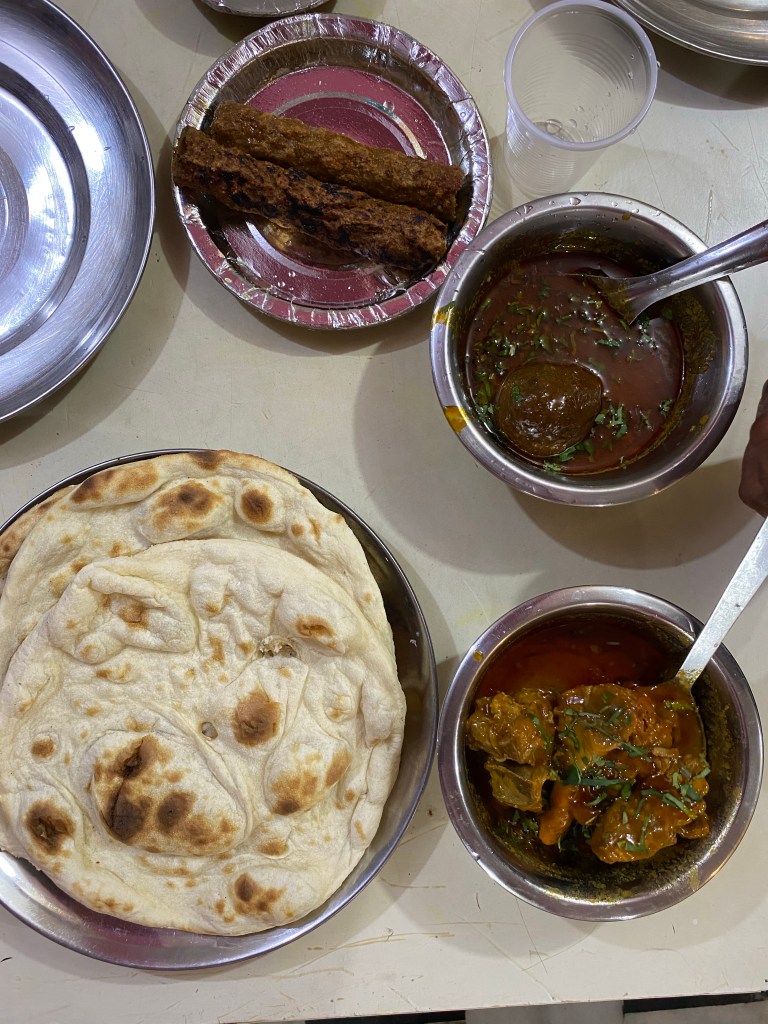
We end the evening in one of the little dabas outside of Nizamuddin. There’s a procession of seekh kebabs, meatballs in yogurt sauce, mutton curry, lamb rogan josh, and lots and lots of fresh chapati. It’s my first meal back in India, and it is glorious.


I spend the morning at the Yamuna Ghat. The Yamuna River is considered sacred by Hindus. The ghat, a series of steps leading to the river, is located near the cremations grounds in Delhi. People come to bathe or worship at the water’s edge. Thousands of migratory gulls also descend on the river. The morning light, cast through the Delhi haze, with the swarms of birds, and the reflections on the water is a stunning scene.
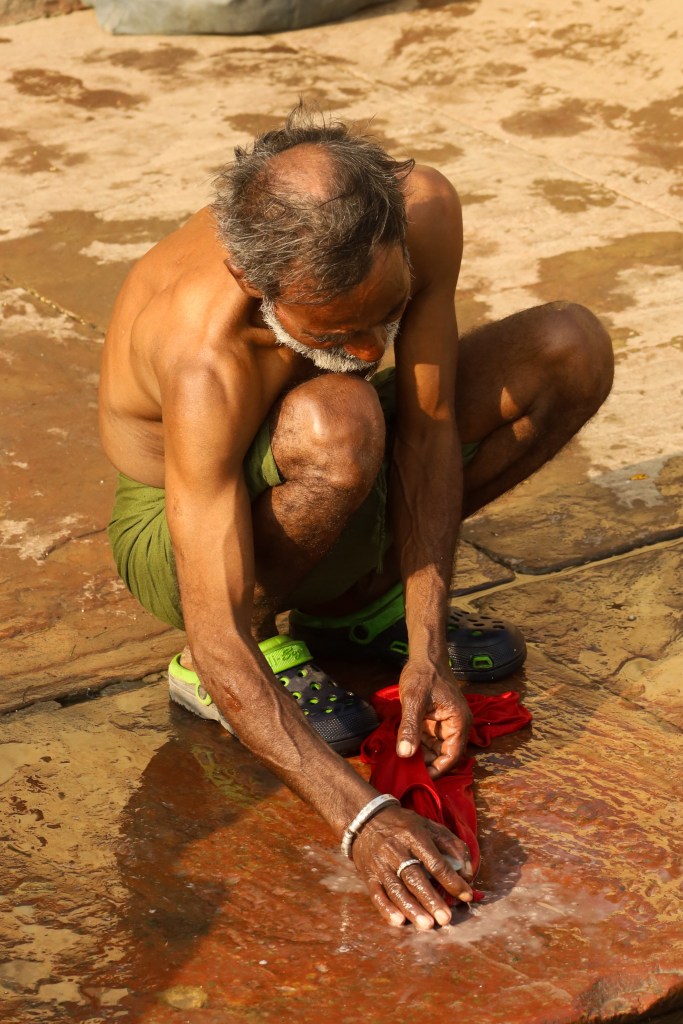
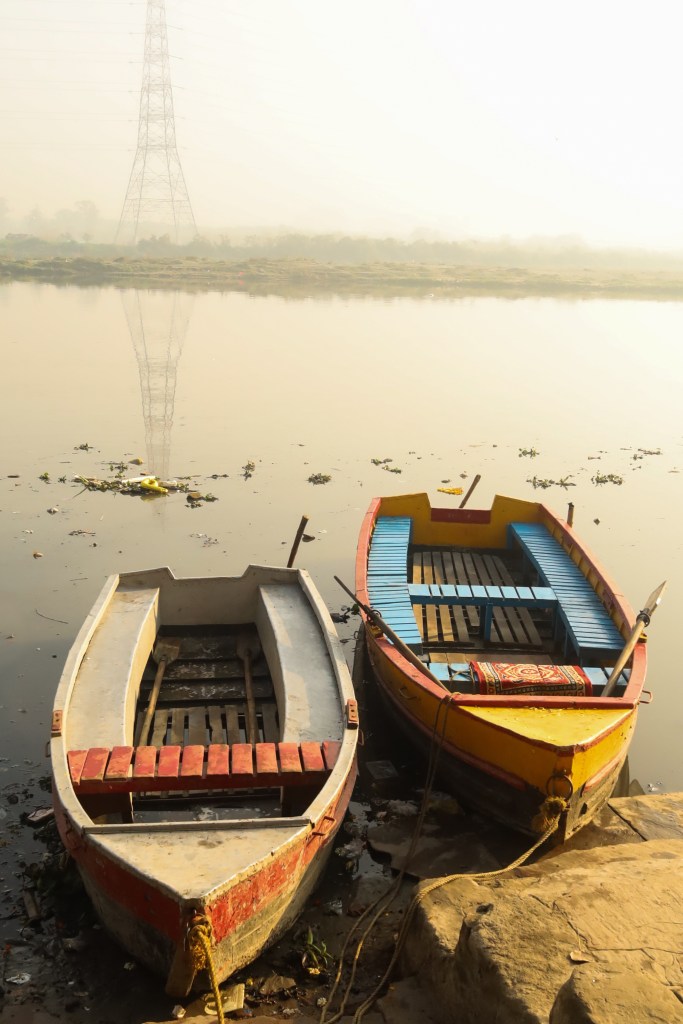
Trekking the streets if Delhi is always interesting and India is eminently photographable. I make a stop at the Jama Majsid, a gigantic mosque in the Chandni Chowk area of the city and as the day starts to heat up, decide to plot my escape from the metropolis. With the time clock ticking before I need to be in Dharamshala, I’d rather not burn another day in Delhi.

More photos of my Dash Through Delhi here.
 Christopher’s Travels