

Located in the Indian state of Uttarakhand, Rishikesh straddles the Ganges River in the foothills of the Himalayas. In the spring, the waters run clean and cold from the river’s source in high mountain glaciers. Rishikesh is spiritual mecca, perhaps best known as the yoga capital of the world.
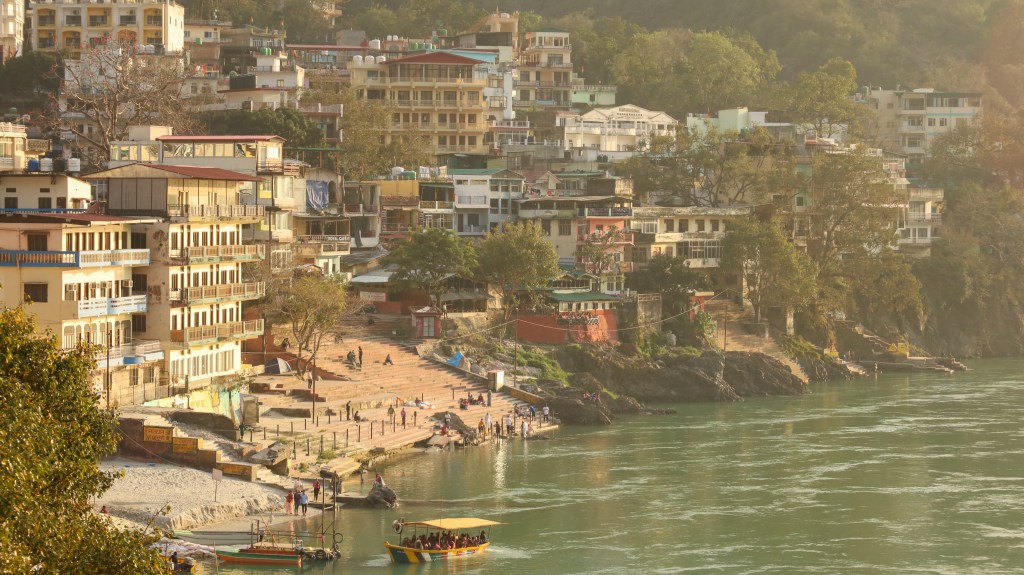
Hundreds of thousands flock here every year in search of something greater than themselves. Some stay a few days and others a few years, engaged in contorting their bodies and bending their minds towards union with the divine Self. It’s a Shangri-La full of ashrams and temples, holy men and mystics, healers and seekers.

The term yoga has its root in the Sanskrit word “yuj”, which means to yoke together or to conjoin. Yoga implies a spiritual union of the individual consciousness with the all pervading universal consciousness, or Brahma. The entire town resonates on this principle and a high vibration is palpable throughout .
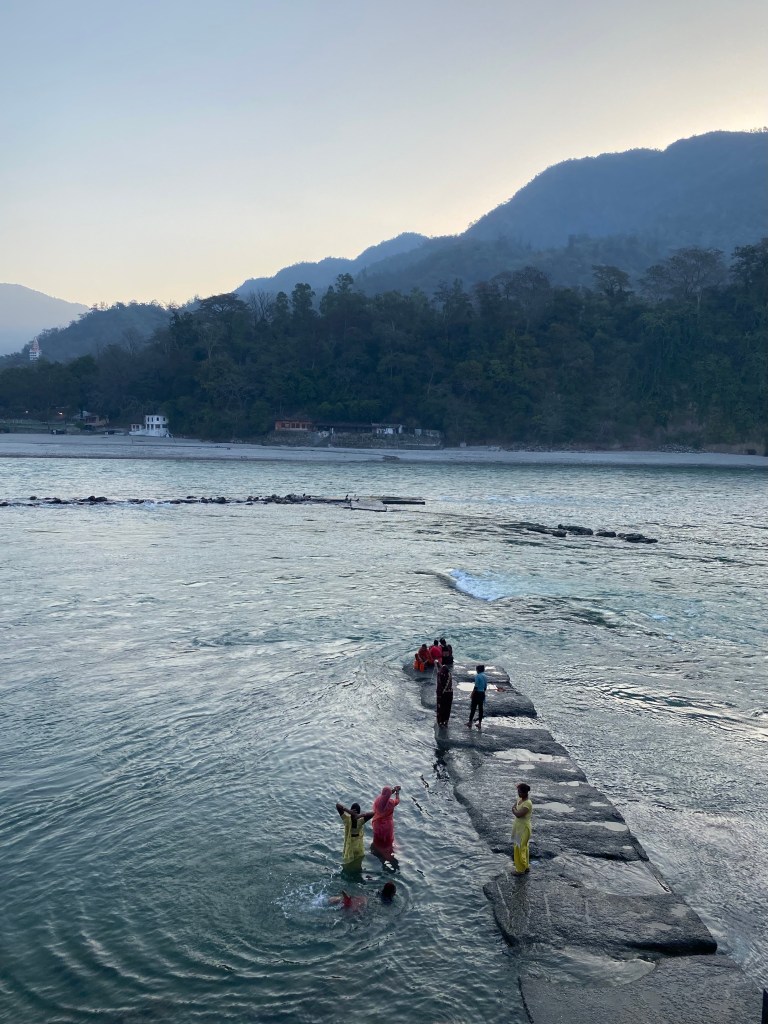
When I first arrived in Rishikesh a few years ago, it was after a few weeks of characteristically rough Indian travel. It was a total respite – a world away from the chaos of cities and the heat of the plains. Rishikesh is where I first fell for India and returning is something of a homecoming.

The Night Bus Experience
Getting around India is anything but easy. I don’t plan too far in advance and I move at my own pace. Last minute flights are expensive, so I usually opt for a train or bus.
Night buses are private buses equipped with sleeping compartments. They run between most major destinations at night, once traffic eases. In theory, it’s a good way to travel – just kick back, go to sleep, and wake up well rested at your destination – except that it’s not.
Private buses don’t leave from a central station. One might depart from a numbered column outside of a metro station, another from a travel office located in some proximity to a particular gas station.
Should you find the location, you then have to find your bus. There are multiple pickup points and your window is short – they stop just long enough to pickup passengers and some freight before moving on (yes, they double as cargo carriers). The stops aren’t marked and the buses don’t display a destination. You have to check each bus parked and every one that passes, hoping that you’re even on the right side of the street.
They’re almost always late, except when they leave early – I’ve run after a few. About 20 minutes past scheduled departure time, when you’re completely convinced you’ve missed it, it usually shows up.
When the ride ends, it’s inevitably at some ungodly hour in some obscure part of an unfamiliar city, and you’re left to your own devices.
But it’s totally worth it.
The night bus from Delhi reaches the Rishikesh stop at about 3:30 am. I might’ve slept three hours. It’s not so much a stop as a drop point. The bus pulls away, leaving a few of us on the side of a highway about 13 miles south of Tapovan, the center of Rishikesh. Luckily, a couple of tuk tuks idle nearby, waiting to ferry us north.
Four of us pile into one and brace against the cold night wind. It’s a jarring ride and takes every bit of 40 minutes. I look to the night sky. In the darkness you can’t distinguish the stars from lights on buildings high up the hillsides. The others get out before Tapovan, and when the tuk tuk chugs away, I’m alone in the dark.
It takes me just a moment to catch my bearings. From the main road, a series of meandering alleys and roadways slope down towards the Ganga. There’s not much to see in the dark. In the middle of the night, the desolation of an Indian town is as extreme as its chaos during the day. Retractable metal doors cover the storefronts and lighting is sporadic. Even the dogs and cows are absent.

I make my way towards the Laxman Jhula Bridge. It’s said to be the place where the god Laxman, younger brother of Ram, crossed the Ganga on jute ropes. My guesthouse is located across it on other side of the it.
This bridge is iconic. Completed by the British in 1929, it spans 450 feet and sits 60 feet above the water. Narrow enough to be considered a footbridge anywhere else, in India it carries pedestrians, motorbikes and more than the occasional cow in both directions.
When I get to the bridge though, my heart skips a beat. There’s a low wall to obstruct the motorbikes, and beyond that, a huge metal plank blocks the span entirely. Affixed to the plank is an unmistakeable sign, the skull and crossbones. Moving back and forth between the Tapovan and Laxman is important. If the bridge is closed, I’ll have to rethink things.

I set my bag down to assess the situation. A closer look reveals a door-sized opening in the metal barrier. There wouldn’t be an opening like this if you couldn’t simply walk across, right? And after 93 years, it surely won’t buckle under my weight?

With nobody around, I step on to the expanse. My big pack weighs close to 30 pounds, my day pack is another 10. If it does give way, I don’t stand a chance. Bursts of wind roil through the valley catching the bridge, so that the whole thing sways and wobbles under my feet.
I hold to the rail, my heart in my throat, and proceed step by carefully placed step. When I reach the halfway point, a silhouette appears at the far side and casually strides towards me. My fear evaporates and I feel a little silly, but the adrenaline is coursing through my veins. This is living.
In 2019, officials closed the bridge. The buttresses that hold the suspension cables are in danger of failing. An oversized load could send the whole thing cascading into the river. Officials were able to stop the motorbikes but the people just kept walking across. So it was reopened by popular demand.

I walk down to the ghats. I wrap myself in a coat, close my eyes, and listen to the churning waters of this mythical river.
In the first light, a lone man appears. He makes prostrations to the river and to a shiva lingam on the bank. He disperses blessings on the sand, gathers water from Mama Ganga, and heads back the way he came.

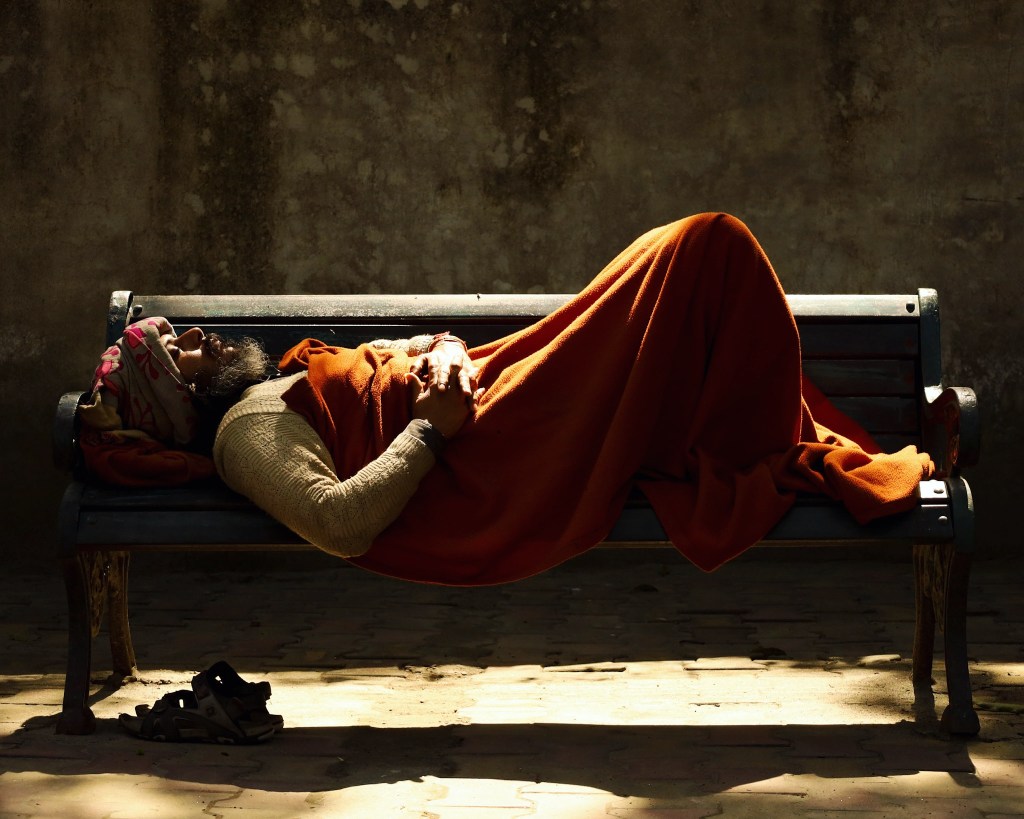
As the sky brightens to the east, I make my way back across the bridge for a cup of chai. In front of shuttered storefronts, people lay sprawled under blankets on the pavement. A few sadhus stir. One invites me to sit and chat. Before we part ways he gifts me with a necklace of Rudraksha beads, the eye of Shiva.

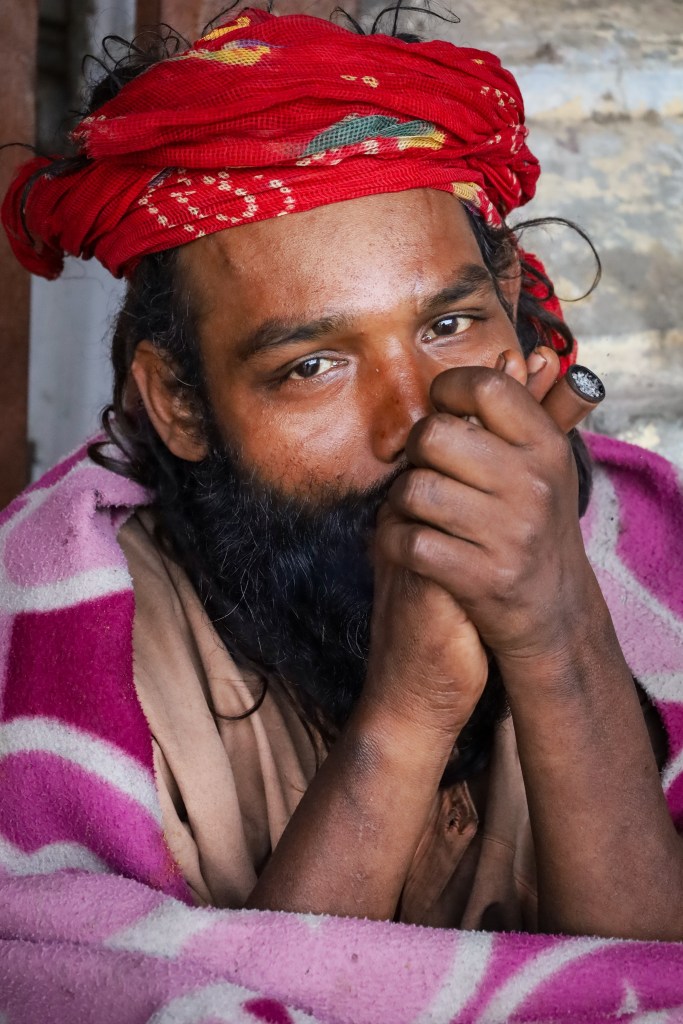
At the chai wala, I meet another. Mohan is a young sadhu with a round face and an inky black beard. Sadhus are wandering ascetics who traverse the India, making pilgrimage from one sacred place to the next. Outside of their saffron robes and begging bowls, they have few possessions. They live a life of ascetic renunciates.
It is a motley crew. Most are earnest seekers and a few are realized beings. Some are charlatans, others beggars with a set of orange robes, and a few, criminals on the run.
They depend entirely on the charity of others. Which makes it all the more powerful when Mohan buys my morning chai and passes his chillum. He has the warm, knowing smile of a seeker. (I will later cross paths with him again on the banks of a sacred lake in a desert town in Rajasthan.)
Rishikesh is one hell of a place.

I intend to hold off on street food until my body acclimates a bit, but I can’t pass up a roadside paratha – a breakfast staple in northern India. Parathas are a fried flatbread, commonly stuffed with potato, onion, or paneer and served with acerbic pickled mango.

A case of “Delhi belly” is almost unavoidable. It’s less an ‘if’ than a ‘when’. My philosophy though, is that you’re better off eating from crowded roadside stall than at an empty cafe. A good crowd means that at least the food hasn’t been sitting around. (That roadside paratha didn’t get me, but a curry from a popular cafe did!)

“You’re better off eating from crowded roadside stall than at an empty cafe.”

Passing Time in Rishikesh
Most mornings, I take and early run along the Gang. It’s sort of surreal. The light is soft, the streets are quiet, and the whole valley takes on this celestial quality. I’m greeted along the way by sadhus, street dogs, and Brahman bulls.

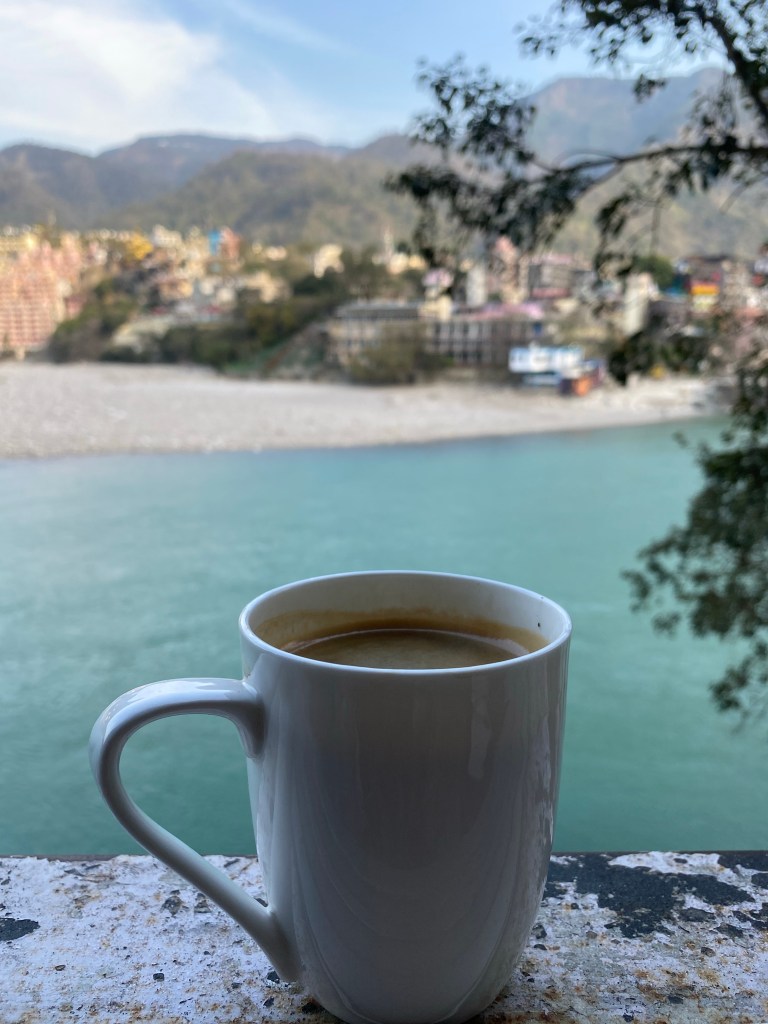
I take morning coffee at Pumpernickel German Bakery overlooking the Ganga on the Laxman side, or Cafe Moktan, just a little alcove off an alley on the Tapovan side.
If you want good coffee in India always seek out “machine coffee” or you’ll get instant. This isn’t difficult in an area that caters to foreigners, but I’ve literally walked miles for a cup of good coffee in India.
If you’re not doing yoga in Rishikesh, you’re not doing it right. The last time, I practiced at the Anand Prakash Yoga Ashram. It’s a beautiful facility with a really charismatic teacher and great energy in the center of Tapovan.
I intended to return until I discovered a satsang at the Ajatananda Ashram that really resonates with me. It’s an Advaita Vedanta ashram, focusing on jnani yoga, or yoga of the mind. We gather most afternoons for a discourse on the teachings of non-duality, kirtan, and evening meditation.
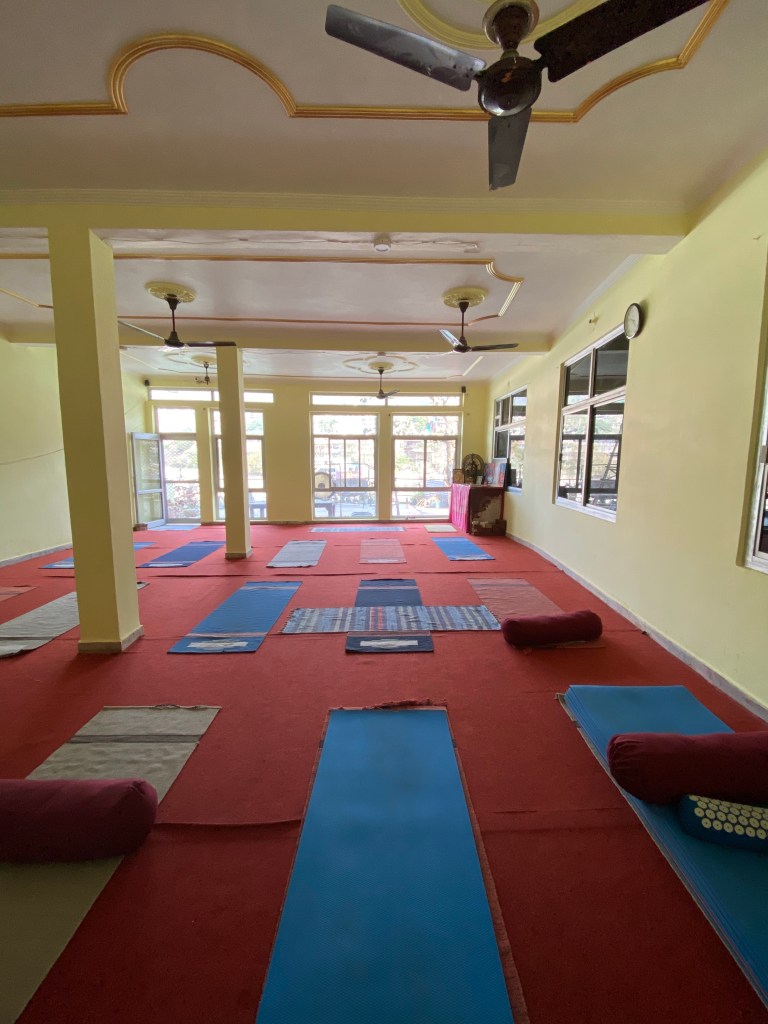
I find a morning class at the Swami Vivekananda Yoga School to focus on my physical practice. The lower level studio and looks out directly onto the Ganga. While practicing asanas, I watch women launder their brightly colored linens on the far shore and men pile loads of river rock onto the backs of mules.

In 1968, the Beatles came to Rishikesh to study Transcendental Meditation under the instruction of Maharishi Mahesh. I have a chance to visit his ashram. Though long since abandoned, you can walk among the little stone cottages and meditation domes where John, Paul, George and Ringo once sat with their innermost thoughts.

Their time at the ashram turned out to be one of the Beatle’s most productive periods of songwriting – and I would argue their finest. A majority of the songs recorded for the White Album and Abbey Road were written here.

It’s a very cool spot, but not cheap by Indian standards. (600 INR ≈ $7.25) My primary objection is not so much the price as the discrepancy in pricing. It costs a foreigner 400% the price for an Indian.
This isn’t an uncommon practice across much of Asia. In fact, you can even expect to pay more to enter temples, houses of worship, in some places. Coming from the States, this strikes me as unfair on an elemental level. The idea of charging someone a higher price based on who the color of their skin or their national origin is a serious faux pas.
Thankfully, I’m visiting with a group of Indians and I have to pay only nominally more.

Most afternoons, I spend some time on the ghats. March afternoons are perfect for basking in the sun, and the people watching is great. A little meditation, a few words of prayer, and a dip in bracing waters of the Ganga is the stuff of life.


Every evening, they hold Ganga Aarti at Parmeth Niketan, a large ashram in Ram Jhula area. Thousands descend to the river’s edge to take part in a ceremony of thanksgiving and blessing to the goddess of the holiest river in all of India. There’s chanting, singing, and offerings to Mama Ganga. I make a point of attending at least a couple of aarti when I’m in Rishikesh or Varanasi.

Rishikesh is absolutely incredible and I could easily settle down here for quite a while. It’s sacred and mystical and beautiful – easily one of the most spiritual places I’ve ever encountered. People the world over come to study the ancient wisdom and learn the timeless practices that thrive here along the banks of the Ganga. They come to learn about themselves and to try and find the answers to some life’s most pressing questions.
And if those answers can, in fact, be found, I have no doubt that Rishikesh is the place.
A Farewell to Laxman
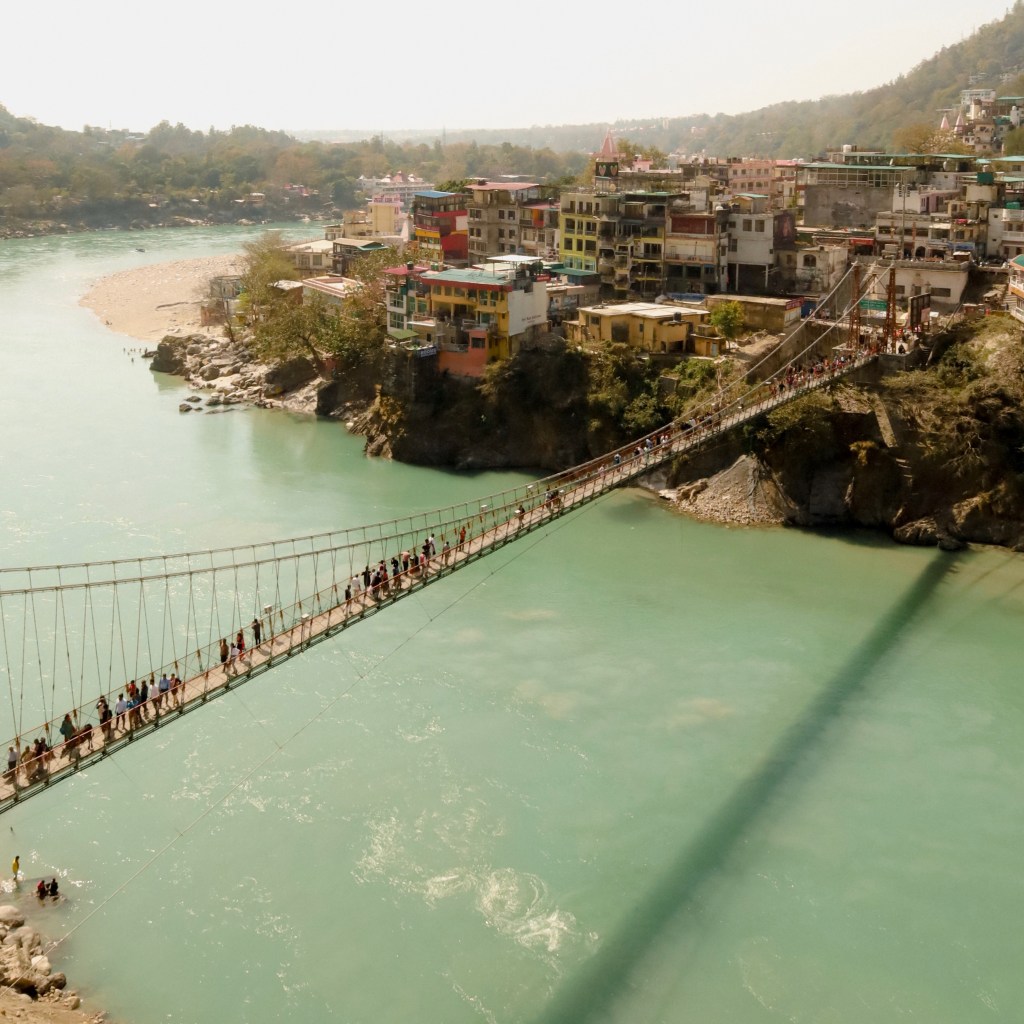
Like so many places I’ve visited lately, change is on the horizon. The closing of the old Laxman Jhula Bridge is going to completely alter the dynamic. The colonial-era suspension bridge is the heart of Rishikesh. This graceful arch is the the main artery across the Ganga here. Its chain link sides, painted to match the Indian flag, leave you open to the elements and the vast expanse below.

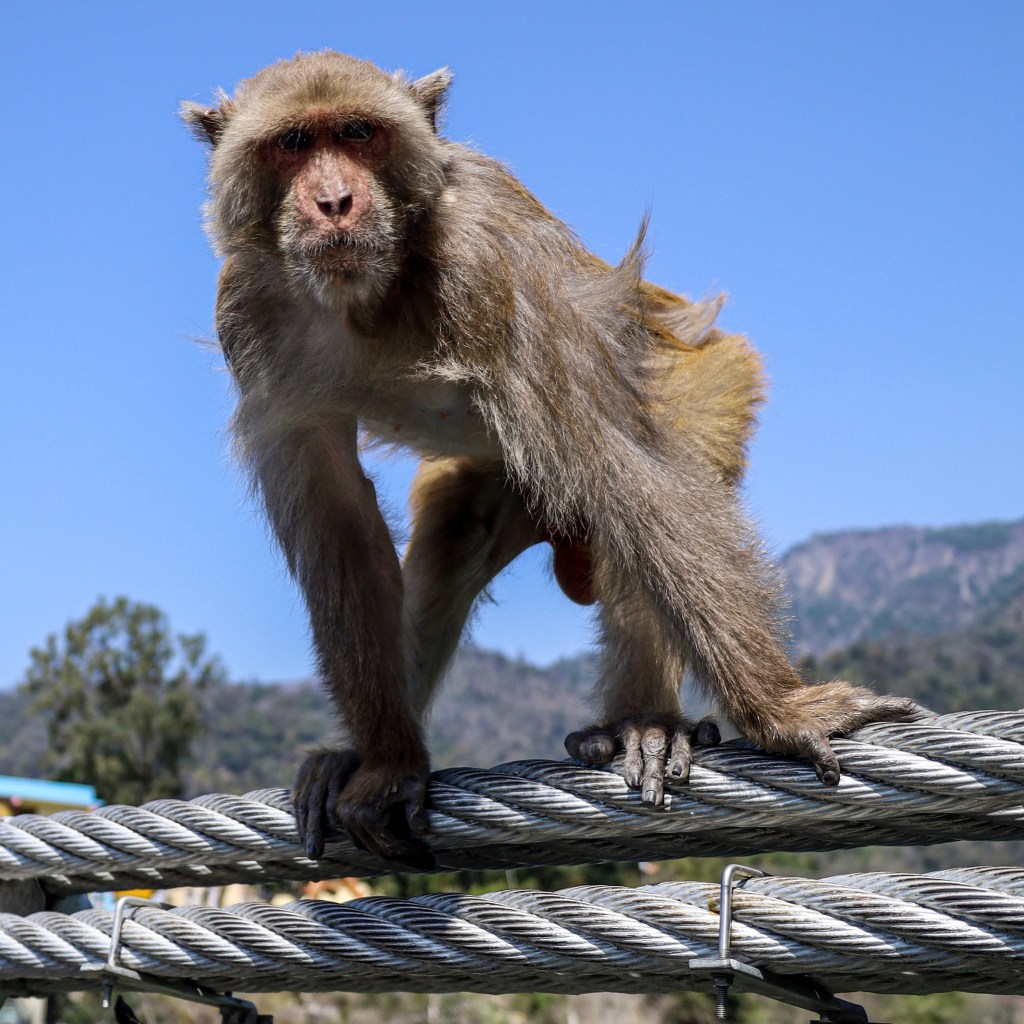
For nearly a century, that mere six foot width has carried all of the foot and motorbike traffic, the lazing cows, and the mischievous monkeys. Most recently though, backups on the bridge are caused by people trying to catch that perfect shot for their social media feeds.

Just after I left Rishikesh, one of the cables snapped. The bridge was closed for repairs and reopened, but the high season of 2022 proved too much. Even while I was there, a weekend influx caused a 30 mile traffic jam into the valley.
Over the course of the pandemic, India experienced an explosion in domestic tourism. With a burgeoning middle class and the opportunity for remote work, Indians are taking advantage. Rishikesh is just a 5 hour car ride from Delhi, making it the perfect place to eascape.
Officials shut down the Laxman Jhula completely in July. Construction on the new bridge is well under way, but it’s not slated to open until 2024. Meanwhile people have to pay to be ferried from one side to the other and the businesses on the Laxman side are suffering.
The new bridge will have none of the charm of the old. There will be two separate lanes for vehicle traffic and one for pedestrians. The traffic will bring gridlock and noise into the nearby ashrams. Whereas drivers might’ve avoided the narrow old bridge and opted for another, they’ll no doubt change course and a quiet crossroad will become a major intersection.

Worse, the thrill of walking the Laxman Jhula bridge will be gone. The new plan includes 7-foot tall glass partitions and a plexiglass floor. There is magic in crossing that span, in clutching your fingers through its open sides and peering into the emerald waters below. And when the wind whips through the valley and the whole bridge rocks, you feel sort of like Laxman crossing Mama Ganga on his swings of rope.
Most of the time change happens in retrospect. You return somewhere and it’s just not the same in one way or another. It’s painful to see it coming head on. I suppose I should count myself lucky to have experienced this Rishikesh; to have walked that bridge, dodging the motorbikes and stepping around the cows, and once thinking myself in a bit of danger there on a March morning just before sunrise.

Best Bets:
Yoga

Anand Prakash Ashram: larger yoga ashram with beautiful facilities in Tapovan.
Swami Vivekananda Yoga School: smaller ashram located on the banks of the Ganga in Laxman Jhula.
Ajatananda Ashram: Advaita Vedanta ashram in Tapovan. Great satsang there when the swami is in residence.
Cheap Eats
Bhandari Restaurant – take a seat behind the open kitchen and watch the procession of rotis from the tandoori oven. Always has a good crowd, right in the hustle and bustle of Tapovan. Don’t miss the dosa.

Dada’s Thali – a newer spot, also in Tapovan, known (obviously) for the Thali. Items on the Thali rotate daily.The puri bhaji is also amazing. A little off the beaten track with a cool atmosphere above a little forested area. Take a walk down to Little Goa Beach after lunch.
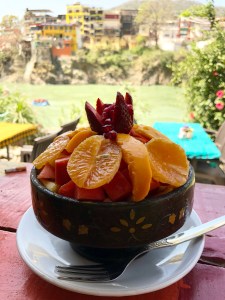
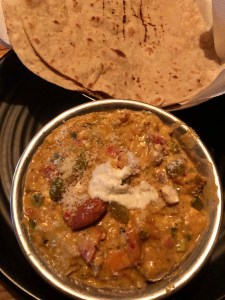
OM Freedom Cafe – A little pricier than the other two, but a great spot. Take off your shoes and sit on cushions in the shade of the inside or dine outside at tables right on the Ganga. Mix of Indian and western food, popular spot. Don’t miss the white curry!
Little Buddha Cafe – similar feel to Freedom Cafe and right next door. Always hopping so the wait times can be long, but the food is solid. Try the falafel.

Moktan Cafe – great coffee and pastries. Little nook in a shady alley. Opens earlier than anywhere else in the area for coffee
Pumpernickel Restaurant – great spot for coffee and pastries on the Laxman Jhula side of the river. Sit on the balcony over the swirling waters of Ma Ganga.

German Bakery – great spot for coffee and pastries on the Tapovan side. It overlooks the Jaxman Jhula bridge and is a great place for people watching. Get the apple pie.
 Christopher’s Travels
Reading this makes me feel as if I am there with you, experiencing your travels. But without needing to traverse that crazy bridge.
Thanks!