

I manage to sneak into Srinagar under the cover of night.
It’s half past 8 when we reach the first military checkpoint some miles outside of the city. A flashlight beam cuts across our faces and an officer approaches the passenger side. He speaks first to the others, and leaning in, directly to me.
I can only look back dumbly.
He motions for us to pull to off to the side and turn off the engine. More uniforms approach.
It’s been a long day, but the ride between Leh and Srinagar is one of the most magnificent I’ve ever experienced.
Shared taxis leave from a dusty parking lot near the center of Leh, Ladakh. It’s pretty good way to travel – quicker and more comfortable than the public bus and cheaper than a private car. But departures aren’t scheduled. Drivers simply leave when the seats are full – completely full.
This can require some patience. Srinagar isn’t a popular destination this particular morning. After a couple of hours waiting and just as many passengers, I pay extra for the empty seats. Another night in Leh and a confirmed seat the tomorrow will cost me close to the same.
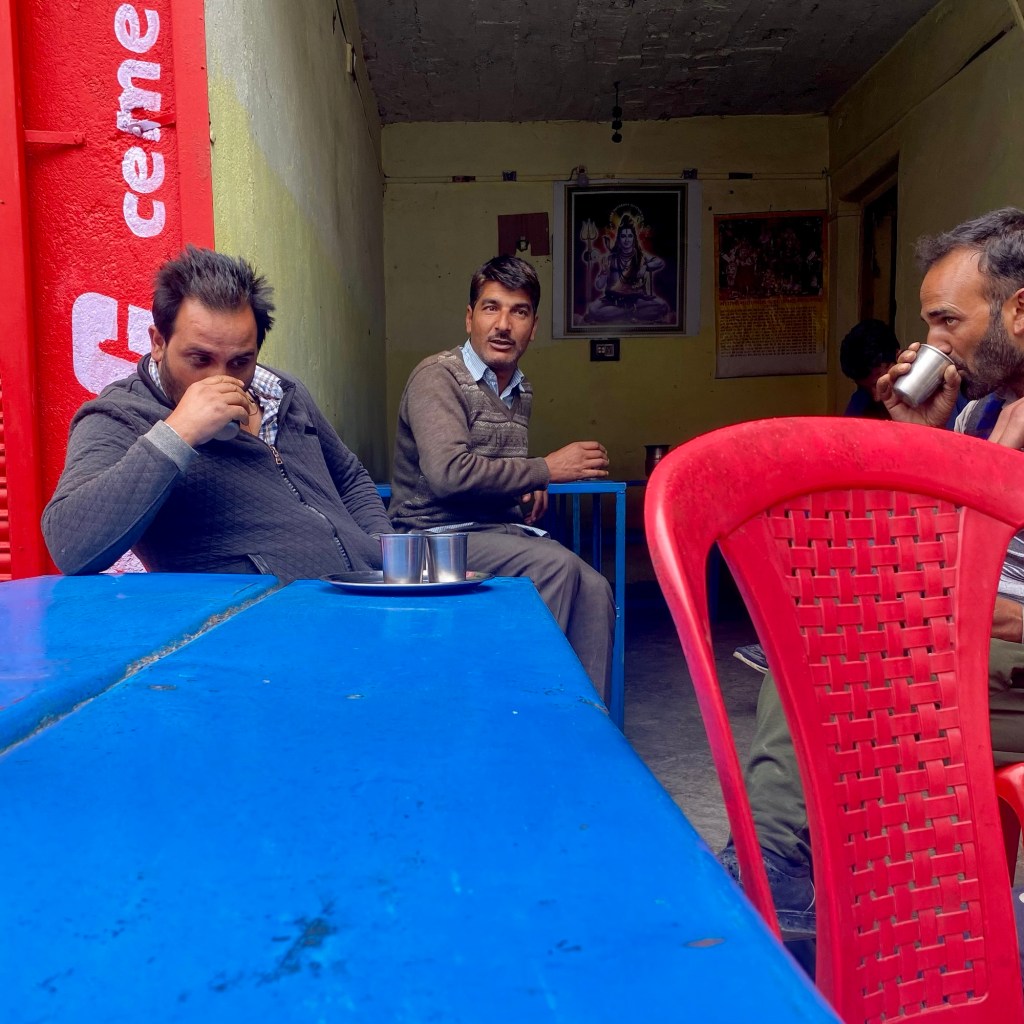
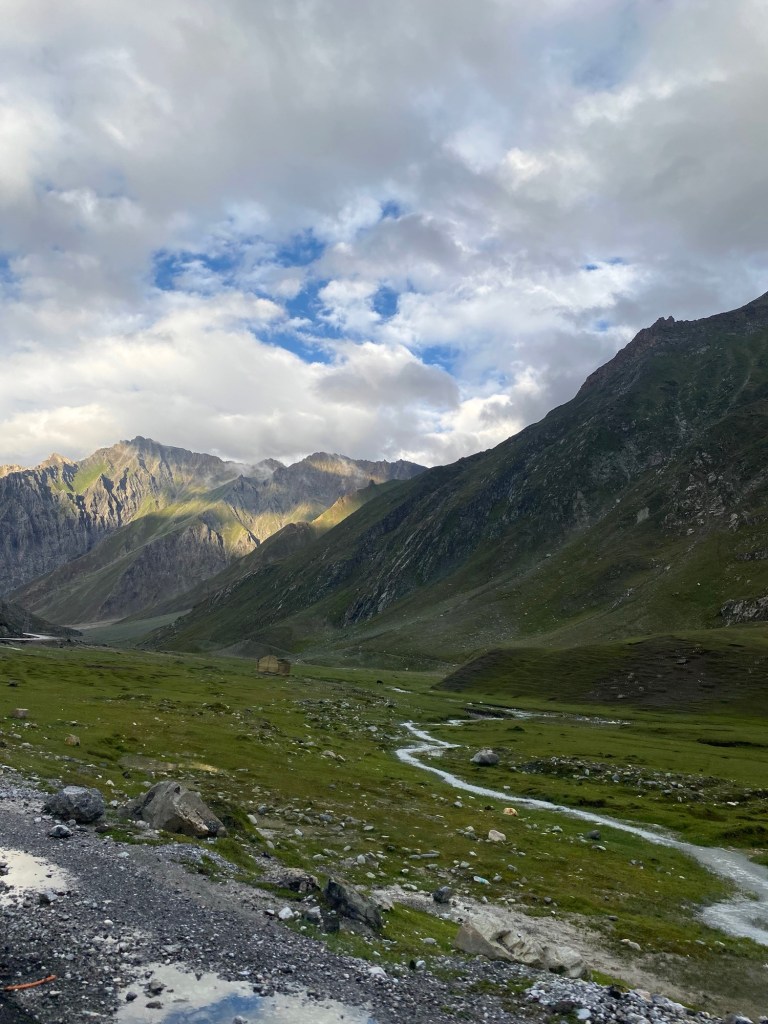
We leave on National Highway #1, which starts out in tunnels blasted into the rock face along the Indus River. It climbs through the Martian landscape of Ladakh, slithering across vast mountainsides and around Buddhist monasteries situated on great pillars of rock.
In little villages, Muslim minarets start to appear among the Buddhist stupas. Soon, the stupas disappear completely as we leave the land of Gautama for the land of Mohammed.
The officer asks for identification and I hand over my passport. He chastises our driver, Omar, while the others stay quiet.
Travel here is tightly controlled. Movement into the city is restricted between dusk and dawn. Outsiders, even Indian citizens, aren’t allowed to pass after dark.
Srinagar is the summer capital of Jammu and Kashmir – a much contested area in northernmost part of India. It’s a land as steeped in conflict as any other piece of real estate on the planet. Internal disputes can spill into bloodshed on the streets as nuclear-armed nations play tug-of-war at the borders.
Omar moves me to the back seat at the last village before the checkpoint, hoping I’ll go unnoticed wedged between a couple of Kashmiris.
It doesn’t work.
There’s a staticky exchange as the officer radios his superiors. They don’t know quite what to make of me. Foreigners aren’t that common here but I don’t pose a security risk. It’s more of a hassle than any reason to be nervous. Plus, the American passport is something of a ‘golden ticket’.
I cross my fingers, hoping they’ll let us through, but after much back and forth, they turn us back. I won’t be allowed to pass until daybreak. As I’ll have to take a room for the night and hire another ride in the morning, I begin to renegotiate my taxi fare.
Omar, sensing his diminishing return, pulls to the roadside and consults the others. After pausing for a beat, he makes a wide u-turn back towards Srinagar.
We make another go of the checkpoint.

Kargil is the halfway point between Leh and Srinagar, but when we reach there in late afternoon, it seems a completely different land. Gone are the colorful aprons and the round, weather beaten faces of Ladakh. The women are mostly covered – many in full burkas. The men wear round caps and gowns that reach below the knee. They have bright eyes and olive skin, with jawlines trimmed in inky beards or dyed bright orange when the gray sets in. It feels more like the Middle East than anywhere I’ve been in India.
Beyond Kargil, the barren mountains turn emerald green. Sheep and goats roam the hillsides, keeping the grass shorn to a neat stubble that carpets the slopes. Flocks of them swarm into the roadway, creating a woolen river that swirls around the stopped cars. Shepherds follow closely behind or keep a watchful eye from rocky outcrops above.
The light is fading by the time we reach Zoji La Pass. The road, which has been good thus far (by Indian standards), transforms into a series of muddy ruts. A landslide had closed it for much of the day, but workers have managed to clear a single lane. We stop and park to let the oncoming traffic climb past and then, as the sun sets, drop through a blanket of clouds into the Kashmir Valley.
As we near the checkpoint for a second pass, my heart climbs into my throat. My first appearance can be chalked up to a simple mistake – my second cannot. With nerves on edge, I pull my cap low and sink into the seat.
We slow into the queue of waiting cars and an officer approaches again. I pray it’s not the same one, but I don’t take the opportunity to look. My heartbeat throbs in my ears as I stare straight ahead, hoping to look just Kashmiri enough.

The officer questions Omar and the passenger up front. I hold my breath as he leans in to get a good look at the rest of us. After a few tense moments, he gives the all clear and waives us through.
It’s first of four checkpoints before the city. Luckily, the others prove more cursory and we breeze through. It’s after 10 p.m. when I finally reach Rajbagh and the home of a friend, where I can rinse the day off in a steamy shower and catch some sleep.

I always enjoy arriving in a new city at night. Beyond the street lamps and pools of light cast around businesses, it’s difficult to get a lay of the land. The terrain remains a mystery until I wake the following day, and it’s like arriving all over again.

In morning, I’m greeted with tree-lined streets and the green peaks that ring the city. I cross the Jhelum River on Zero Bridge, an old wooden span converted for pedestrian use, and head towards Dal Lake.
I prefer to walk. It’s the easiest way to get away from the main thoroughfares and discover the hidden parts of a city. I always seek out the promenades, the urban parks, and the temples, but it’s in the narrow lanes under the laundry lines that a place really shines.
The tall trees of Srinagar are a welcome sight after a few weeks in the mountain desert of Ladakh. In their shade, soldiers gather.
Lots of soldiers.
It’s an overwhelming show of force, really. Several are positioned every hundred meters or so, and armored personnel carriers stand at the ready. In places, I’m forced to walk into the street to avoid spools of razor wire blocking the sidewalks.
After the partition of India and Pakistan in 1947, both courted the independent region of Kashmir. India promised relative autonomy and ultimately won out, but things have been dodgy ever since.
Kashmir is a majority Muslim territory where the Hindus once formed a ruling class. They owned the businesses and the land while the Muslims toiled away in their factories and fields.
It’s a classic story of class division fueled by economic inequality. Religious extremism and the scars of colonialism only serve to fan the flames. Things mostly smolder here, but flareups do happen. There’s a strong movement for Kashmiri independence within and Pakistan actively stokes unrest from without. The Indian government responds with a heavy hand, and over the years, thousands on both sides have been killed.

In the 1990s, a series of populist reforms stripped ownership and property rights from the Hindus, and amid rising violence, most fled Kashmir entirely.
Officially an “Indian-administered territory”, Kashmir long held a special status that conferred some amount of self rule. Over the years though, its sovereignty has slowly been stripped away.
In 2018, India dissolved the local government, split Kashmir from Ladakh, and removed this special status entirely. It’s something of a police state now, with the Indian military occupying the valley in staggering numbers.
The occupation only feeds into existing resentments, strengthening calls for independence or a union with Pakistan, which results in a more robust military presence. It’s a self-perpetuating cycle.

Dal Lake is the crown jewel of Srinagar. Covering over 7 square miles, it’s home to floating villages, fisheries, and drifting gardens.
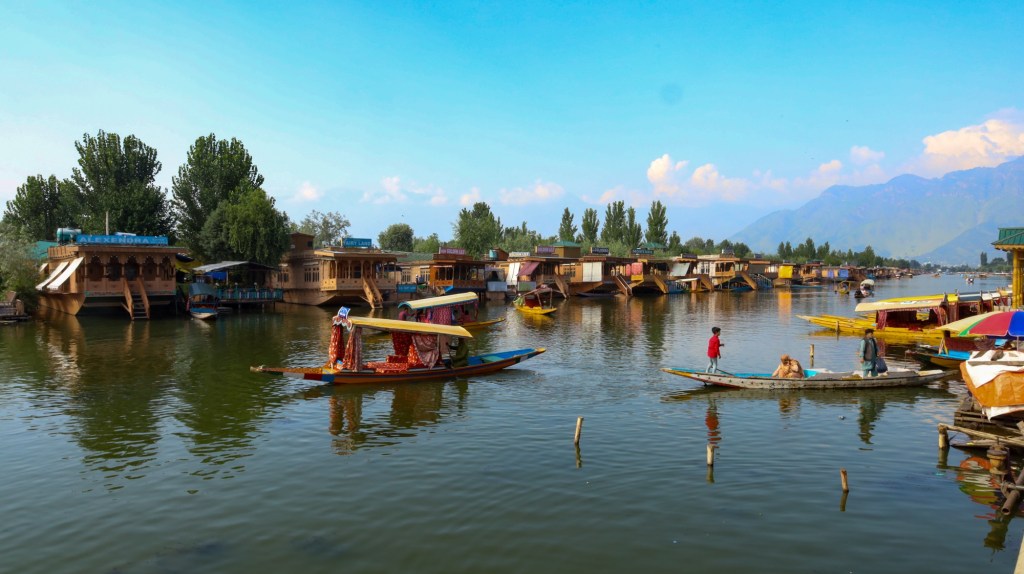
Shikaras, traditional gondolas, glide silently across its smooth surface where motorboats are forbidden. The boats look like something out of Willy Wonka: brightly painted, with pitched roofs, curtains, and cushioned seats.
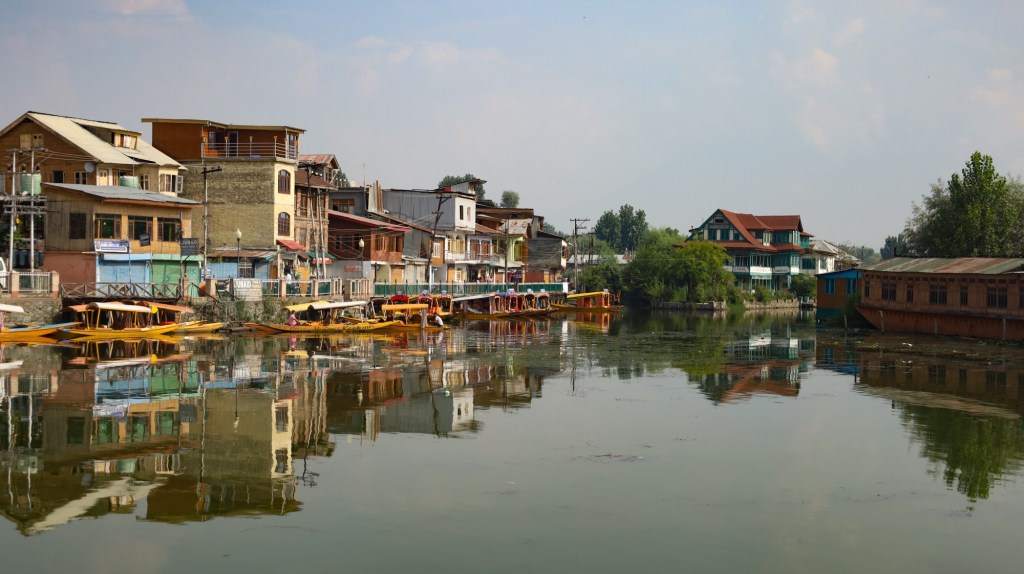
Dal Lake is perhaps most famous for the houseboats though. Some 1500 of them are moored in the southwest corner. They date from the days of the British Raj and now serve as floating hotels. They’re made of wood and range from simple to palatial. Interiors boast thick rugs, silk upholstery, and ornate carvings.
Opposite the houseboats and across a wide channel, Boulevard Road draws visitors with cafes and artisan shops. If there’s a tourist hub in Srinagar, this is it. Local men gather at the ghats along the water, hawking shikara tours and rooms for the night.
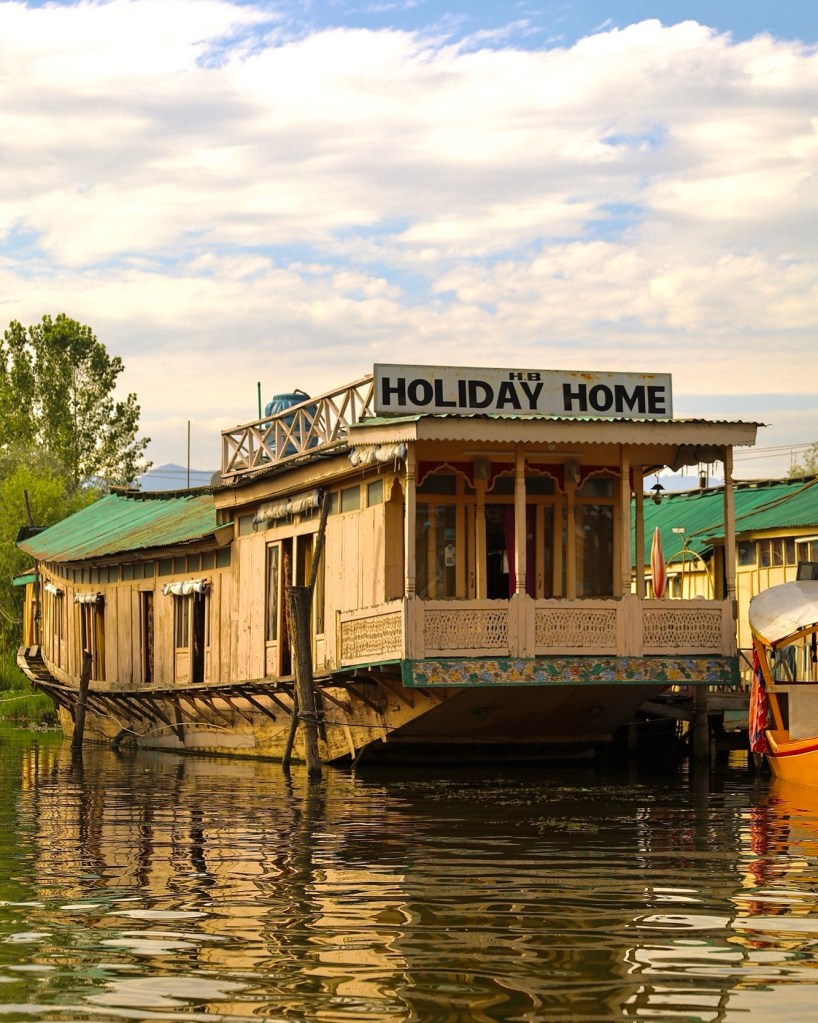
I meet Monsoor among a gaggle of men at Ghat #4. He’s a thick, 30-something man who earns his living with a set of oars. His father, Mohammed, owns a houseboat just across the way. I come to inquire about a morning trip to the floating market but leave with a room booked on the Holiday Home.
It’s one of the simpler boats and has definitely seen better days. The furniture is a little threadbare, there’s a soft spot in the floor, and peeling wood laminate in the bathroom. But it’s cozy and quirky, and the price is right.
Kashmir has long been a refuge from the oppressive heat of Indian summers. In the 1500s, Mughal emperors began traveling from Delhi and Agra to escape the inferno on the plains and pursue their “hobby” of laying out gardens.
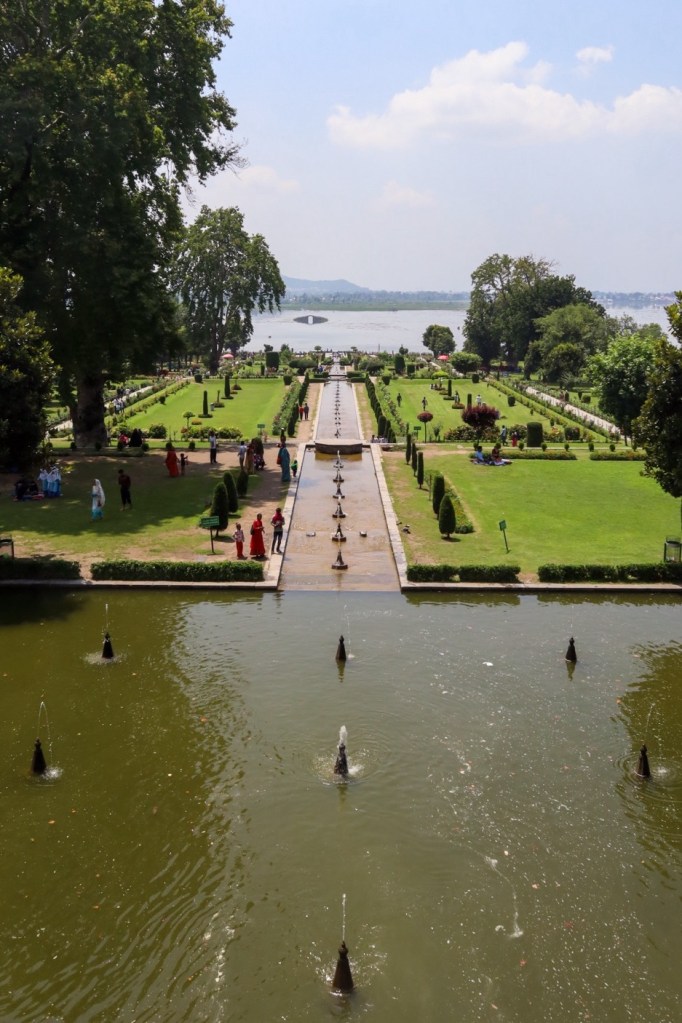
The results rival the finest of any European palace. The gardens at Nishat Bagh sprawl over 117 terraced acres, overlooking Dal Lake from the foot of the Zarbarwan mountains.
Across the lake, the white onion dome of Hazratbal Dargah marks the holiest Muslim shrine in all of Kashmir. It’s said to house a lock of hair from the prophet Muhammad.
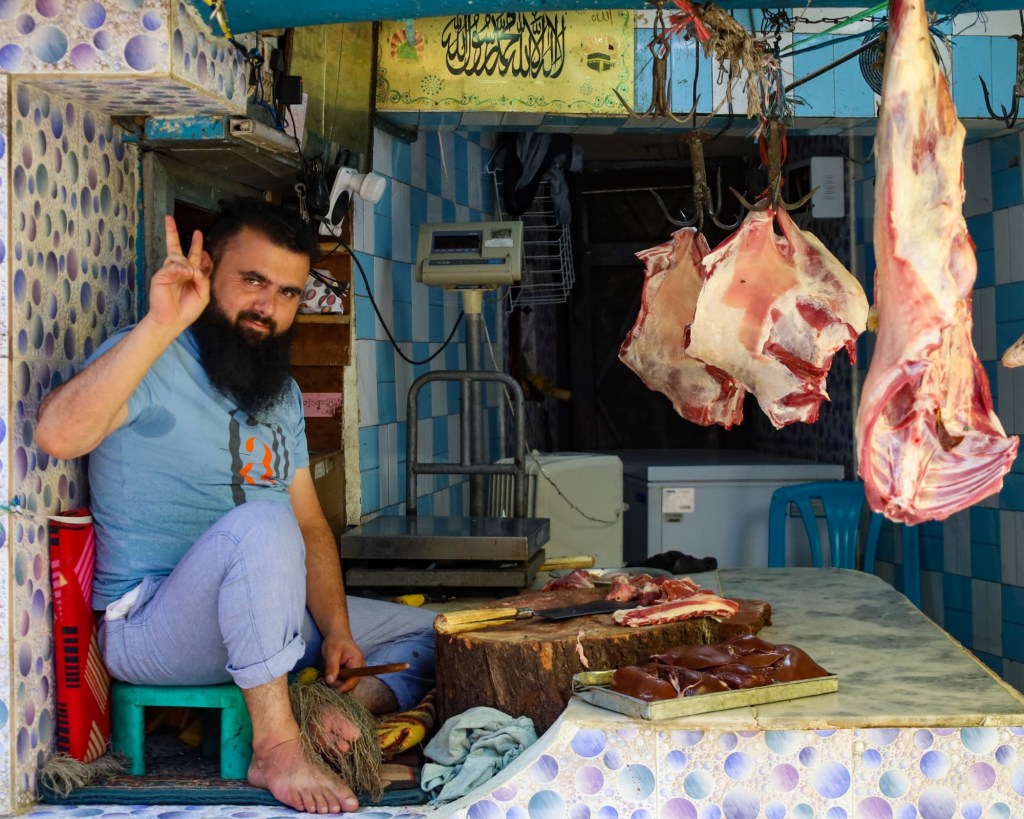
In the busy market around it, men sit in squat rooms shooing flies from sides of beef or swirling dough in bubbling vats of oil. Live chickens can be had for a dollar – still squawking or dispatched on the spot, headfirst in a bucket of water.
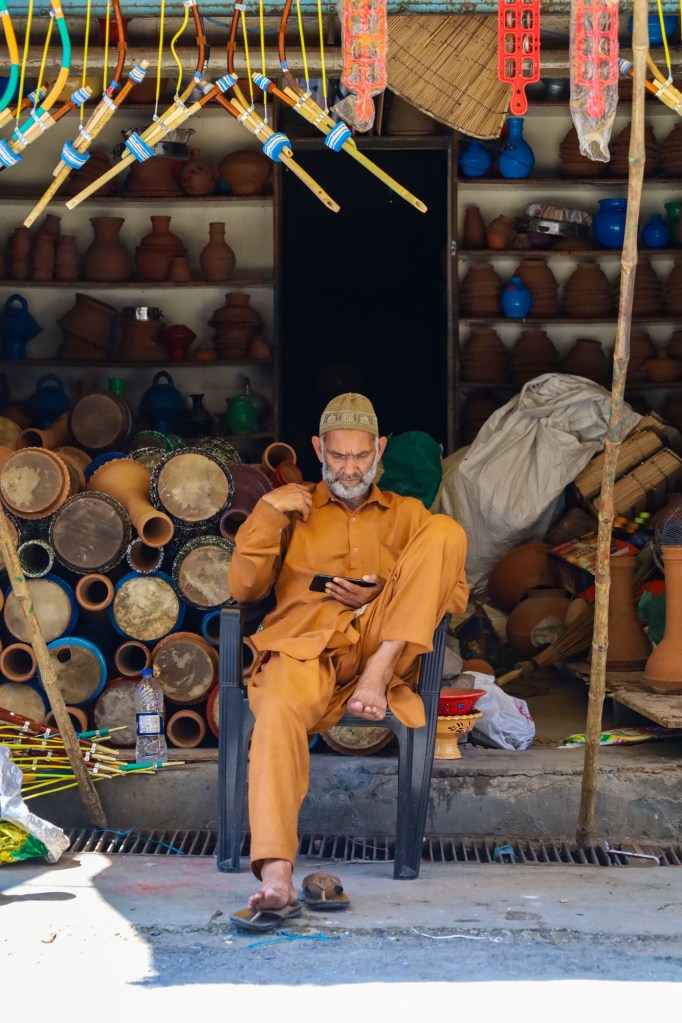

The ramparts of Hari Parbat Fort crown a hilltop to the north. Inside its walls, a Sikh Gurudwara, a Hindu temple, and Muslim mosque sit side by side – a testament to a religious tolerance that once flourished here.
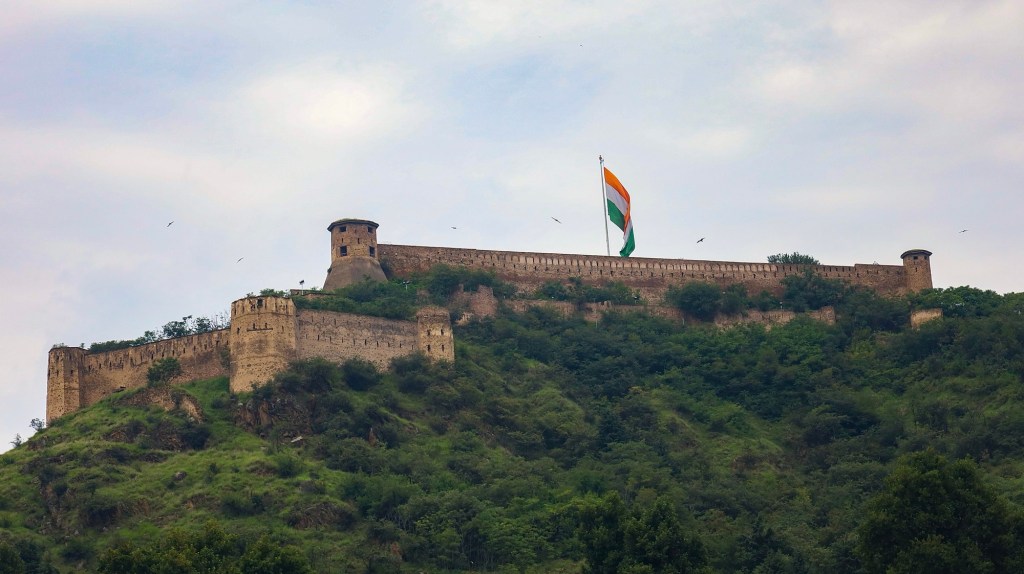
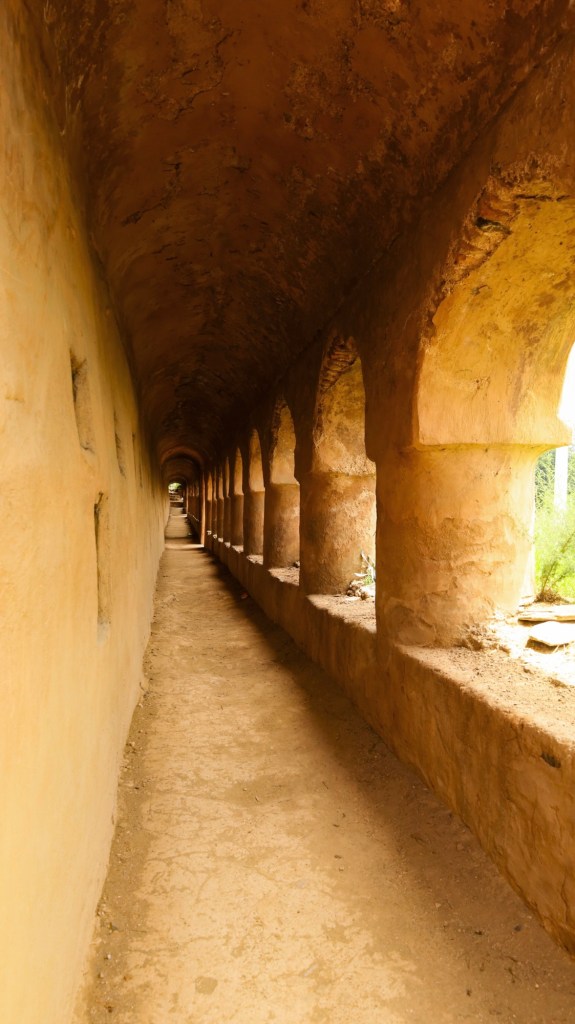

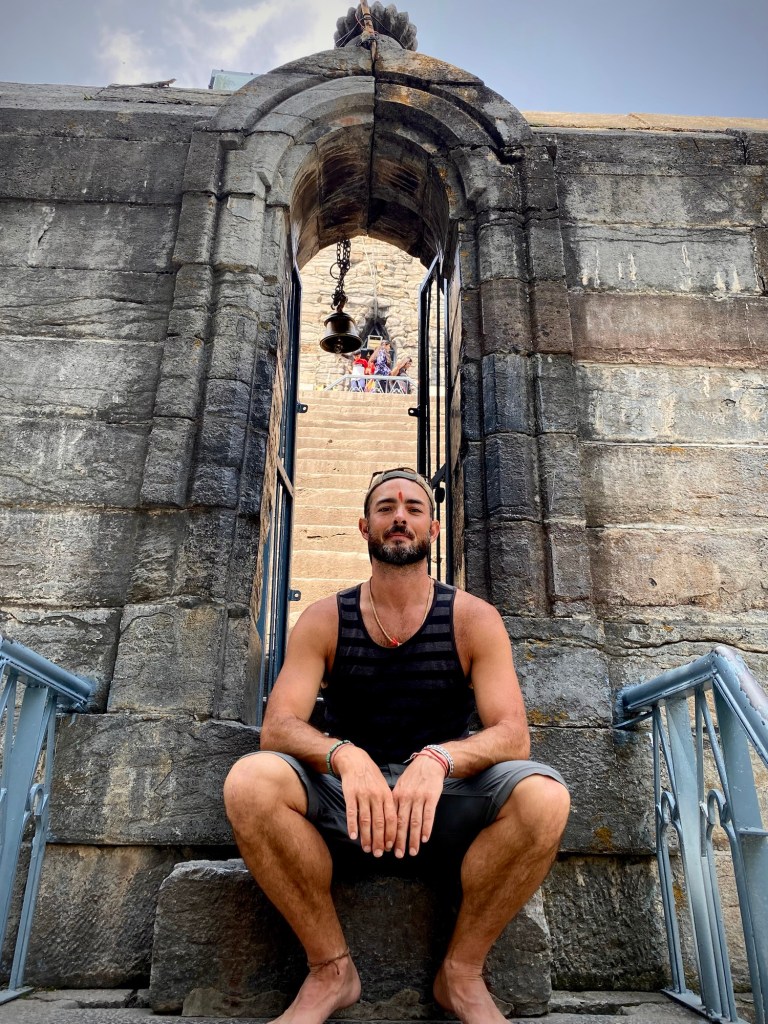
Shankaracharya Temple sits on a thousand-foot precipice to the south side of the lake. The Shiva temple is the oldest in Kashmir. Below it, the houseboats look like a beaded necklace strung out across the water.
I meet Abdul outside the temple. He’s a local tour guide with a toothy grin and long white hair flowing from a back-turned baseball cap. He’s blessed with the gift of gab, and with few foreigners around, he’s thrilled to share this gift with me. When we part ways, he offers me a free walking tour of the city the following day and I’m happy to oblige.

I meet him at Zero Bridge and we walk a short distance to the Bund, a once-fashionable promenade along the river. Some old colonial-era buildings still stand, but most are demolished or locked up, and foot traffic is barely a trickle. Abdul sees life under the British Raj as something of a golden age here. It’s a sentiment I haven’t encountered anywhere in India, but perhaps it was a touch more peaceful then.
Mahatta & Co. is photography shop wedged between a few art galleries and a Victorian tea room on the Bund. It has been open since 1915, and the walls are covered black and white prints of a life here from a different era. Inside of gilded frames, overdressed and under-melanated Brits relax on boat decks, play lawn games, or walk the Bund in their evening finery. Locals are seen manning oars, schlepping luggage, or otherwise attending to the lives of aristocratic leisure.
We head towards Lal Chowk, the central market of Srinagar, where the stalls are filled with the same mass produced, poorly made crap you’ll find across Asia. Between the rows of fake Adidas and knockoff NorthFace though, we peal off into a labyrinth of shadowy back alleys. The passages are tight and the walls sag overhead. When we emerge, I find myself in a real market – of butchers and bakers; of fabric dyers, perfumers, and coppersmiths.
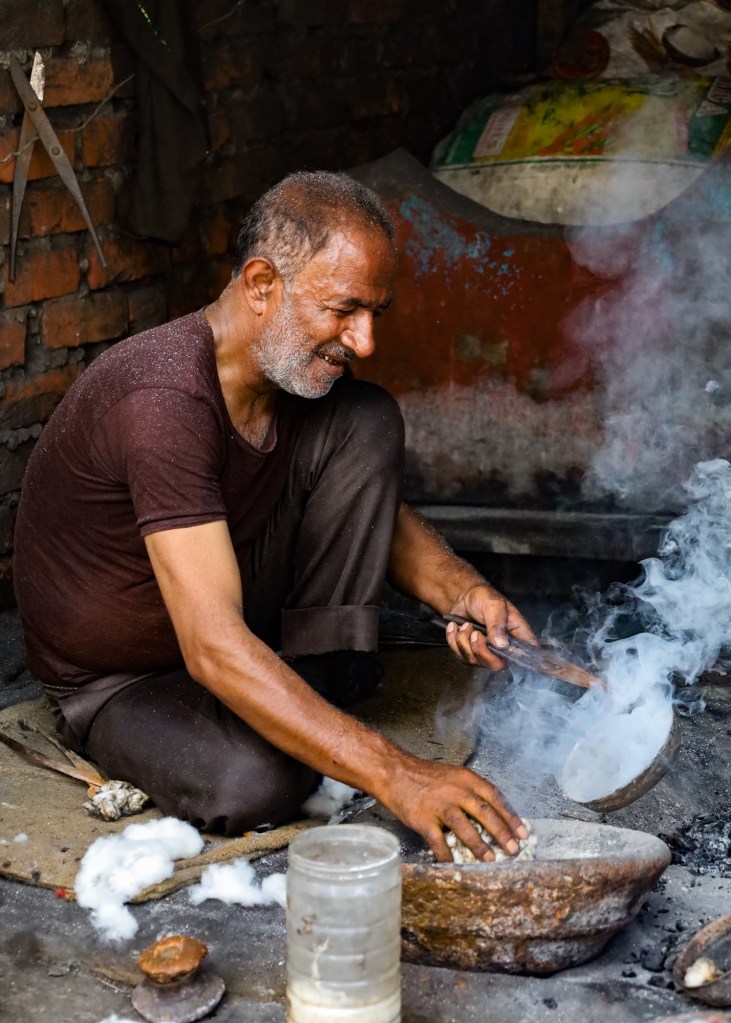
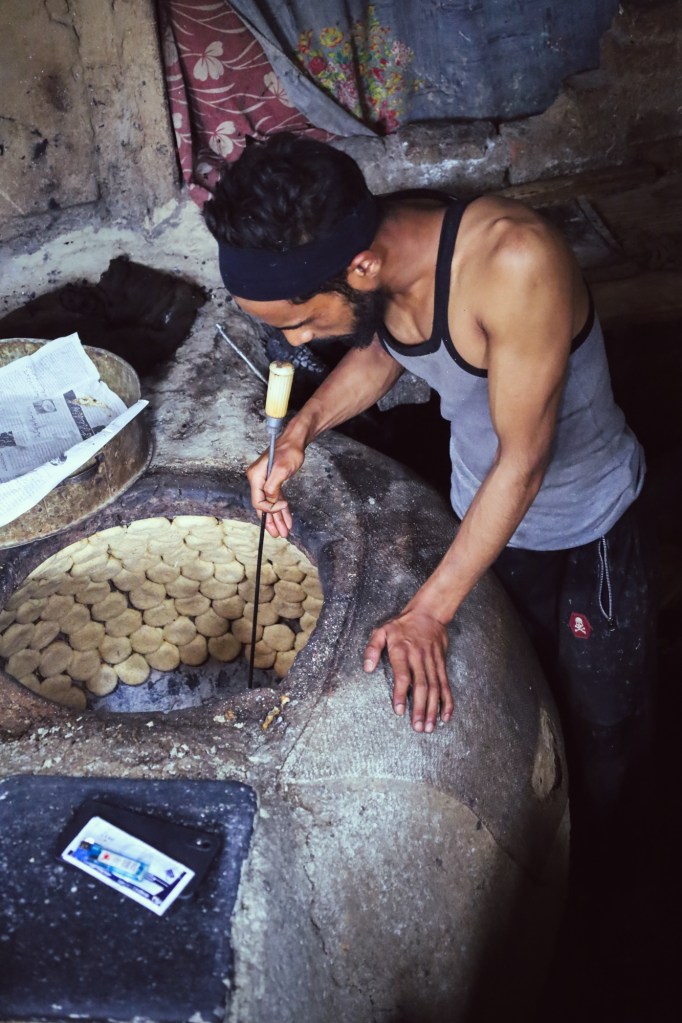

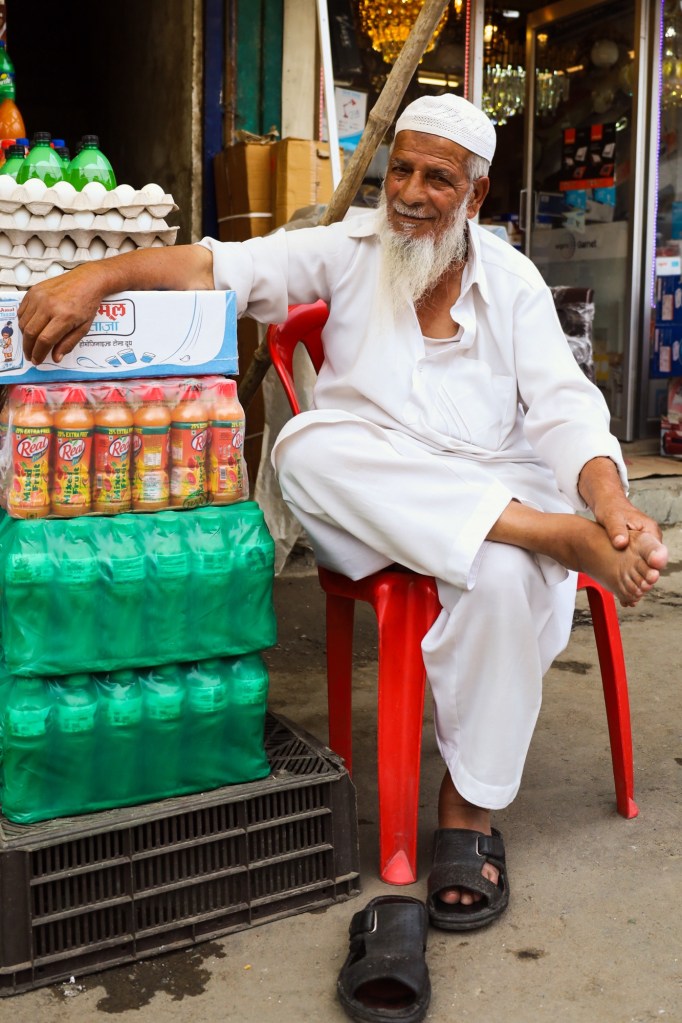

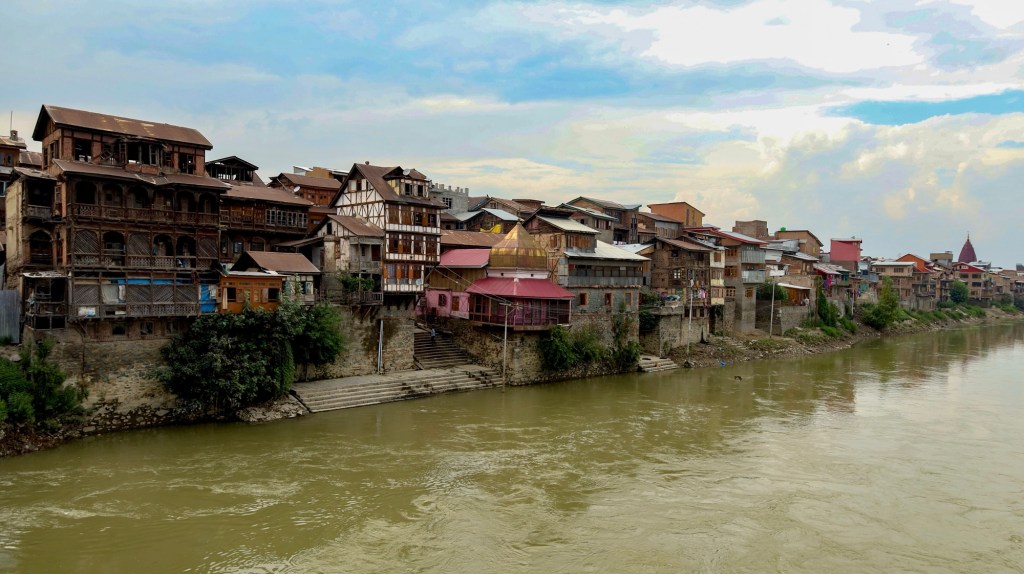
The buildings are rambling mixes of timber-laced plaster, stone, and brick. The upper floors are wrapped in wooden porches and colored windowpanes stand open to catch an afternoon breeze. It feels like a city right out of medieval Europe, save for the occasional Hindu Temple and calls to prayer from the minarets.

Many of the buildings are eerily empty. The Hindus, who fled in 1990s, seemingly up and left. It looks as though they intended to return when things cooled down, but 30-plus years later, everything sits just as they left it.


Abdul and I spend 6 hours traversing the city. We visit an ashram on the banks of the Jhelum and the Khanquah-e Moula, a giant wooden mosque with brilliant geometric patterns laid out in paper mâché.
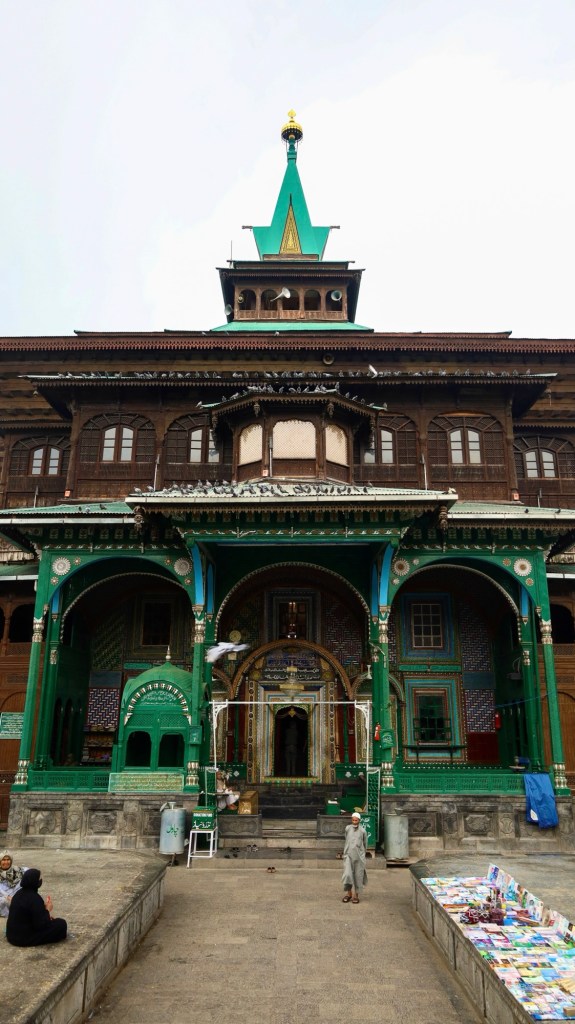

Abdul has friends everywhere we go and seems to make more as he whisks me along. Tours aren’t usually my thing – I prefer to strike out on my own – but Abdul has me rethinking things. Sometimes you can’t really see a place until you see it through the eyes of a local. He’s an ambassador for this city with a backstory every step of the way.


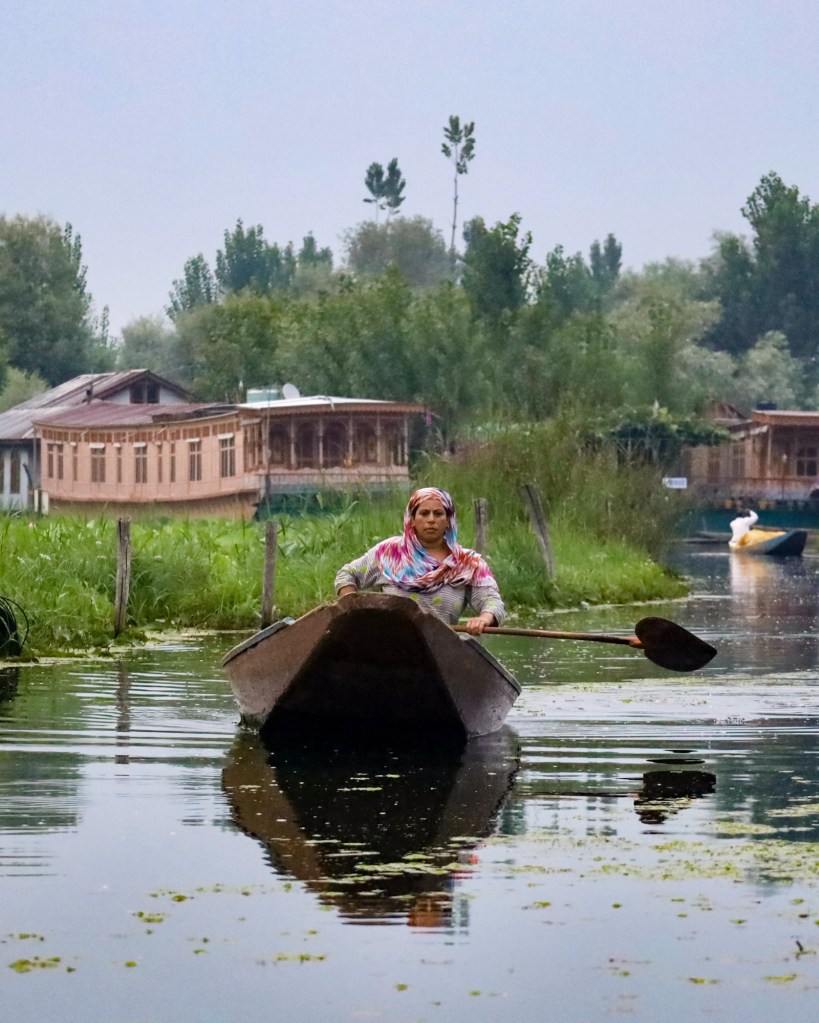
Early one morning, Monsoor and I take a shikara to see the floating market. At half past five, when the canals are quiet and the light is low, we leave the main channel and slip into a network of small waterways that crisscross the marshland.

All is quiet. We pass the occasional floating shop or cafe, still shuttered from the night before, and just few other boats glide past. The only sound is the swirl of water left behind their paddles. As the sky brightens to the east, we’re surrounded by drifting gardens of lily pad and lotus flower.
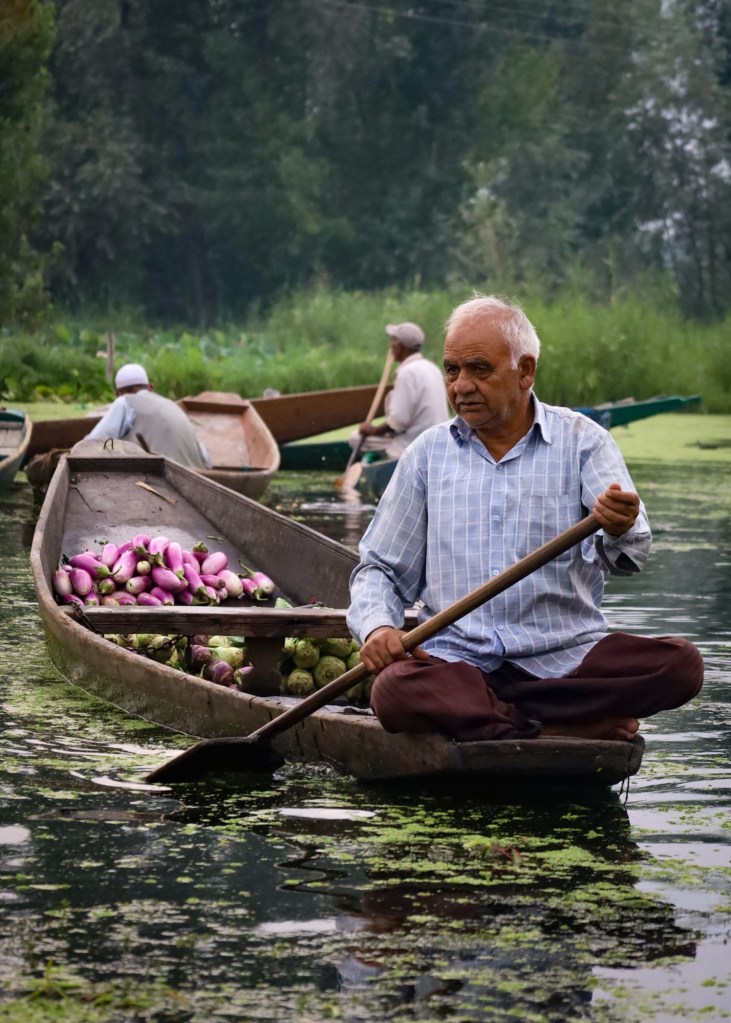
Finally, we reach a clearing in the water where men gather in small skiffs. They sit cross legged, circling about effortlessly. It’s nothing like the large, boisterous affairs of Southeast Asia. It’s soft and subdued. It’s less a commercial endeavor, it seems, than neighbors and friends gathering to exchange stories and swap produce.

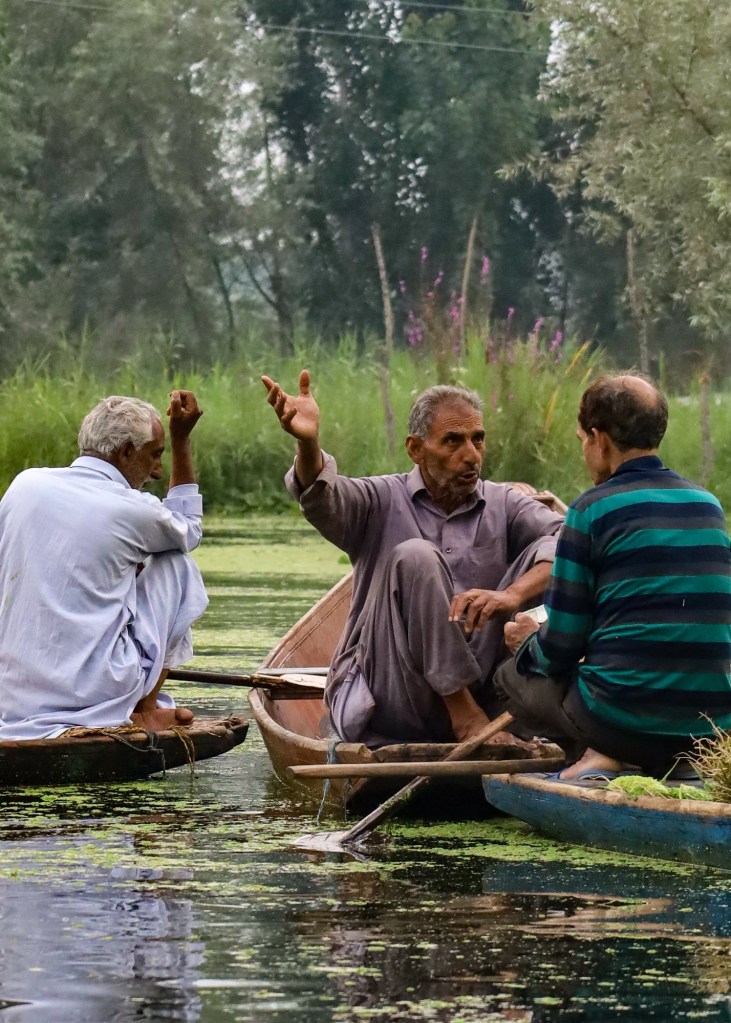

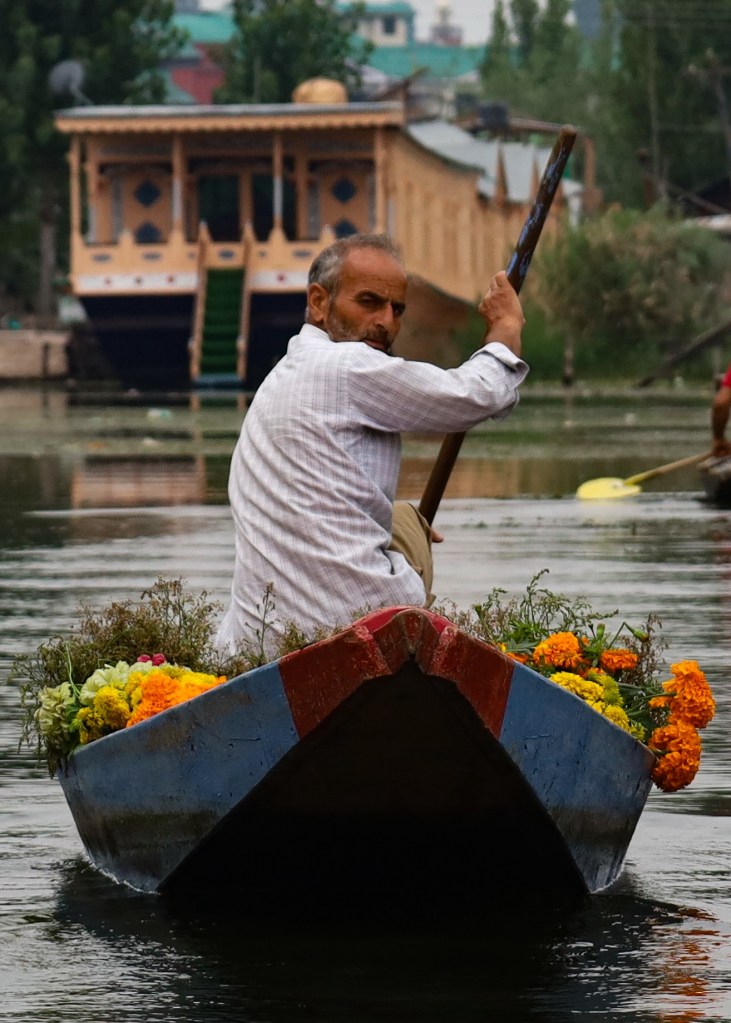
Some paddle about to make a sale while others chat from the bows. The skiffs are piled with greens and beans, tomatoes and eggplant. There’s a flower hawker and a man who sidles up to pour steaming cups of sweet mint tea.
Looking around, there’s little indication as to what century I’m in.
I learn that the following day is a holiday and that everything will be closed.
It’s the Mourning of Muharram, a Shiite holiday marking the martyrdom of the prophet Mohammed’s grandson. Celebrations of martyrdom are, by nature, somber affairs. In Kashmir, things get extreme. Mourners wail in the streets and parade through town flogging themselves bloody.
This I must see.

Such emotionally charged gatherings, however, remain unpalatable to the Indian government. Unwilling to risk the situation spiraling out of control, the celebration doesn’t happen. In fact, nothing happens.
I’m thinking that a few shops might be closed or that I might be hard pressed to mail a letter. But when I wake up, the channel is completely still – not a boat in sight. Across the way, Boulevard Road is silent and the ghats are deserted. The only movement is an old ski boat full of army officers that chugs by every so often to make sure no one is out.

When I open my phone, there is no network. Pandemic lockdowns were a drag, but at least I had the internet. Lest anyone organize something online, the Indian military sees fit to turn off the World Wide Web.
I spend the day in the confines of the Holiday Home with another American traveler and not much to do. With the help of a houseboy though, we manage to paddle out the back way to an illicitly open shop for instant noodles and potato chips.
By early evening, people start to stir over on Boulevard Road and my friend and I leave to find some real food. On the way, there’s a skirmish at one of the intersections. A group of soldiers is trying to subdue a man under a rain of baton blows. Opposite, a crowd jeers and rushes at a set of metal barricades. Soon, the man is in the back of a paddy wagon and the soldiers turn their attention back towards the crowd.
Despite the array of grilled meats available just past this melee, we decide it’s probably prudent to circle back.

Maybe because of my meal interrupted – but more likely because I love to eat – I can’t leave Srinagar without a traditional Wazwan. This multi-course meal was originally cooked for royalty. It consists of anywhere from 7 to 30 courses – almost all meat-based.
The Mughal Darbar has been serving Wazwan for 40 years and feels every bit the institution. We sit amid historical murals and arched columns in the dining room, as aged men in faded uniforms attend to us. This is considered the place to go for a Wazwan in Srinagar.
We split the meal, as it promises to be a feast. At about $14, it’s extravagant by Indian standards. Even a half portion is more than I’ve spent on a single meal in India.
The food arrives in a procession. Our server sets out a large copper-domed platter and surrounds it with smaller dishes brimming with more.
Our Wazwan consists of 9 courses. There are minced meat kebabs, braised and fried lamb ribs, roasted chicken, two kinds of meatballs, and lamb rogan josh – the most famous dish to hail from Kashmir. It’s all served with a pile of white rice and assorted chutneys.
My friend relents before it’s all gone, but I let nothing go to waste. Thoroughly full and feeling sluggish, I return for an afternoon snooze on the porch of the Holiday Home.
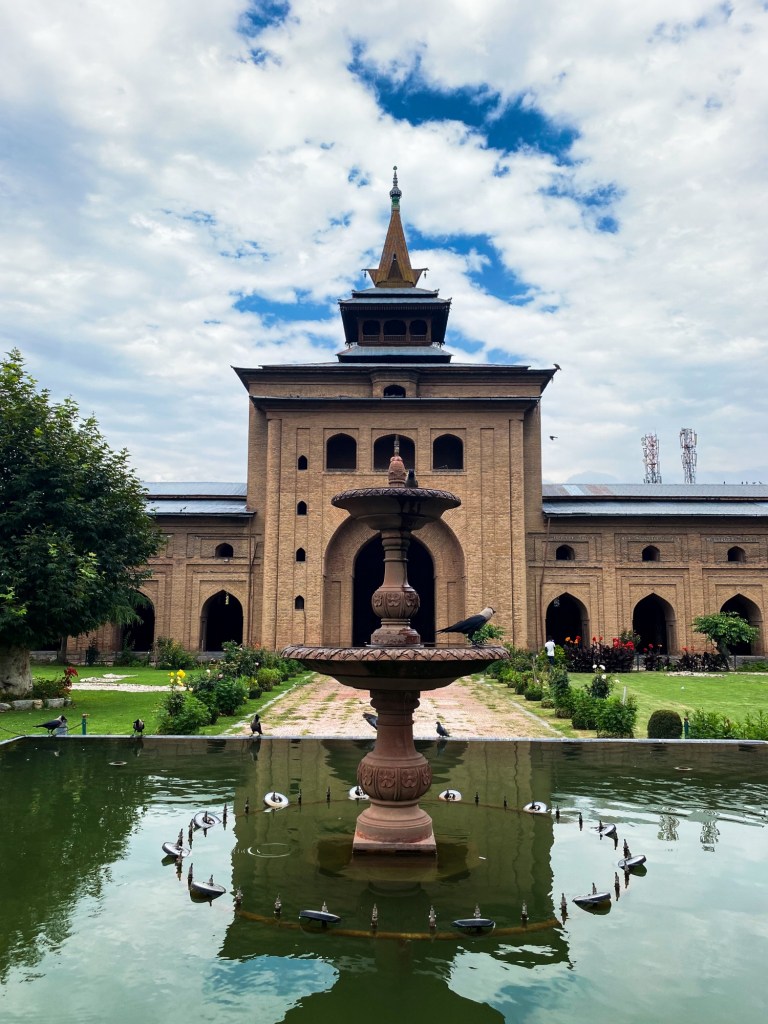
Srinagar is unlike any other city I’ve visited. Kashmir may be a part of India, but only in the legal sense. It may not independent on paper, but it is fiercely so in spirit.
From the still waters of Dal Lake to the lively markets and the terraced gardens, it’s a place unto itself. Whether strolling in shaded back alleys or sipping coffee on the balcony of a houseboat, there’s nothing quite like it.
Despite the unrest, I’m welcomed by citizen and soldier alike. I don’t see any end to the struggle – both sides are too deeply entrenched. I can only hope for some semblance of peace, a stalemate that affords the people of this city a respite from the violence and tears of the last 75 years.

 Christopher’s Travels