
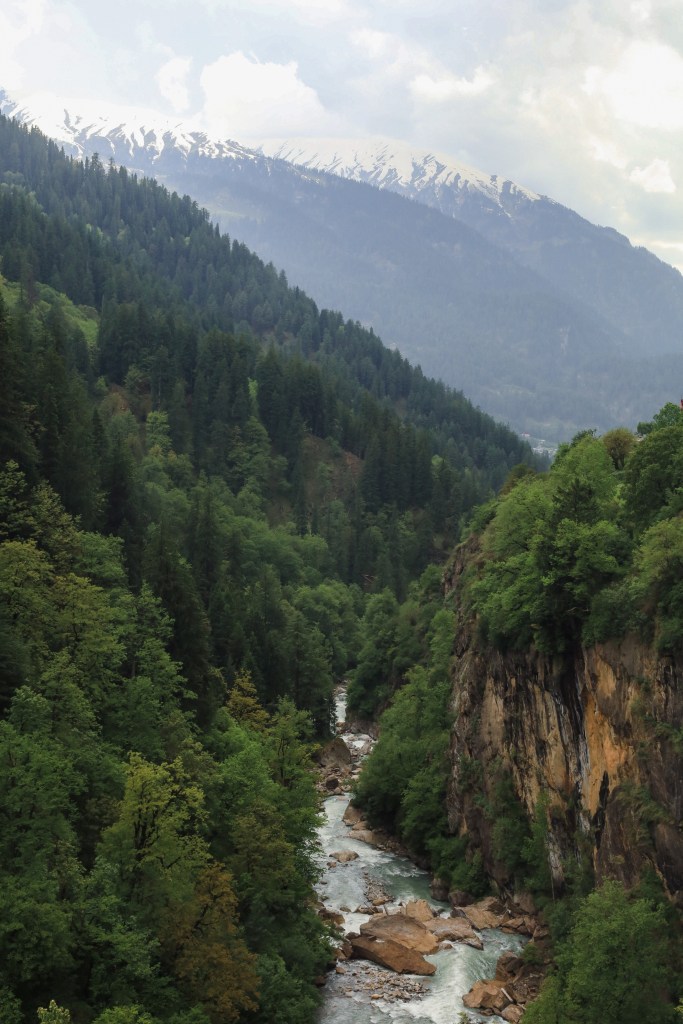
The Parvati Valley is this fairytale world tucked into a mountain crease in the center of Himachal Pradesh in Northern India.
Pine cathedrals and steep mountain trails overlook the roiling Parvati River. Villages, accessible only on foot, perch precariously on mountainsides and cannabis grows with wild abandon. It’s a mystical place, where Hindu Gods once played and their legends still endure.
It’s said that Lord Shiva, in the form of an ash-covered sadhu, meditated in the Parvati Valley for some 3000 years. When he opened his eyes and gazed out onto beauty of the untouched wilderness, he named it after his consort, Parvati. Later, their son would sit here in meditation for another thousand years.
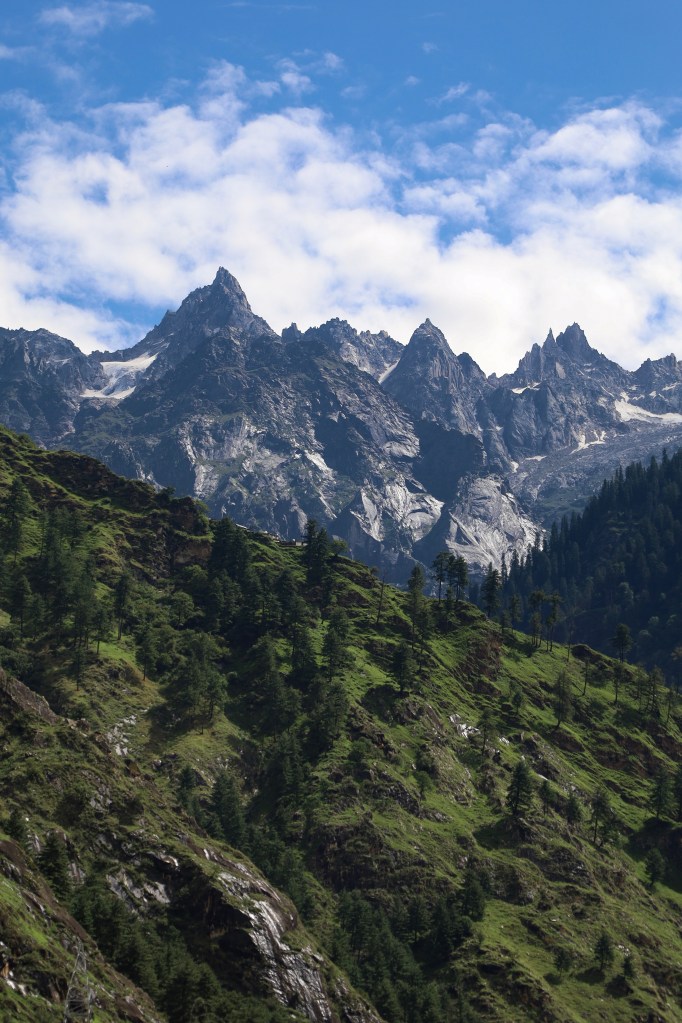
The best way to reach the Parvati Valley is to catch a night bus to Manali. The overnight ride is a challenge. You can’t see the landscape, but you can feel every bend. As soon as you settle into a position and close your eyes, a curve sends you the opposite direction. Any sleep you get is purely a bonus.
On my first trip, I shared a taxi from Dharamshala with a few Israeli backpackers. In a driving rain, they held hands and recited prayers as we weaved mountain roads, pleading with the driver to slow his pace in between the pit stops to empty their stomachs.
There’s a reason that Indian drivers put a Hindu deity or three on the dash. In Himachal, they work overtime.
The Beas and the Parvati rivers converge at Bhuntar, just south of Kullu, and the Parvati Valley stretches out to the east. Local buses run regularly from Bhuntar to Kasol. It’s 19-miles, or approximately two hours if the bus requires maintenance along the way.
Kasol
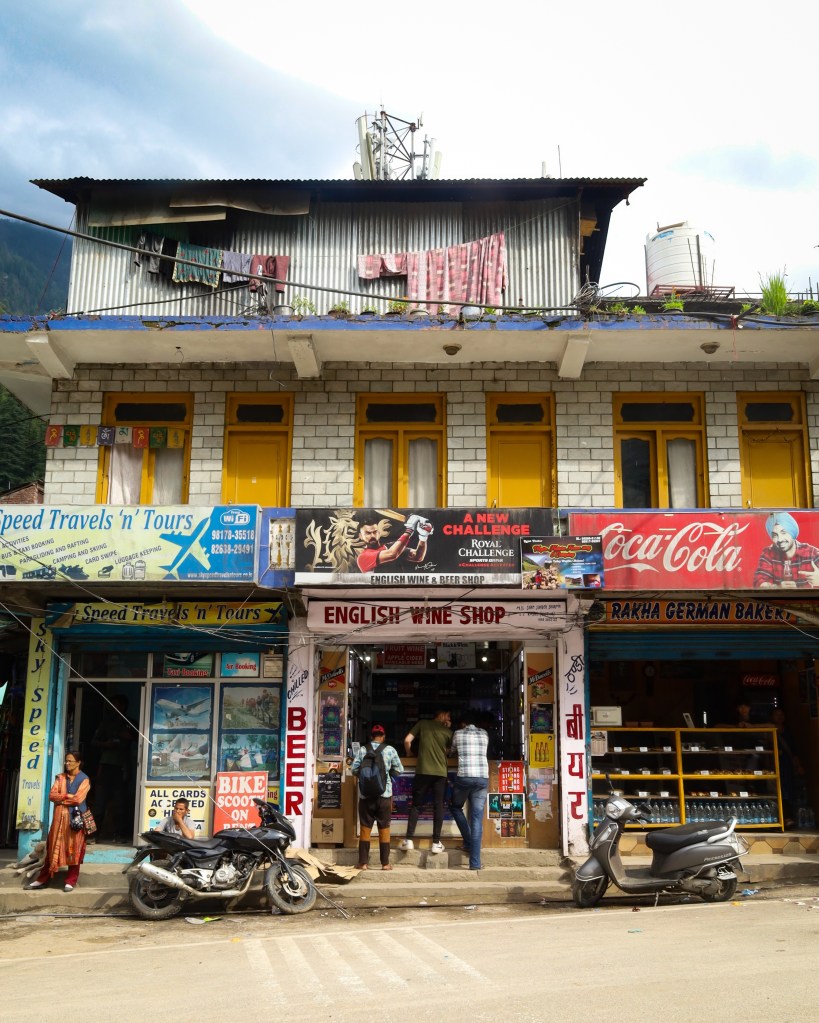
Kasol is ground zero for the backpacking set in the Valley. It’s a good first stop after an overnight on the road. Rooms are easy to come by, albeit a little more expensive than in the smaller villages.
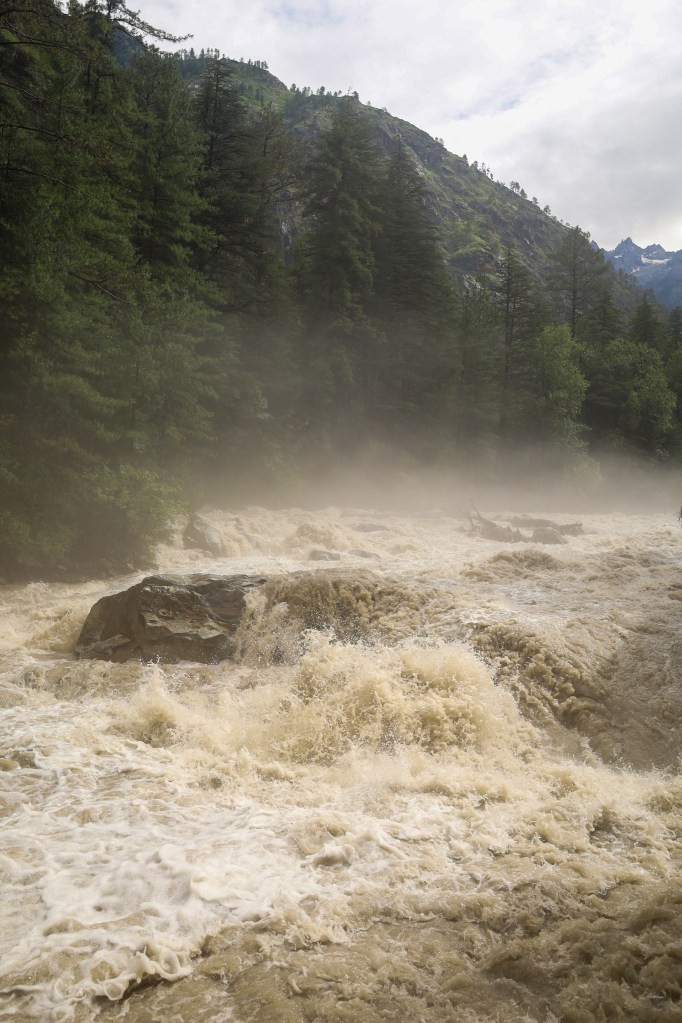
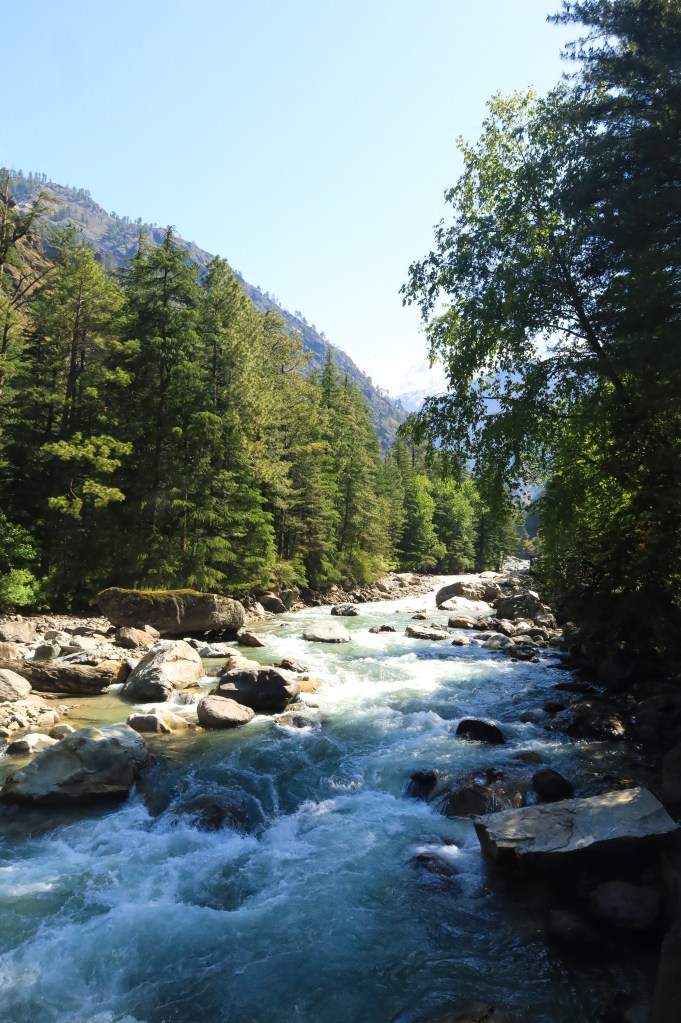
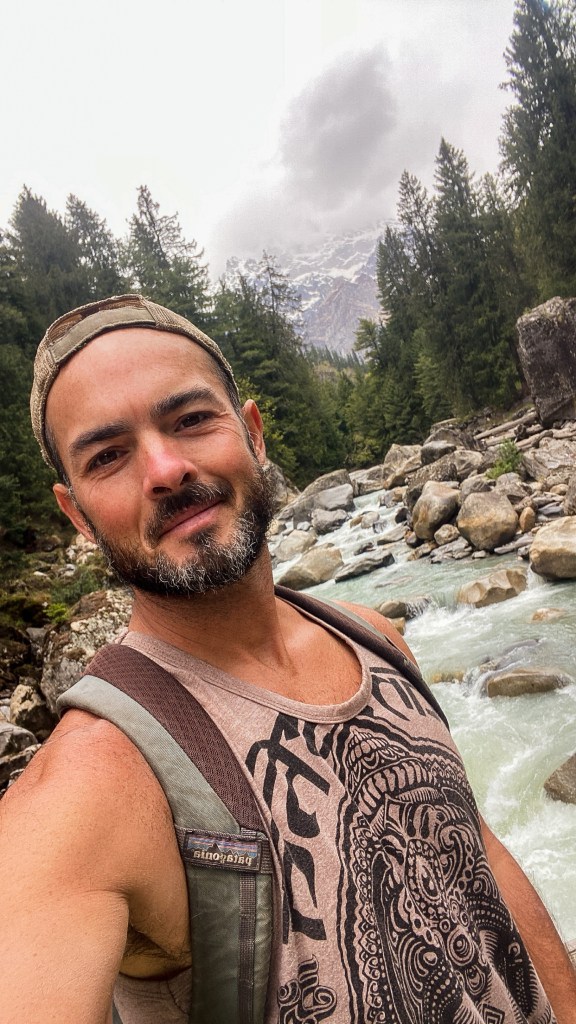
Here, cafes and campsites overlook the Parvati River, which is quite something in July. With the rains, the river takes on a savage quality. Snarling torrents of white water writhe over the boulder-strewn river bed, rumbling like rolling thunder and throwing up a cloud of vapor.
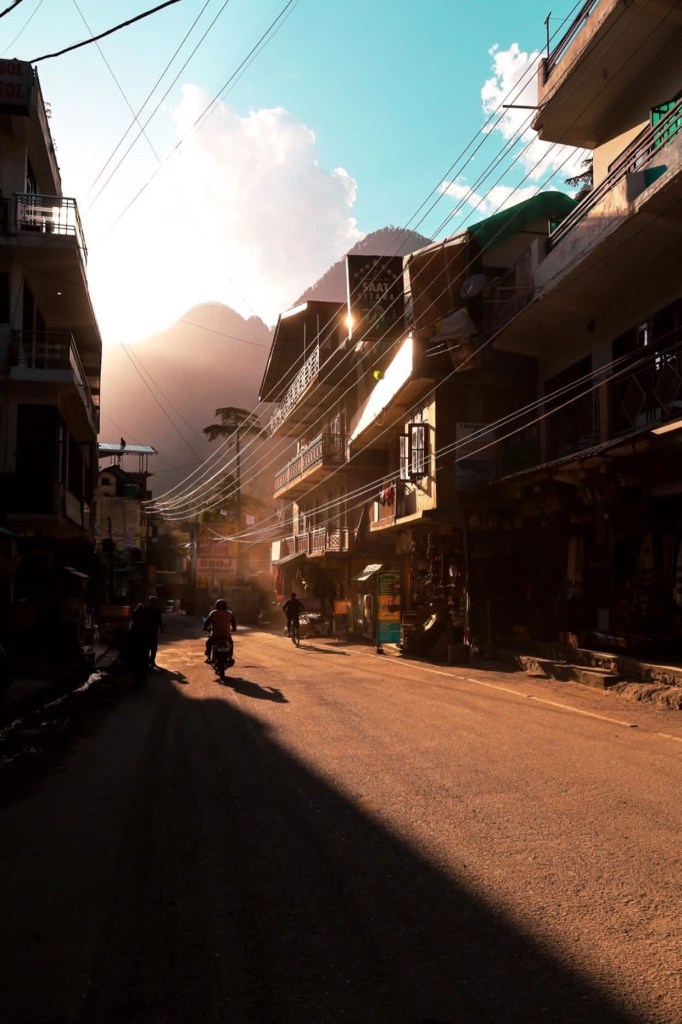
It’s in Kasol that I first notice the quality of the light. The Parvati Valley runs East to West, so the sun shines almost horizontally twice a day. The mountain edges cut the light with curious shadows and the forests diffuse it, creating dappled landscapes and surreal vignettes. In the warmth of the golden hour, it’s simply extraordinary.
I catch my breath for a couple of nights in Kasol. It’s on the “Hummus Trail”, a loose network of Indian destinations popular with young Israelis. In the village cafes, you’ll actually hear more Hebrew than Hindi, but plenty of domestic tourists come from up from the plains to beat the heat. It’s got that backpacker vibe – bohemian and a little bit gypsy.
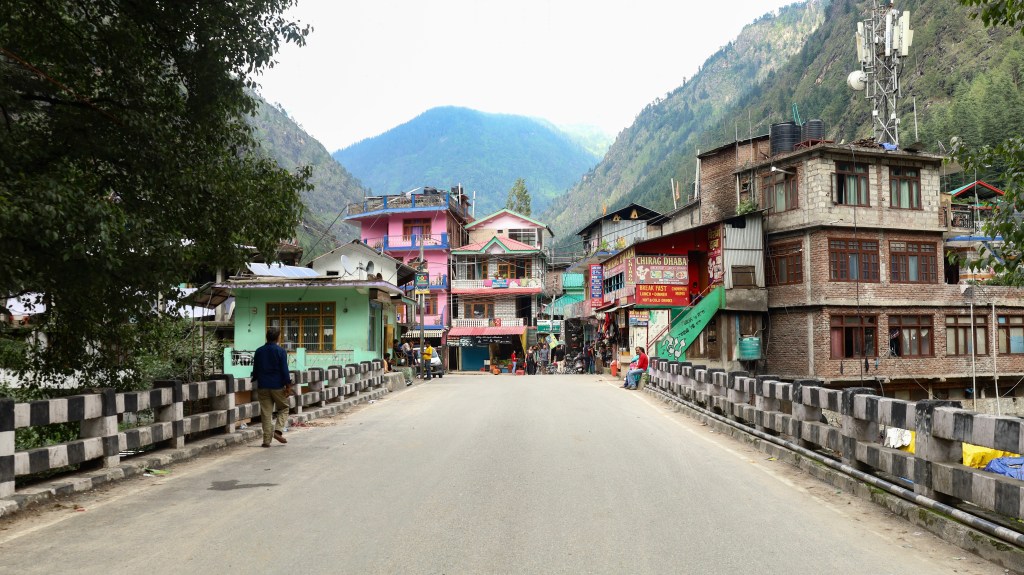
Kasol is the last place to stock up and hit an ATM before you head up the valley. Amenities grow scarcer the farther you go. It’s also the last place to get a decent cup of coffee – it’s Nescafé the rest of the way.
Chalal is a small village literally “over the river and through the woods” from Kasol. It’s a half hour walk, but feels much more remote. With just a handful of cafes and guesthouses, it’s a quieter alternative to Kasol. For now it’s only accessible by footpath, but there’s a road under construction, so change is on the horizon.
Charas
You can find electronica-fueled parties or quiet cafes in Kasol. Most people while away the days in the cafes, seated on cushions around the low slung tables, drinking chai and smoking copious amounts of hash.
Hash production is the cottage industry of the entire valley, and smoking charas, is almost obligatory. Hash is the sticky resin gathered from the flower and/or leaves of the female cannabis plant. At harvest time, villagers rub them together with their palms, forming a tacky black putty they call charas. The hash from the Parvati Valley is considered some of the finest in the world.
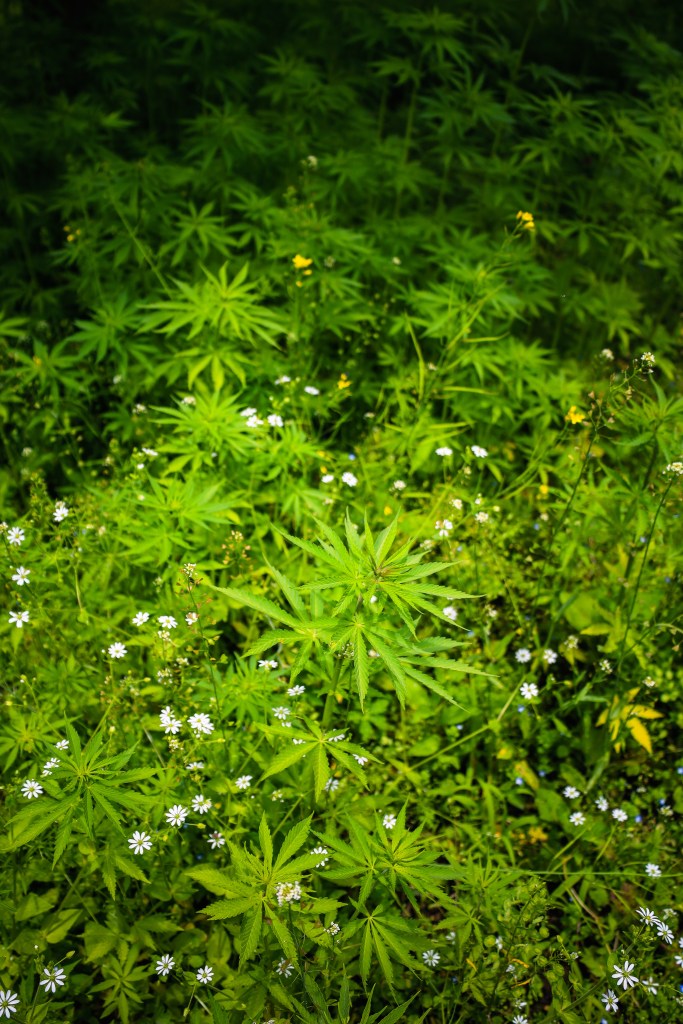
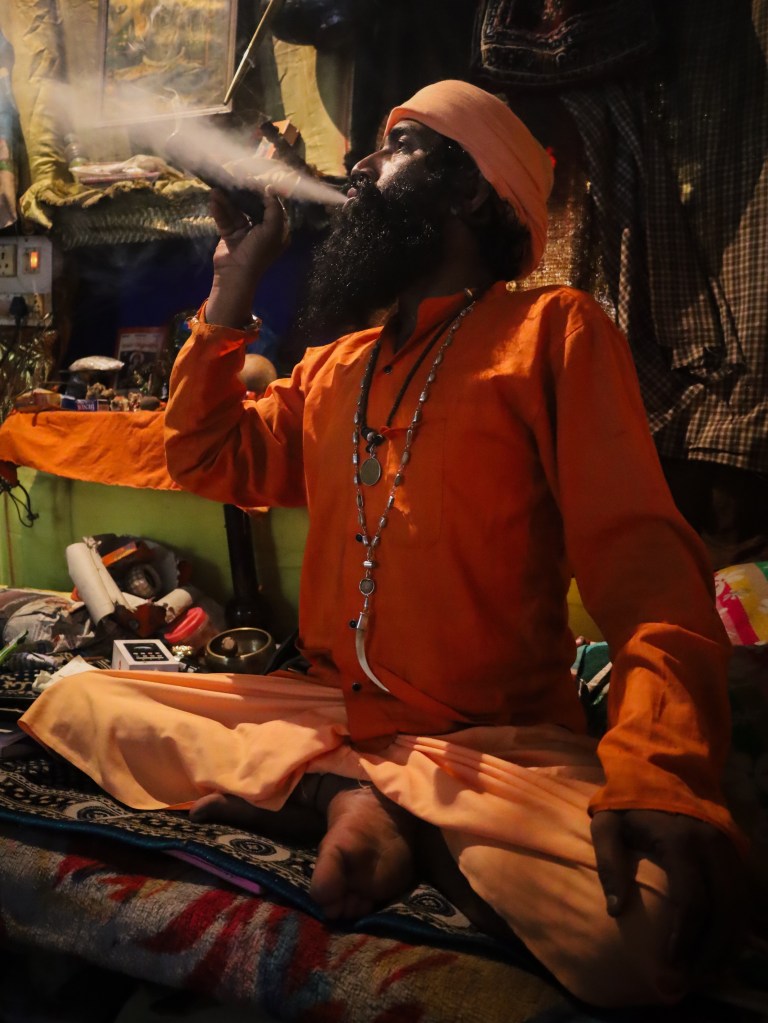
The hash is mixed with tobacco and smoked in a joint or a chillum, and it’s basically everywhere. If you sit for a chai, chances are, someone will pass you a smoke. At any given time, more people seem to be smoking than not. It’s shared about in the way that people share in a bountiful harvest. It’s celebrated here.
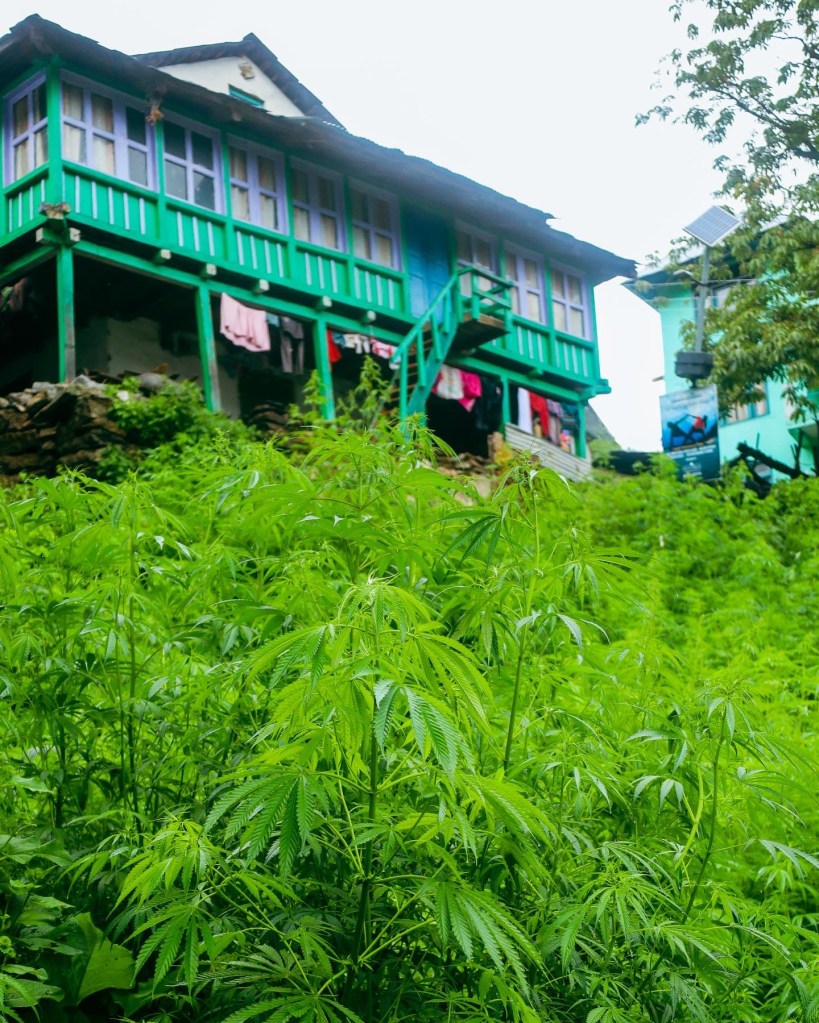
In the summer, when the cannabis plants explode across the landscape, the villages are fringed in tufts of electric green. The highest quality produced here, referred to as “cream”, is revered across India. Holy men use hash to aid in meditation and even Lord Shiva is said to be a fan.
It’s a mellow experience – low anxiety and not terribly intense. It’s pleasant, like a warm bath. Or so I’ve been told.
With legalization and the mainstreaming of cannabis in the west, the products engineered for your local dispensary are more potent than what’s growing in these hills.
They just smoke it constantly here.
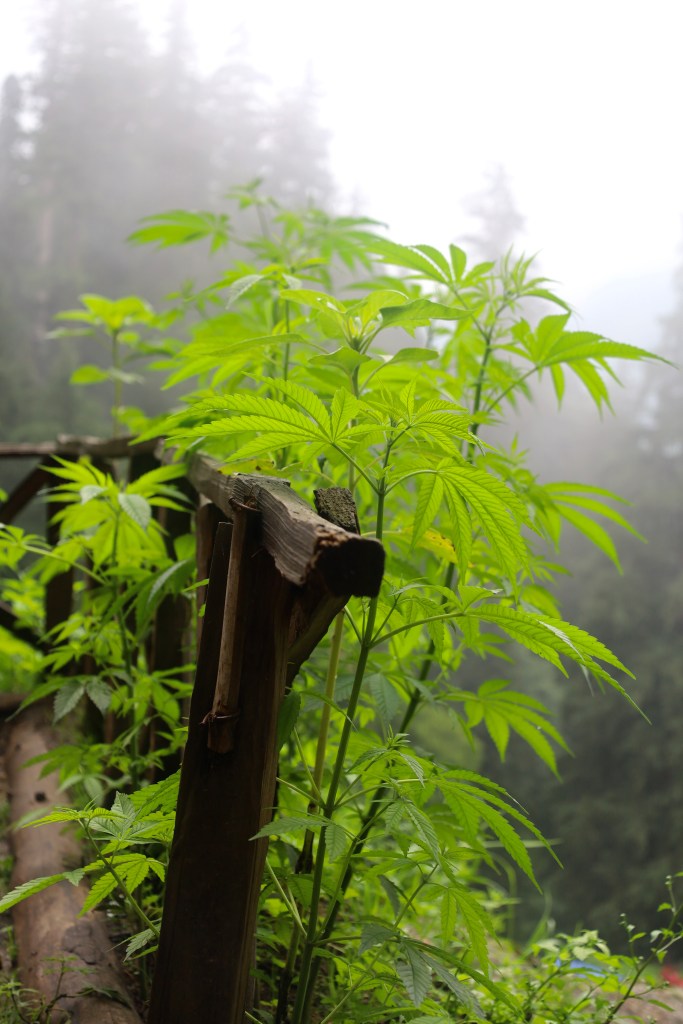
The hash trade is mostly tolerated within the valley, or at least ignored by the powers that be. Palms are greased, I assure you. Once it leaves the valley though, loads of it of it hit the black market – where loads of people are looking to make loads of money.
This attracts shady people.
Something Darker
The Parvati Valley has another moniker – the Backpacker’s Bermuda Triangle. Over the years, more than a few people have vanished here.
Some people get lost here on purpose. They come to lose their past and don’t want to be found. The valley draws spiritual seekers who seek to turn inward and renounce the world, but also a more nefarious type, who is running from something darker.
In Lost in the Valley of Death, Harley Rustad recounts the story of Justin Alexander, an American survivalist on a spiritual quest, that ended with his disappearance here in 2018. In his telling, Rustad examines scores of other disappearances. Alexander was presumably killed by a single baba gone bad, but more than 20 others have vanished under sinister circumstances in the last two decades.
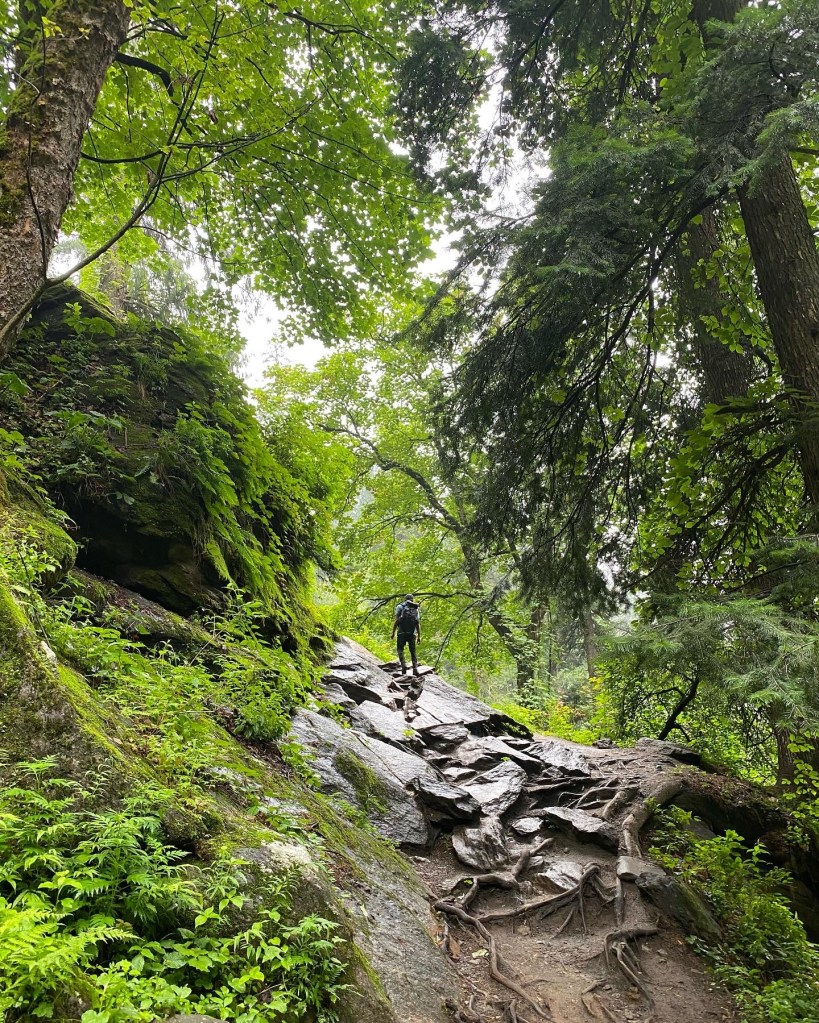
There are steep trails and it is isolated. A misstep in places would mean long fall and a plunge into the raging Parvati. Though remote, the valley runs east-west and all trails eventually lead to a village, so it would be seemingly difficult to get lost.
Did they fall and get sucked into the river? Did they cross a cartel? Maybe they were robbed, killed, and dropped in the torrents. Or maybe they just wanted to disappear.
The Parvati doesn’t give up her dead.
The the place is intriguing and a little danger only adds to the mystique.
Manikaran
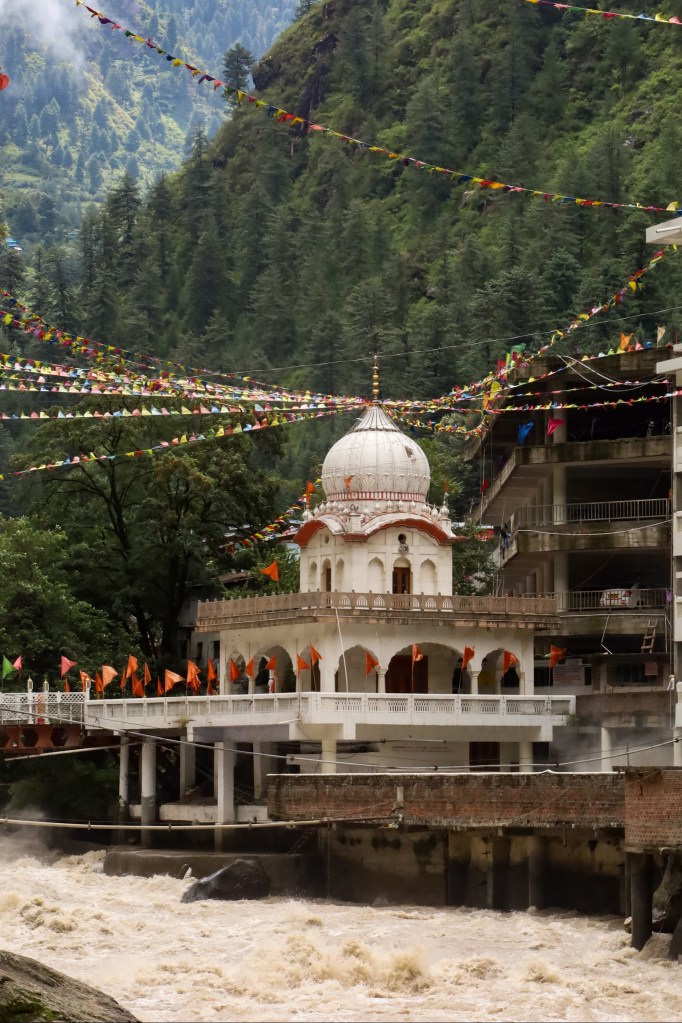
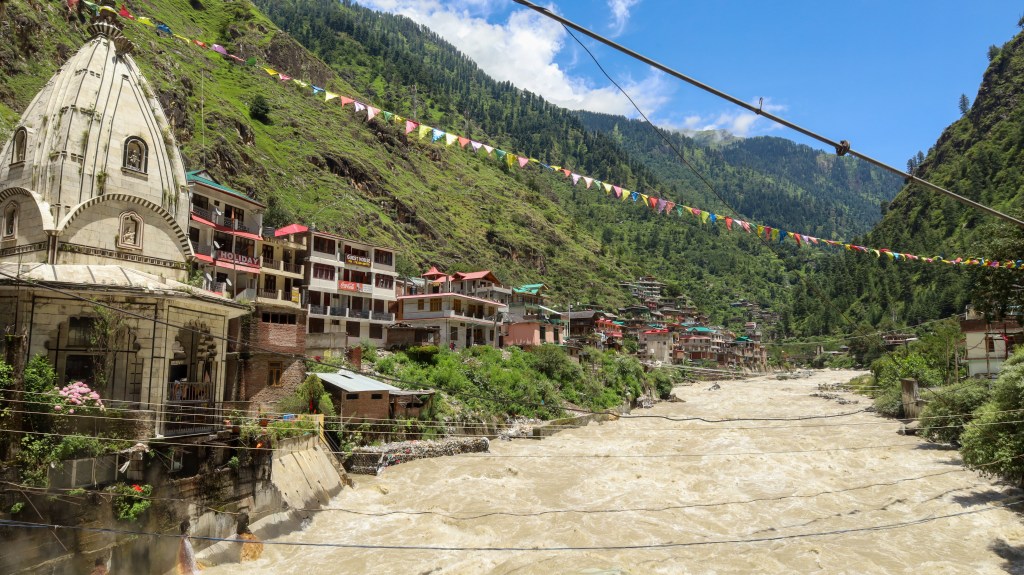
Manikaran Temple, about three miles east of Kasol, is a pilgrimage sight for both Hindus and Sikhs. It sits astride the Parvati River, over a network of sacred hot springs that bubble up throughout the valley.
The temple is built of white marble and sits on both sides of the river. There’s an onion-shaped Sikh dome on the near side and Hindu mandir on the far. A footbridge connects the two under long strands of flags that flap in the wind over a particularly gnarly stretch of whitewater.
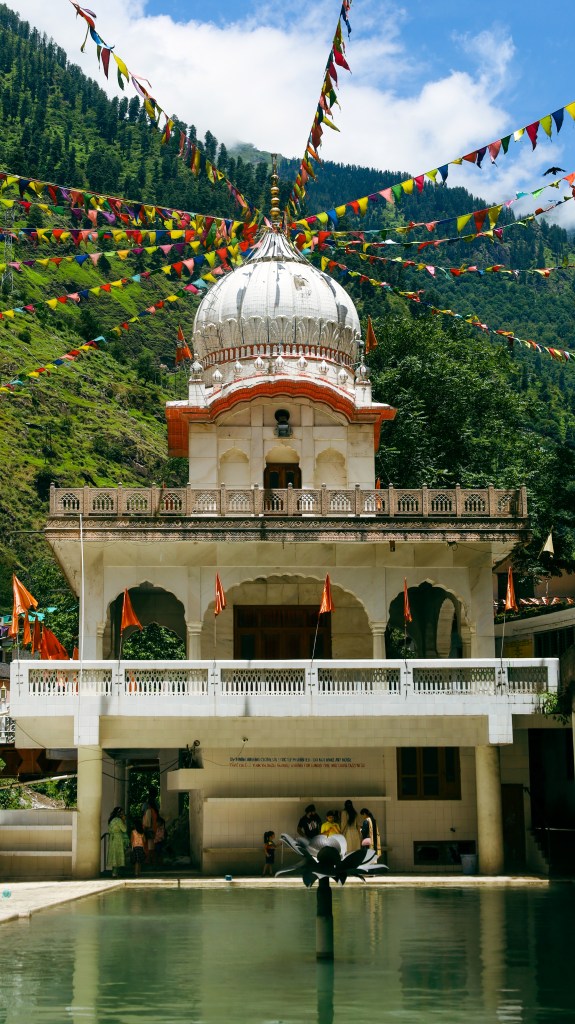
The legend of Manikaran says that Shiva and Parvati were so enamored with the beauty of the place, that they decided to stop here and relax for a while. They ended up staying 1100 years.
At some point, Parvati lost some of her jewels in the river. When one of his attendants couldn’t find them, Shiva appealed to the serpent god Sheshnag, whose hiss gave rise to a flow of boiling water. Parvati’s gems were returned and the hot springs flowed forth.
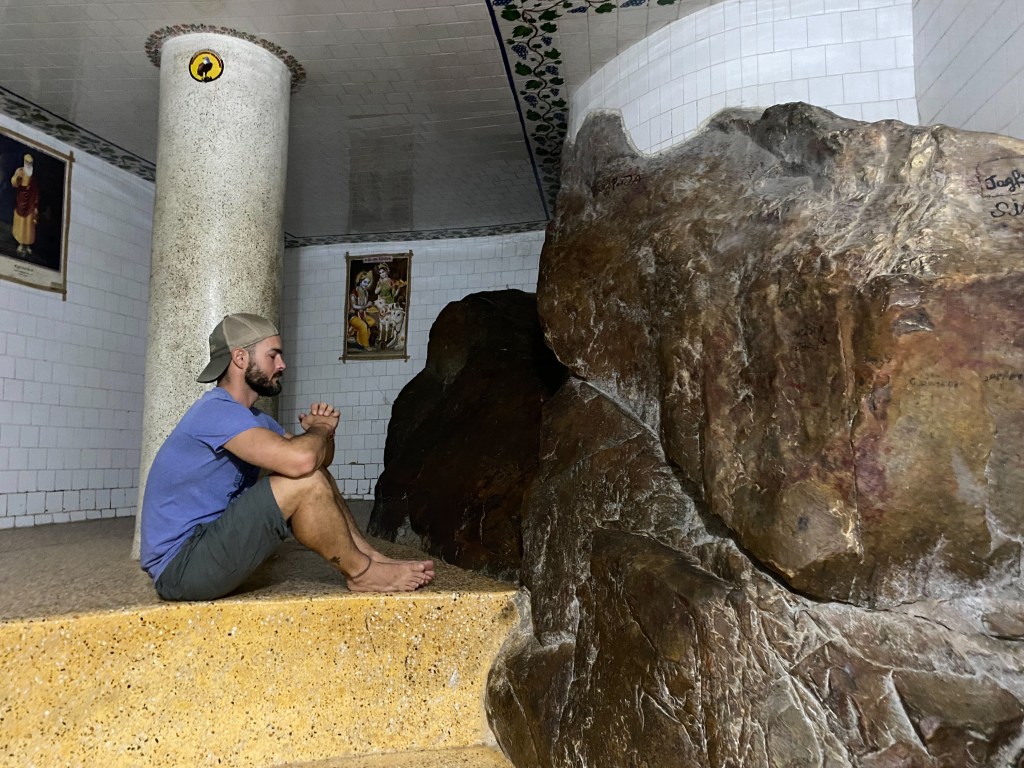
In the temple, there’s a langar, or free community kitchen, where you can sit on the floor and eat with a few hundred others. Beneath it, a series of subterranean chambers hold bathing pools and a hot cave, where you can sit in meditation or just lounge in the warm embrace of the earth.
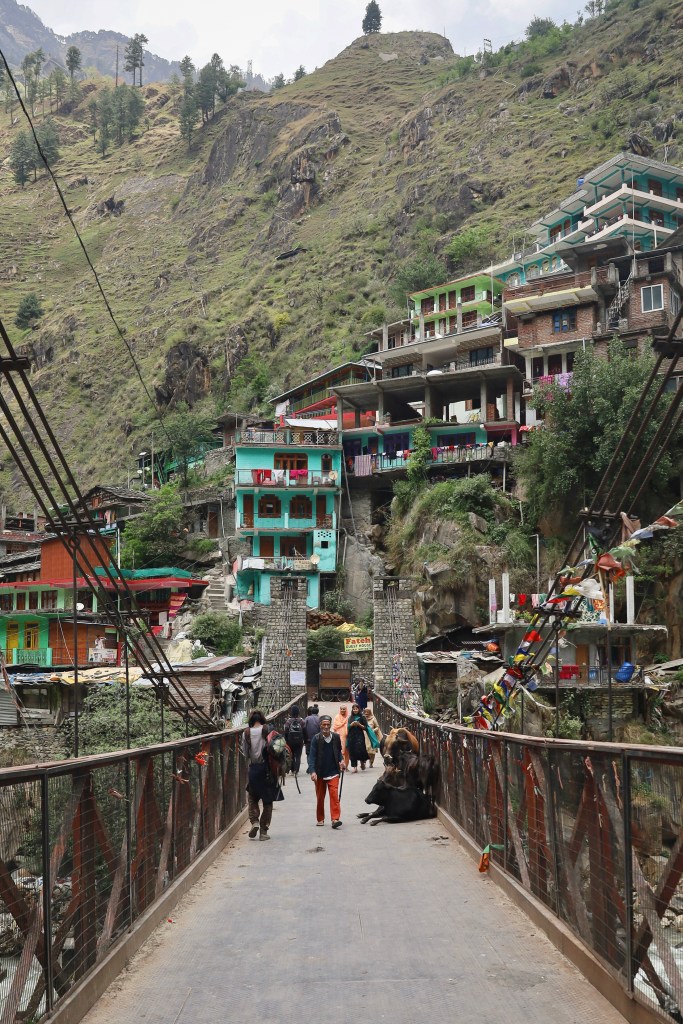
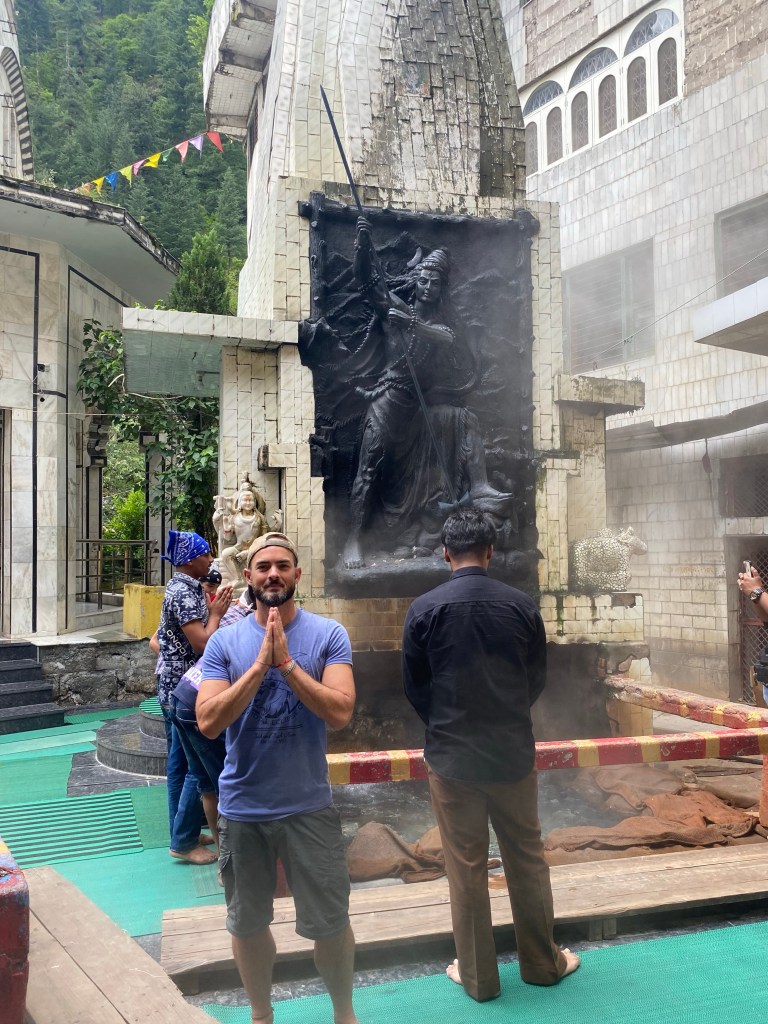
The water is scalding. It bubbles up at a near boil under clouds of steam. Below a Shiva statue, people cook rice in little mesh bags tied to strings. The water is piped into those underground bathing tanks and into a huge emerald pool that overlooks the river, but it’s entirely to hot to enter. Most let it cool before pouring it over themselves.
Village Life
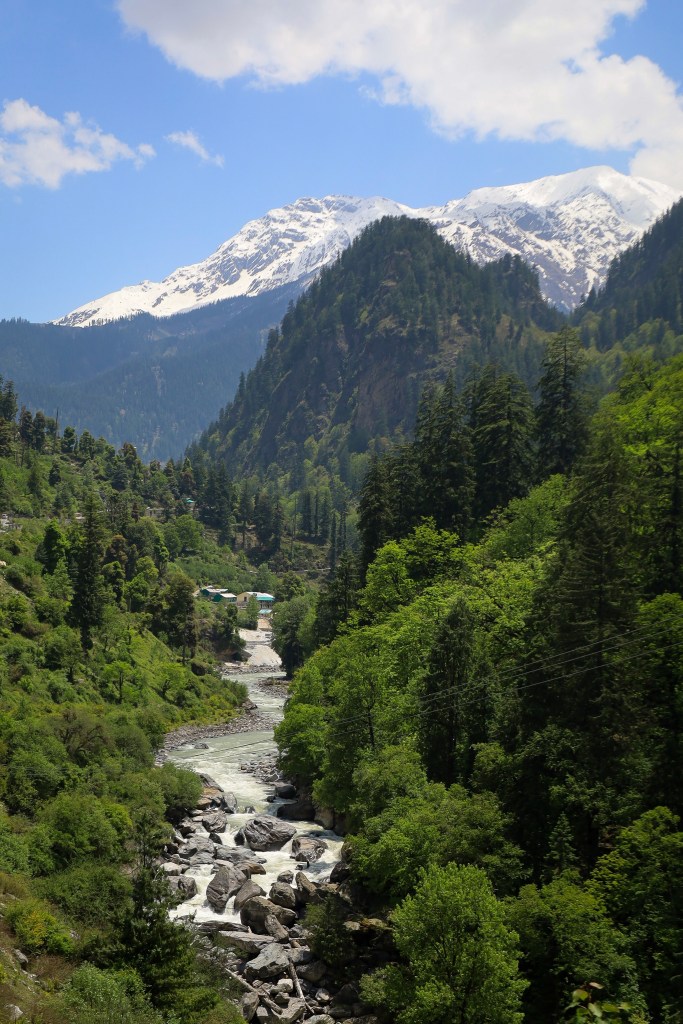
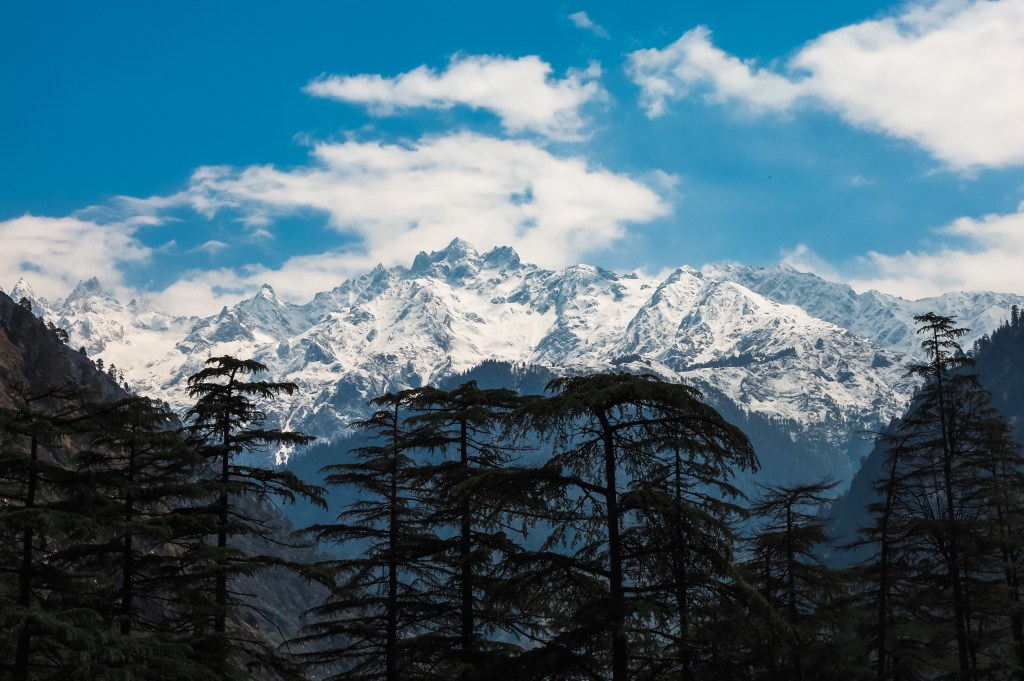
Barshaini is the end of the road, or at least as far as the buses go. It’s 10 miles from Kasol, and with stops, takes every part of an hour. The landscape is incredible. The road first skirts and then soars on a ribbon over the river. Beyond the near ridges of green cedar, craggy snow peaks claw at the sky. Waterfalls streak through the forest, carrying fresh snowmelt from the peaks to the Parvati. It’s enough to just look silently out the window.
Barshaini isn’t much more than a taxi stand and a few cafes. It’s mostly a jumping off point for weekend trekkers. From there you can catch a taxi or walk to the villages, or set off on the Kheerganga trek.
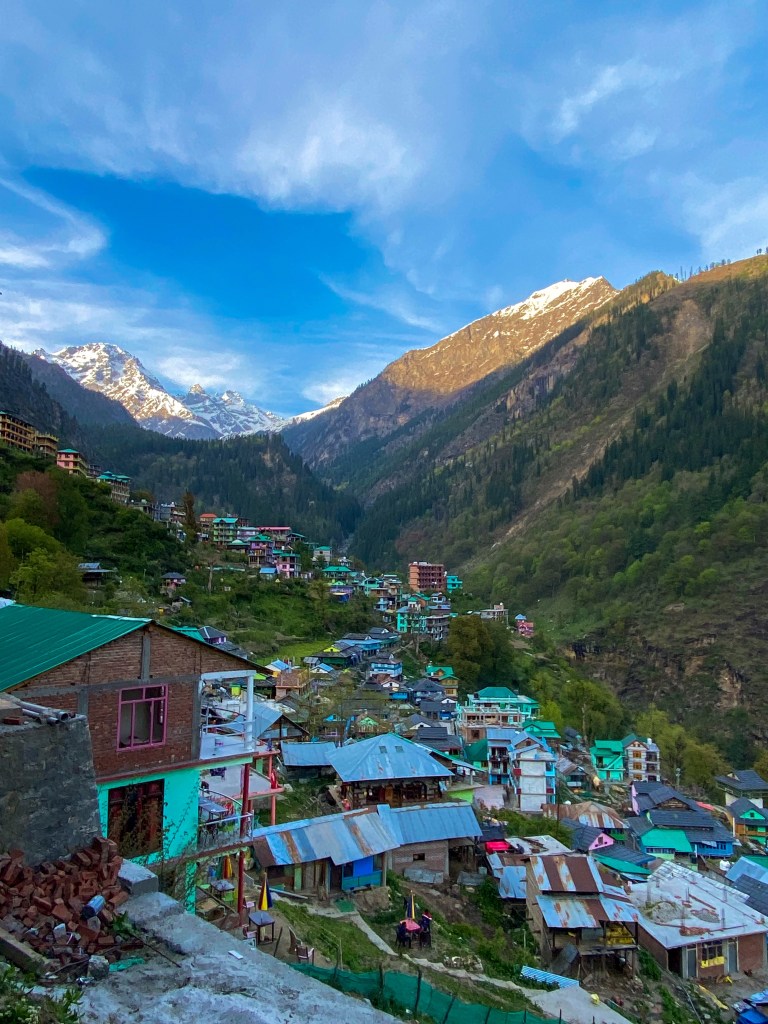
Tosh is my first stop. It’s only 2.5 miles from the bus stop, but mostly up. With all of my gear, it requires a taxi. Taxi are prices standard, which is great as I always lose when I haggle with cabbies. It’s 300 INR ($3.65) to get to Tosh or Pulga and it’s 100% worth it. If you arrive on the bus, it’s easy to find someone to share the ride.
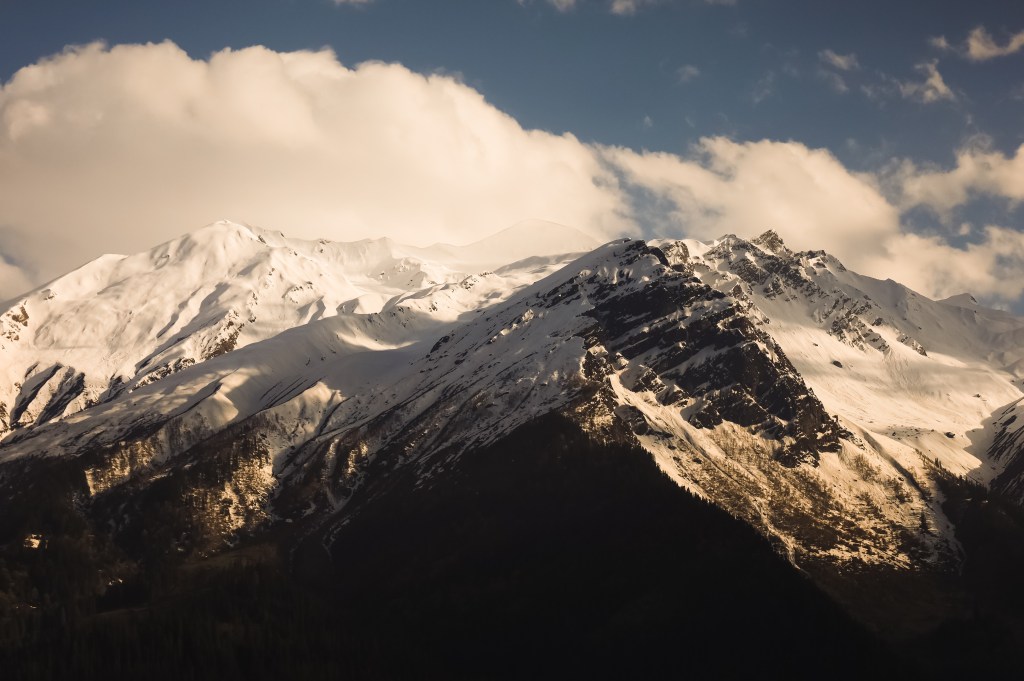
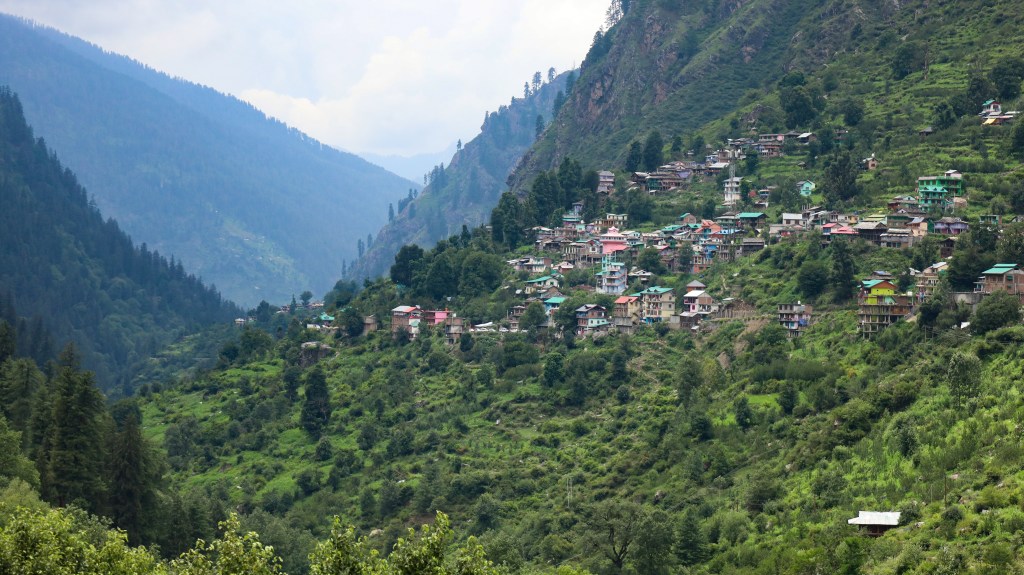
Tosh is a little village that looks to be scattered across the face of a mountainside. It sits in a side valley on the north side of the Parvati. It’s higher up than the other villages and has the best Mountain View’s.
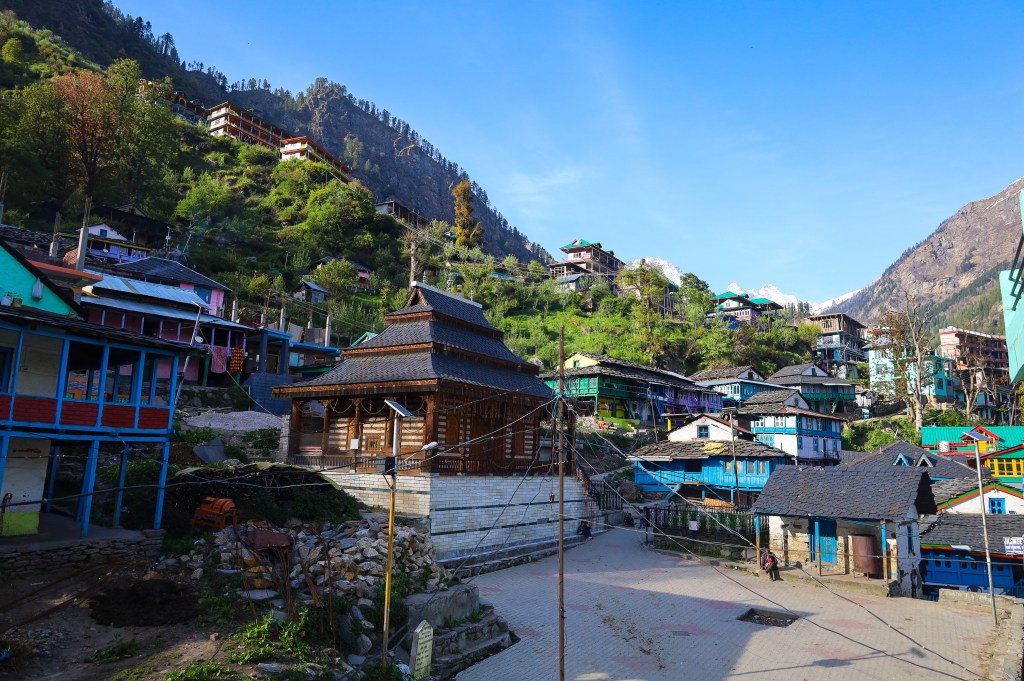
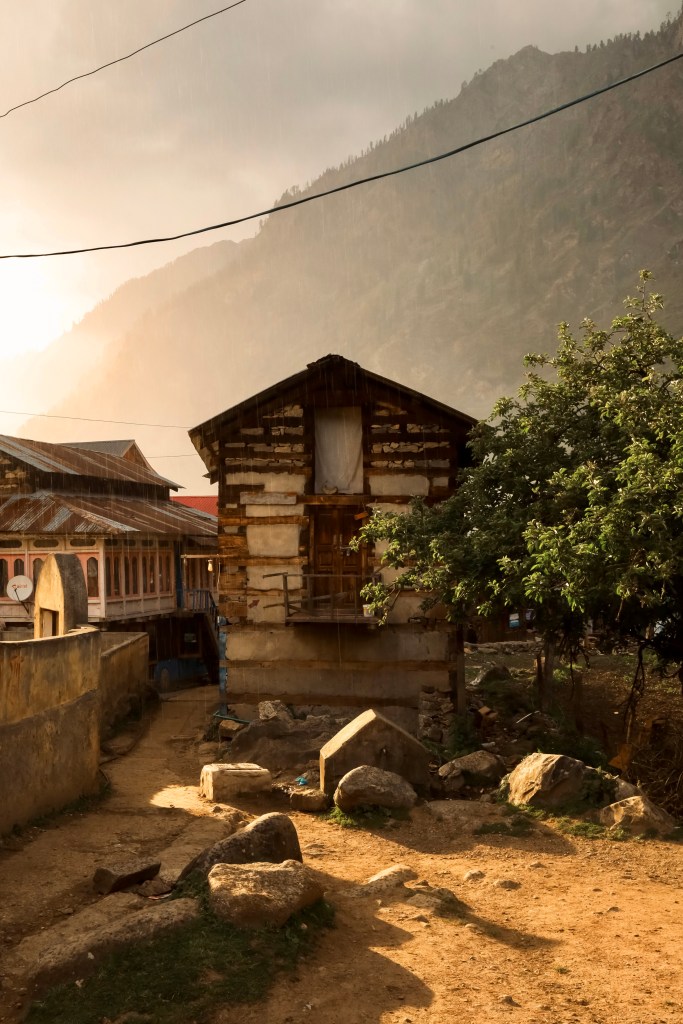
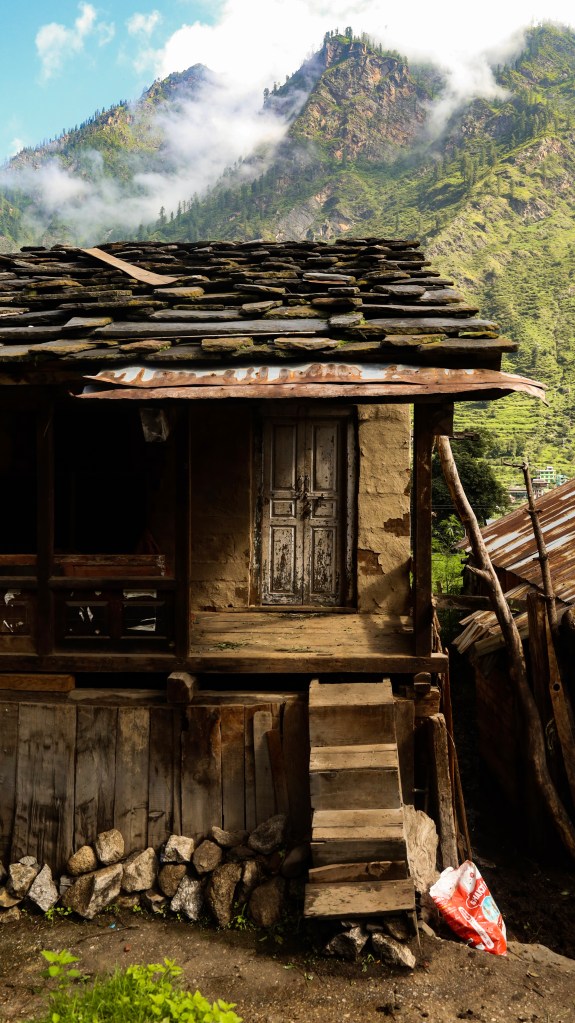
In the center of town there’s an open square and a temple. North Indian village temples are beautiful. They look something like a log cabin, built out of long, square-hewn timber. Some are narrower at the base and have porches that wrap around the top level. All have dark, ornately carved wooden doors.
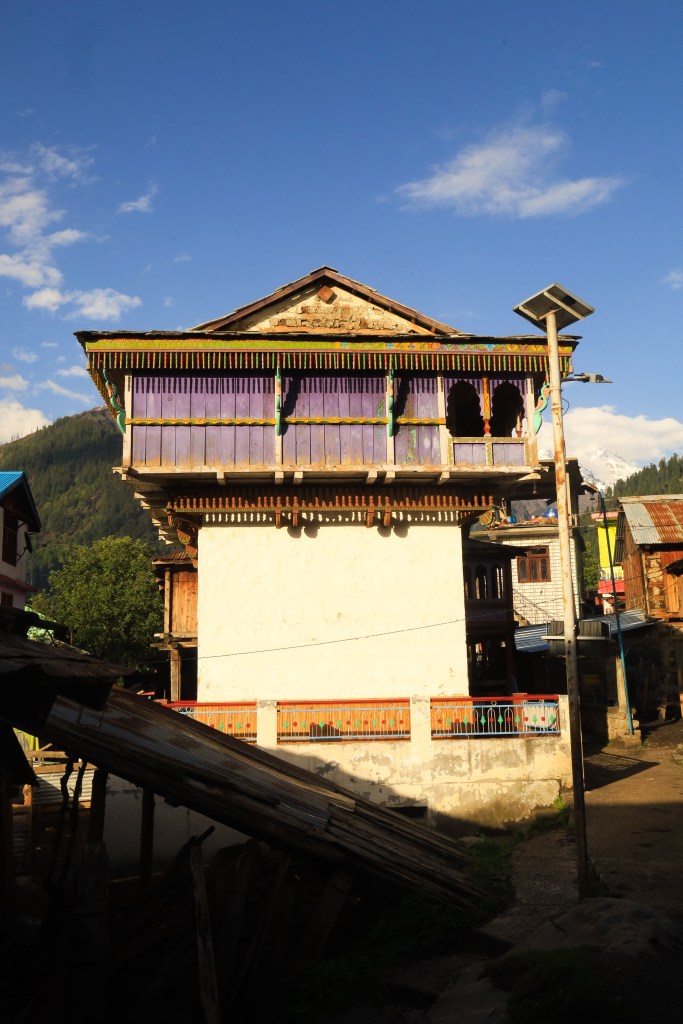
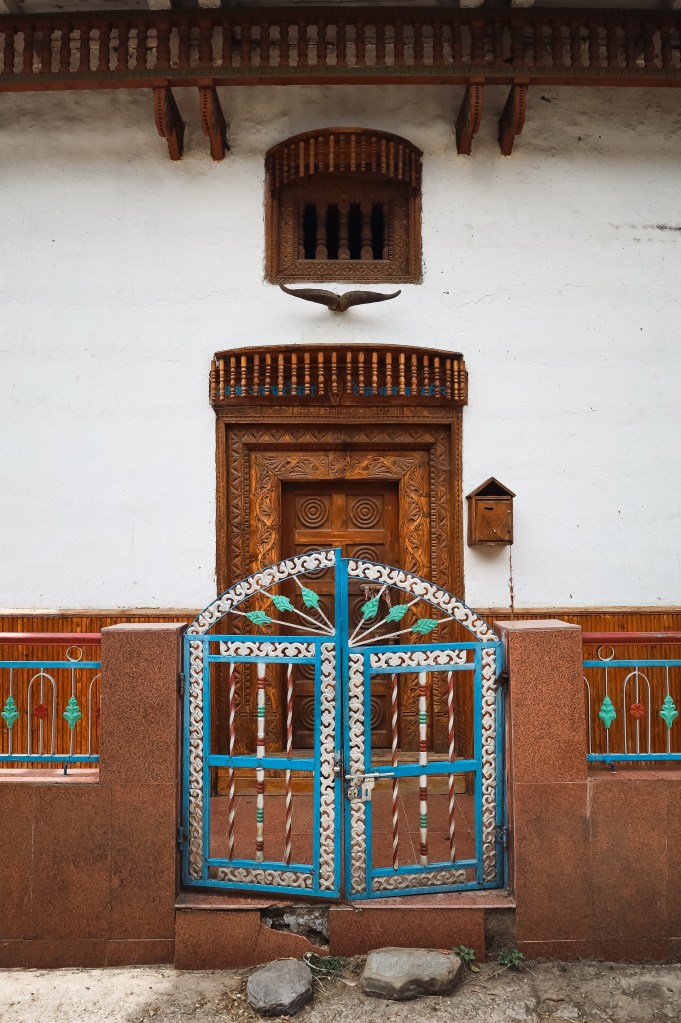
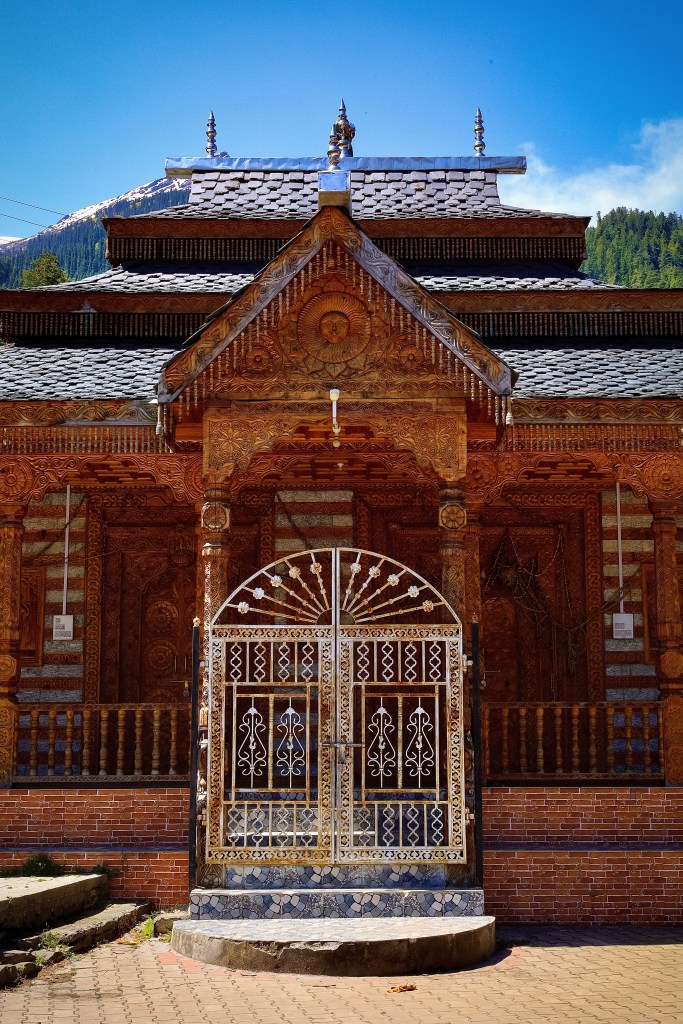

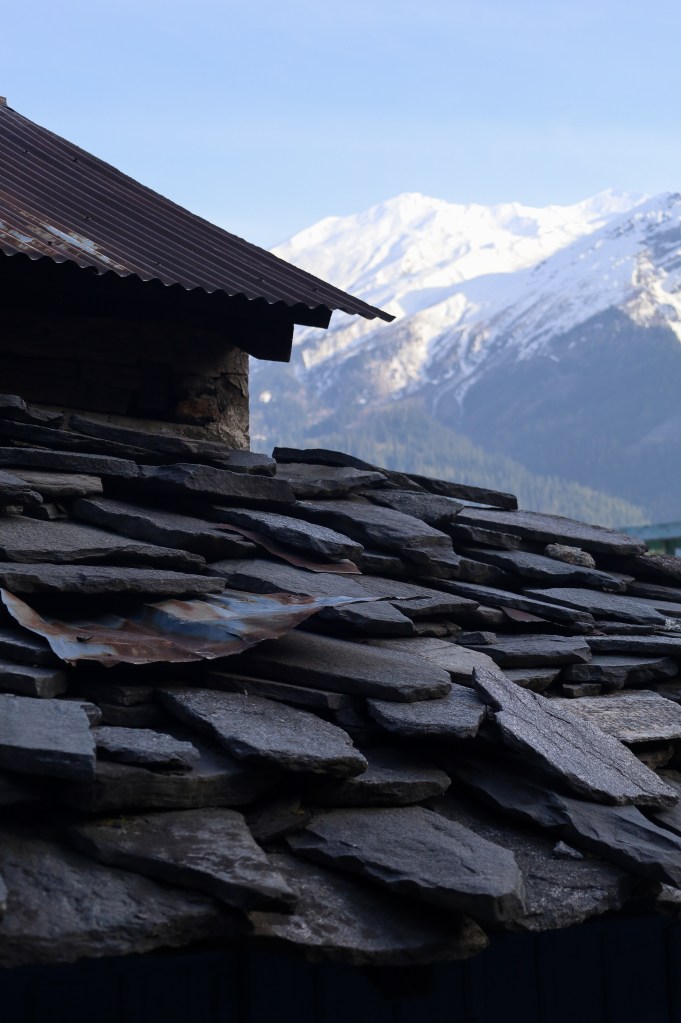
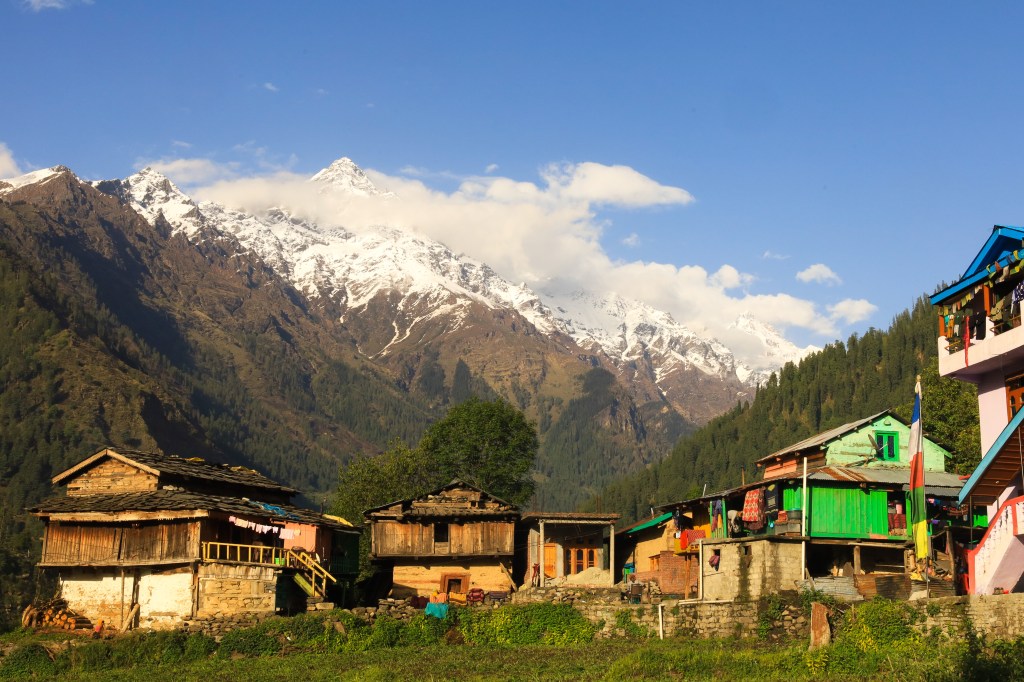
Most of the buildings are wood frame with slate or tin roofs, and all are painted garishly bright – lavender and lime green or bubblegum pink and royal blue. Smoke curls from stovepipes set into the piles of thick stone on top, whose placement looks more haphazard than strategic. When the wispy clouds roll in the from valley, it’s something out of a storybook.
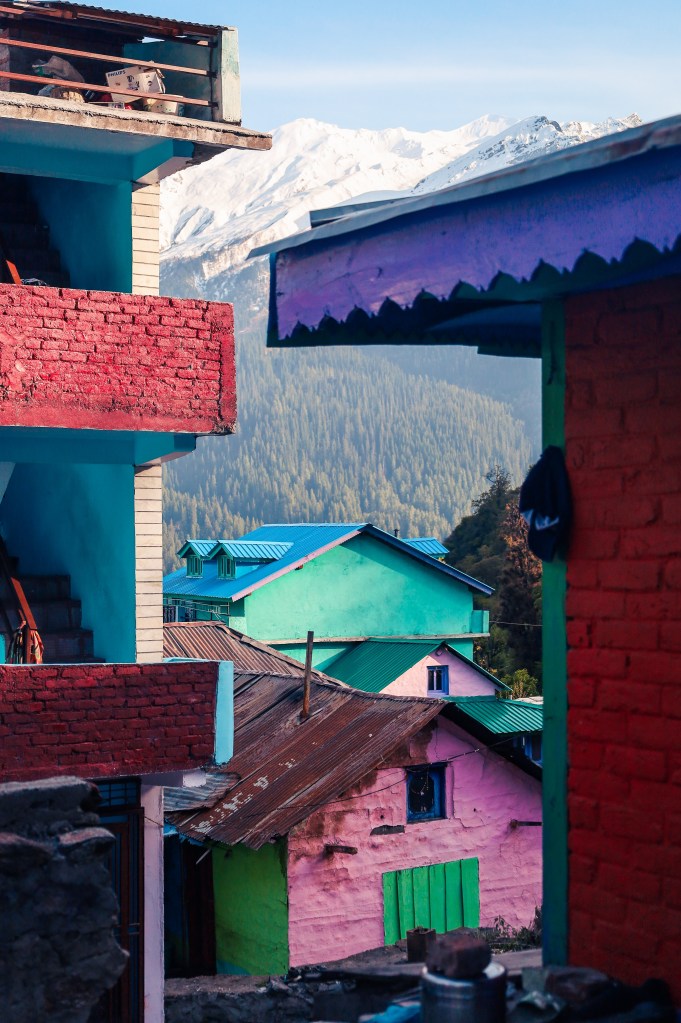
The going rate for a room is 500 INR ($6), and there’s not a bad view in town. I stumble into Olive Garden, where I get a clean room with hot water and warm blankets. It’s basic and it’s all I need. There are few frills in the Parvati Valley.
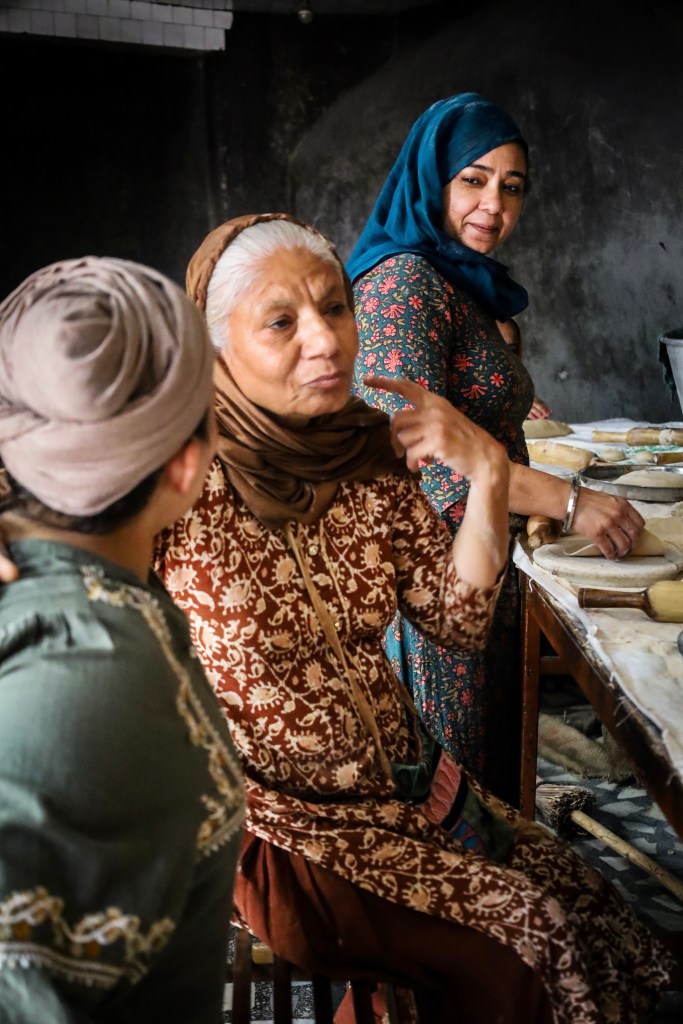
Village life is quiet and simple.
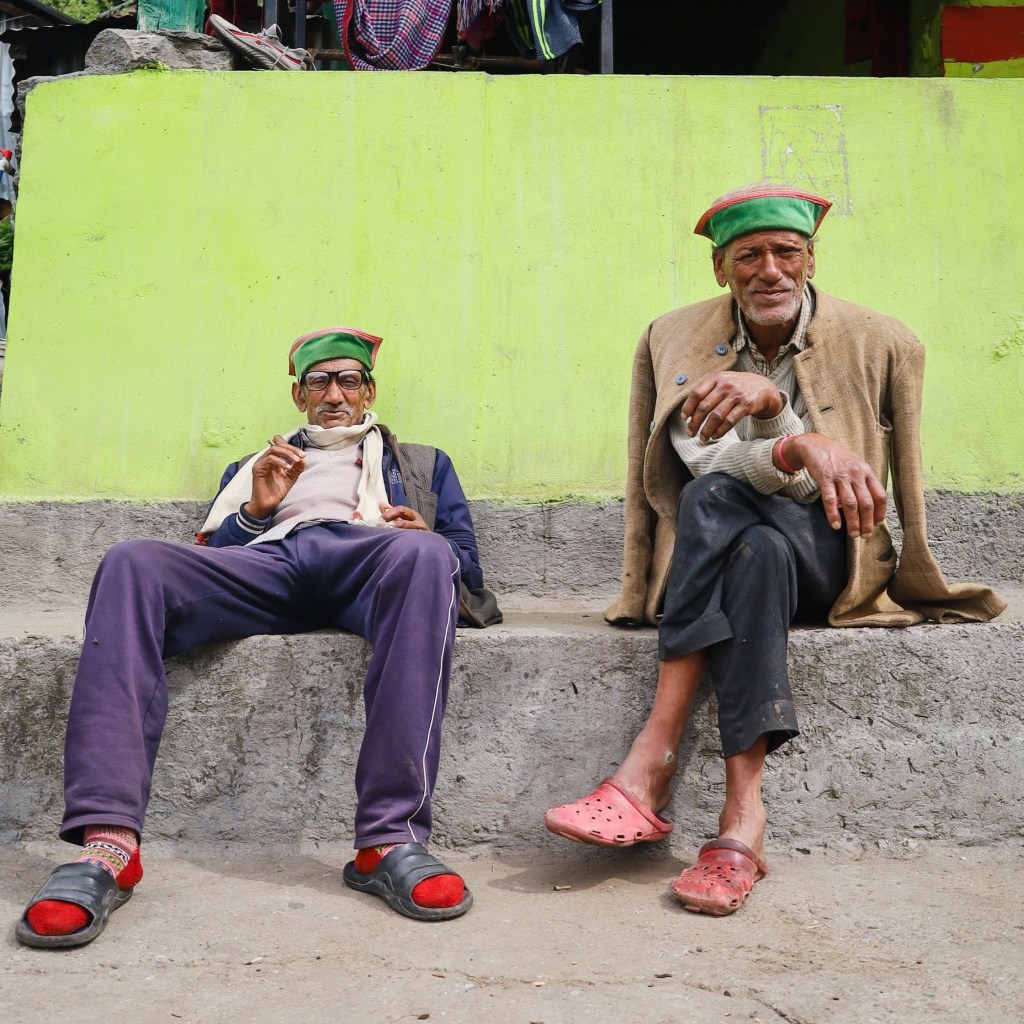
People tend to cows tied under their homes and scrub laundry at taps in the open. The same men sit on the same rocks or along the temple wall in the sun. Uniformed kids play outside the schoolhouse or in the open square, and there’s not a screen in sight.


There are just a couple shops and a cafes. Shalom Cafe is a mainstay and German Bakery makes a ‘space brownie’ that will knock your socks off. Finishing a whole one is not advisable. Or so I’ve been told.
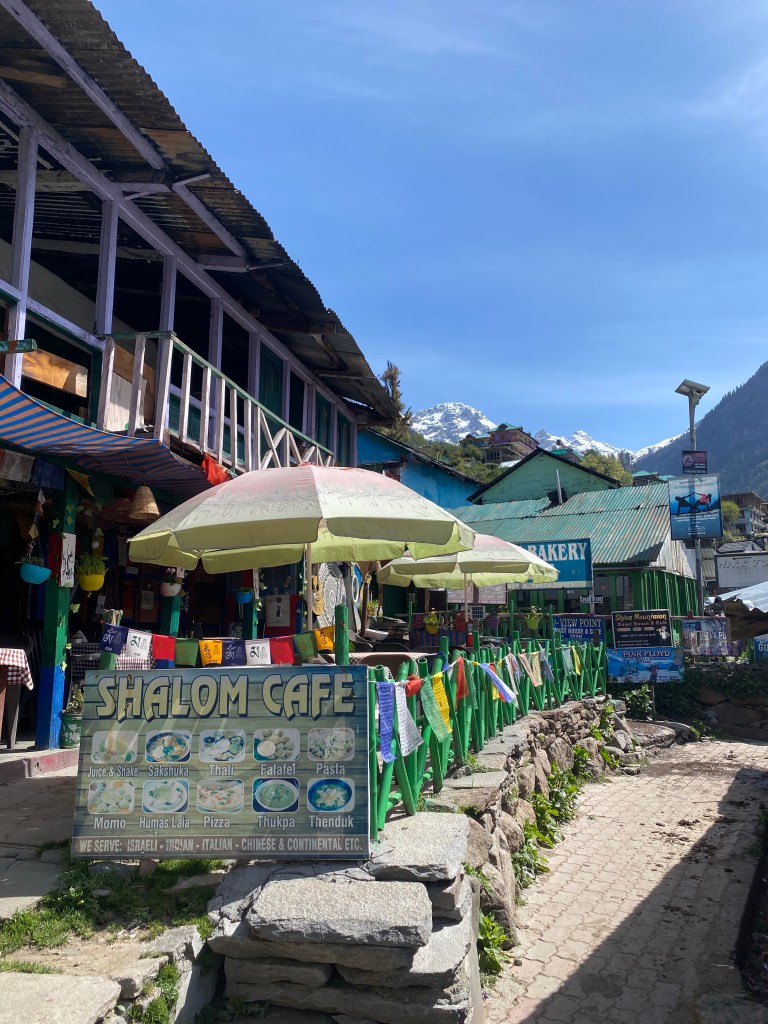
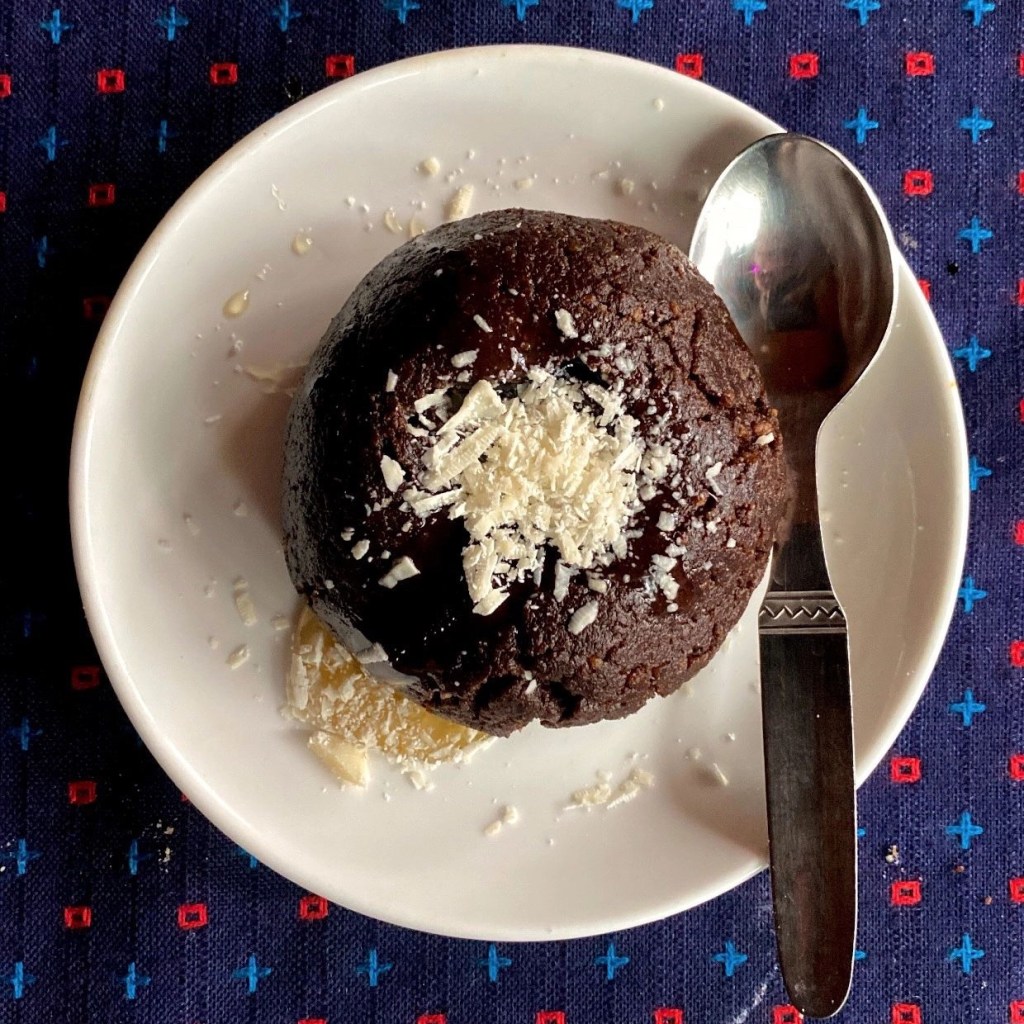
People in the village perform chores, but there doesn’t seem to be a lot of labor going on. The cannabis plants creep right up to the houses, so I suspect that come harvest time, there’s plenty of work to be done. Between that and the tourist dollars, their modest needs are taken care of. They spend most of their time socializing with each other and they’re very gracious hosts.
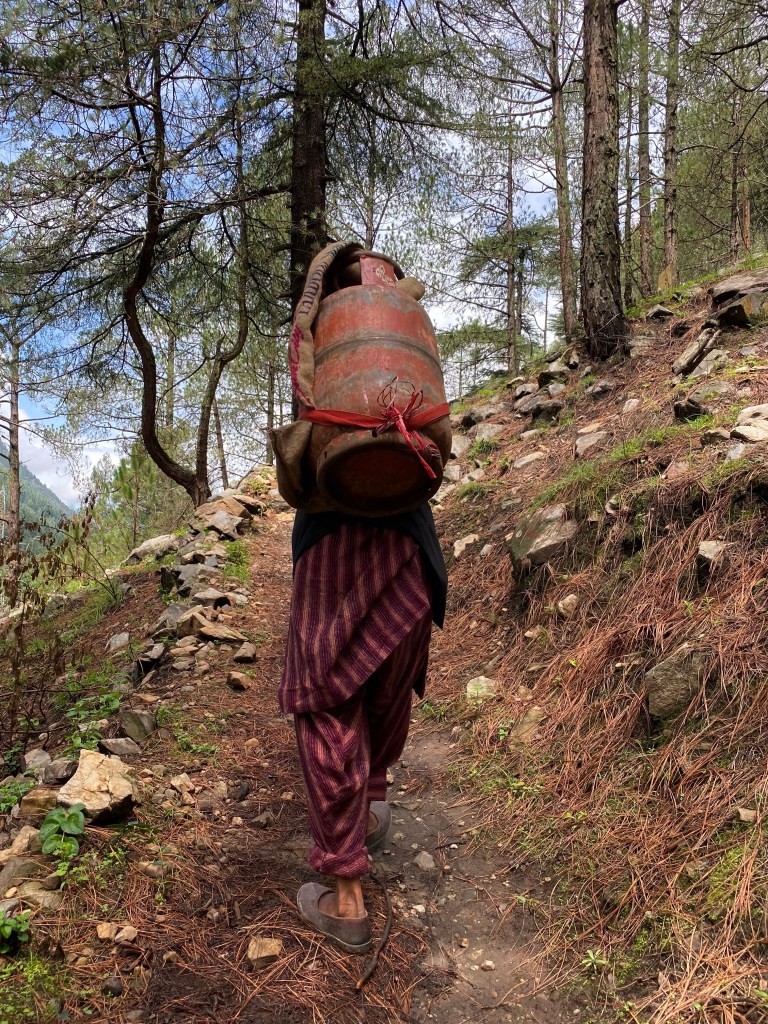
Others in the valley do work – very hard. Roads are starting to reach more of the villages, but most supplies are still ferried by donkey or human. Sinewy little men load teams of donkeys with everything from concrete to Coca-Cola. They’re in perfect physical form: lean and nimble, with superhuman strength and the endurance of professional athletes.
While the men load and lead caravans, the women use brute human force. With loads strapped to their backs or propped on their heads – sometimes both – they climb mountains. Women, old enough to be grandmothers, transport 60-pound propane tanks uphill – all day long.
Tosh sits over a tributary to the Parvati River. Just a short walk from town, you can grab lunch at a table midstream below the Tosh Waterfall. Beyond that, Kutla offers more remote camping and Jurassic Park is a little-known alpine boulder field up the far arm of the river.
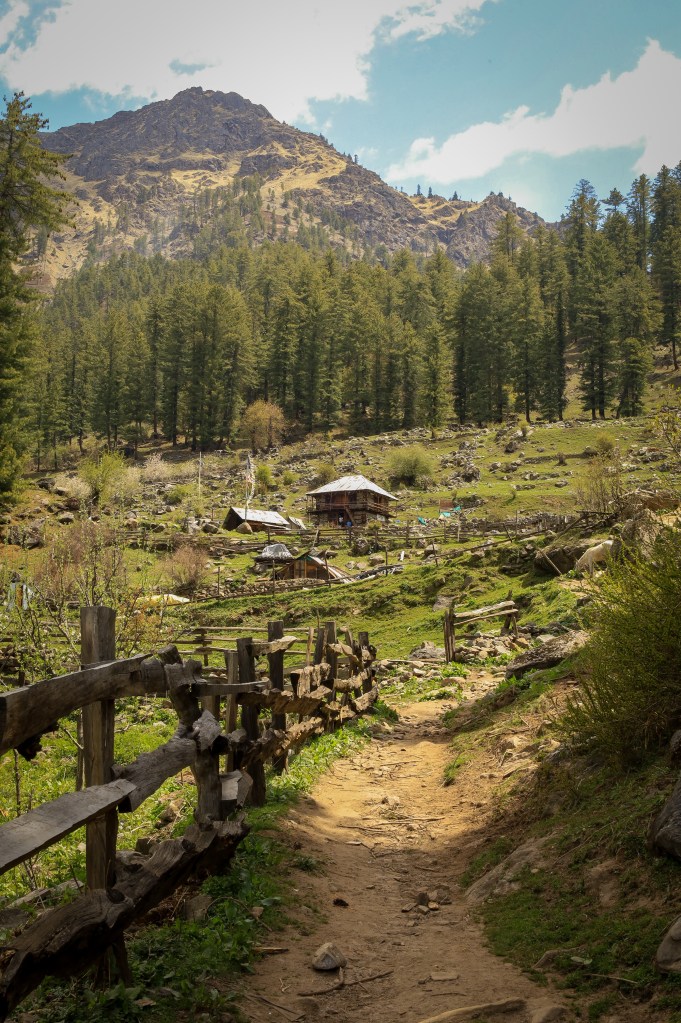
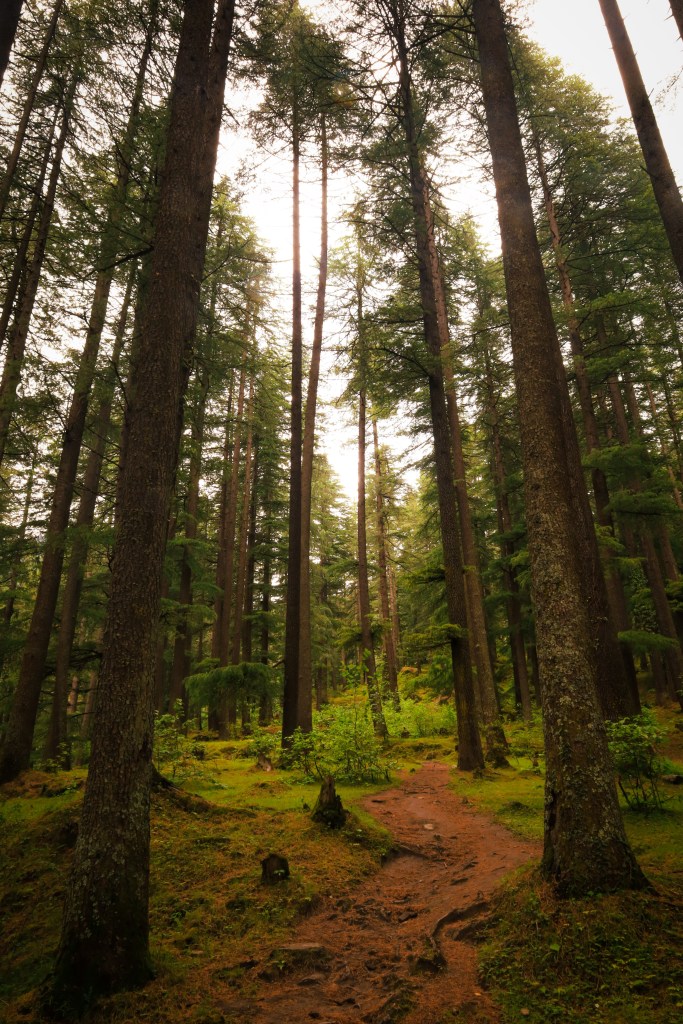
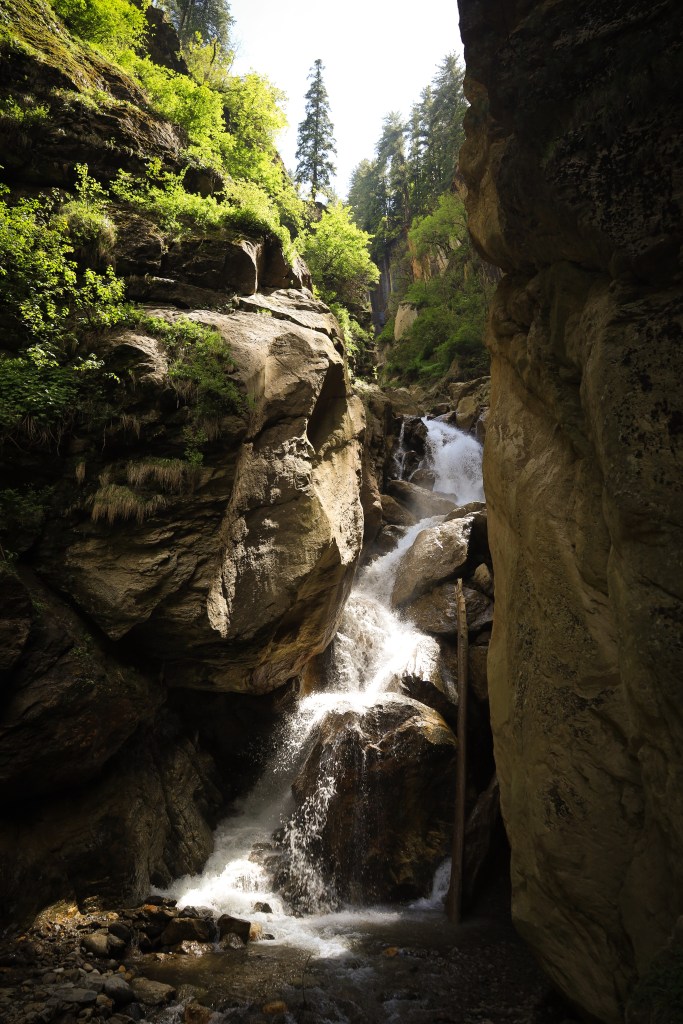
Pulga is just opposite the valley from Barshaini. It sits on a ridge over the Parvati and backs up to the Fairy Forest. Pulga is my home in the valley; my “just right”. The Fairy Forest is this wonderland of giant Deodor cedars crisscrossed with shepherds’ trails and waterfalls – just steps from my room.
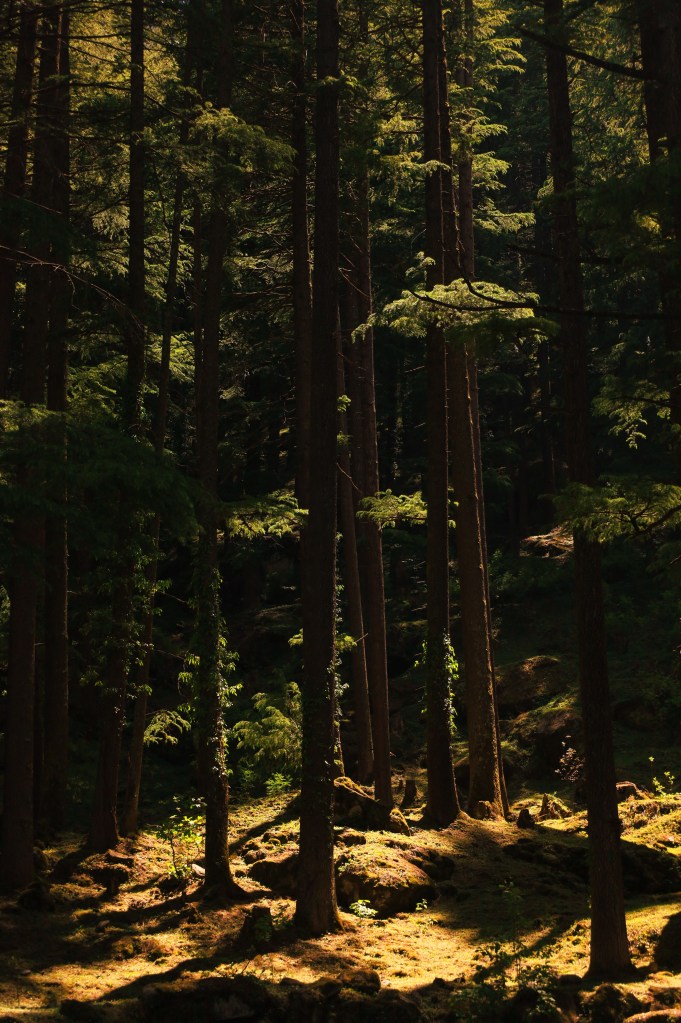
The forest floor is clear of undergrowth, save for moss and ferns, and the trails lead up to Bhandak Thatch, a huge pasture on the moutaintop of the with 360° views of the Himalayan snow peaks.
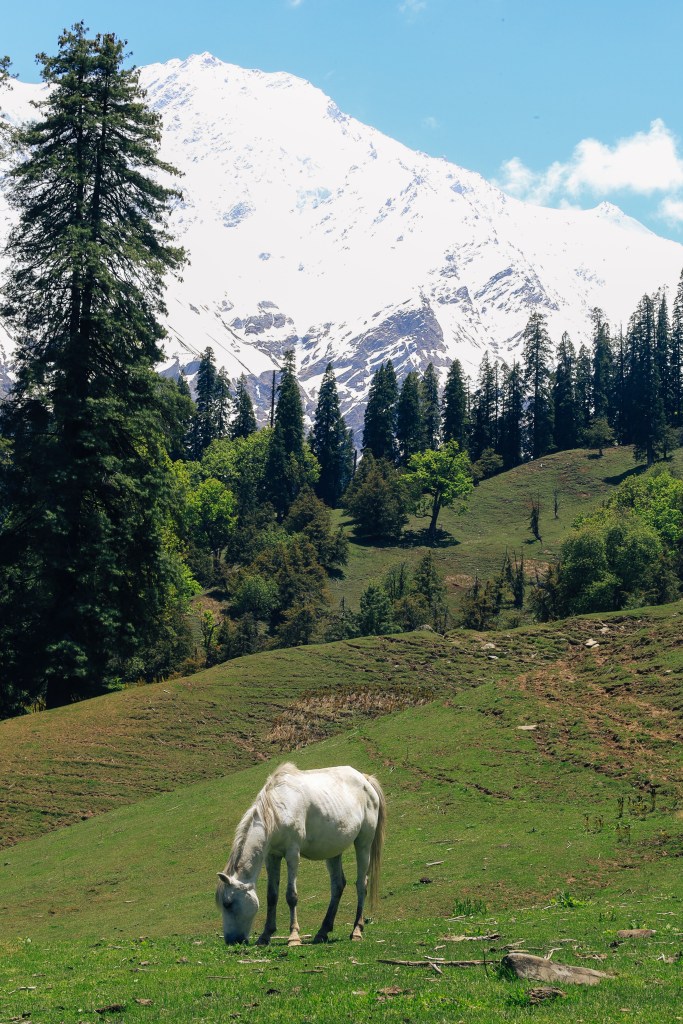
Pulga is a little larger than Tosh, but not by much. There are a few more cafes to choose from, but there’s not a lot going on. And that’s the draw.
I find a quiet guesthouse up the hill where I plan to stay for a few nights and end up for a few weeks. Days are spent in the woods and evenings in the cafes. It’s the perfect place to disconnect.
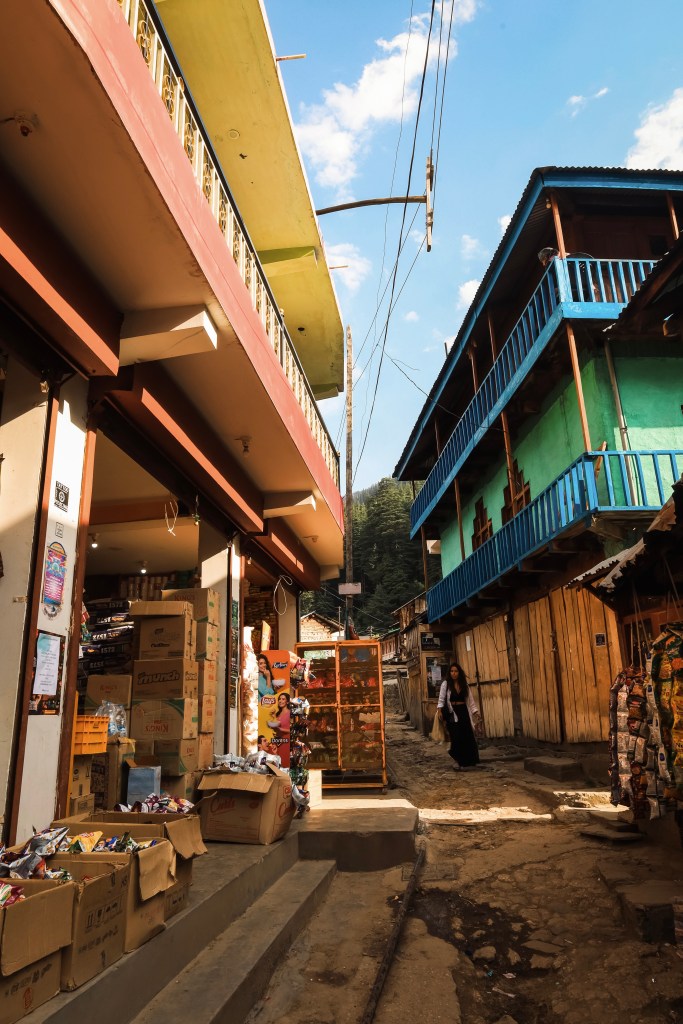
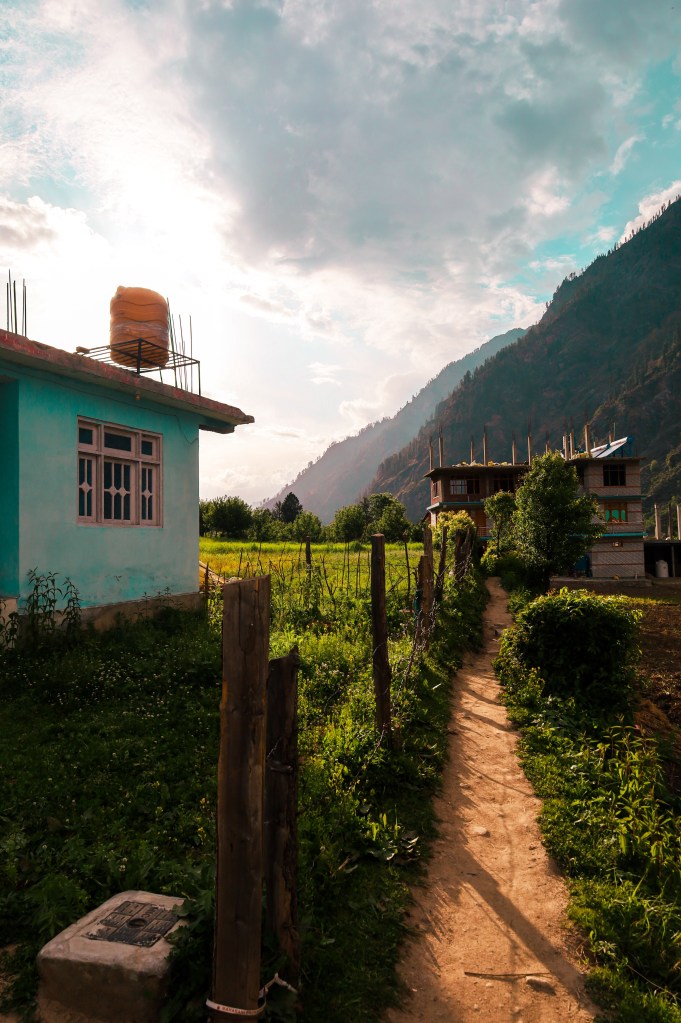
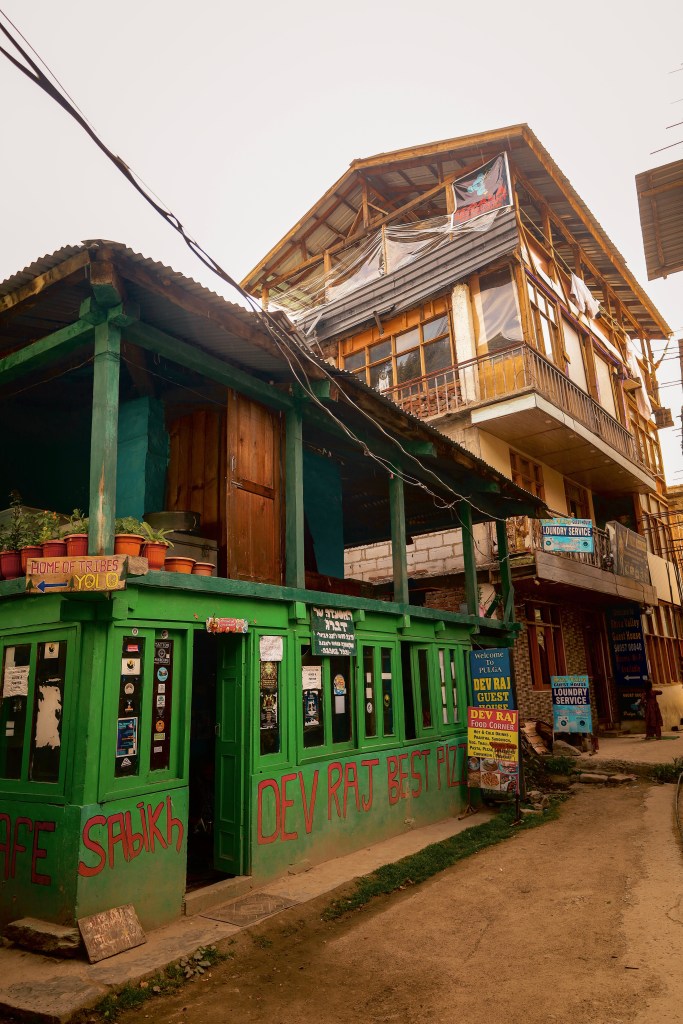
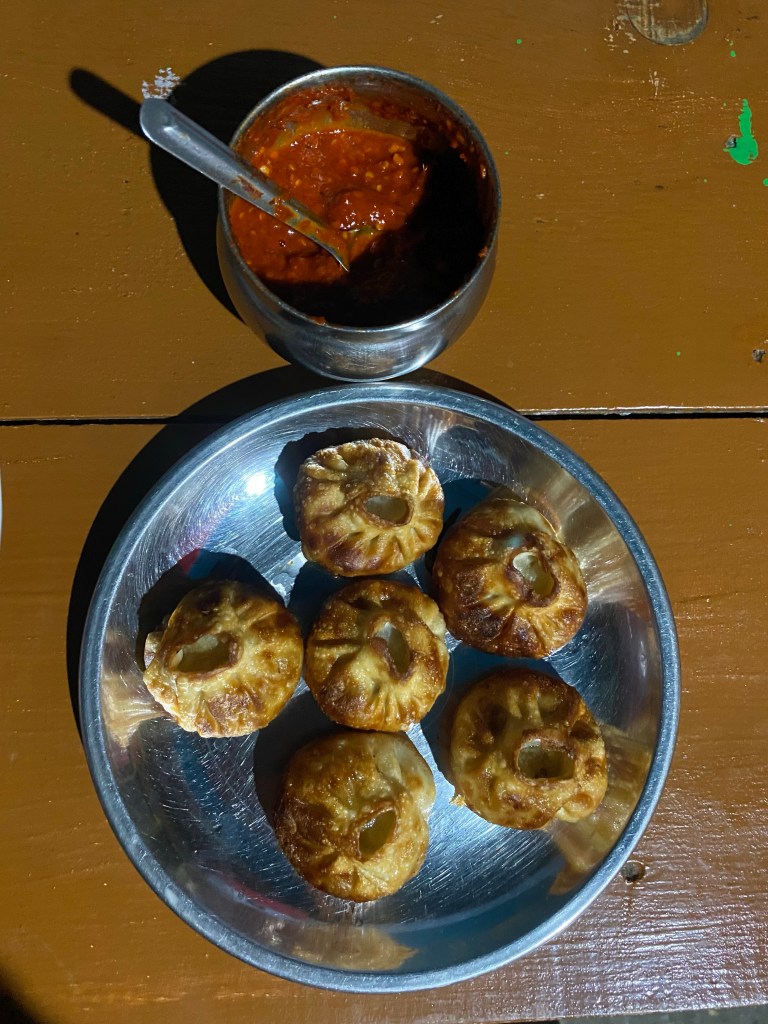
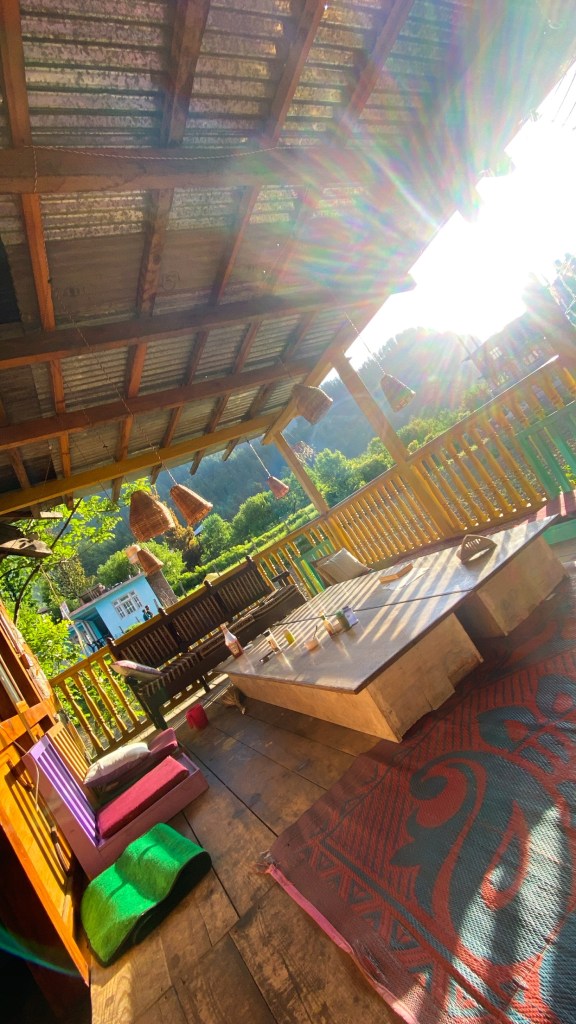
The food in Pulga is very good. I tend to find a favorite thing at a particular cafe and rotate between them. Devraj has a great thali and strong wifi, Jacky Star, incredible falafel. In the late afternoon, you’ll find me on the back porch of Boom Shankar Cafe sipping chai and catching rays.
Kalga, just ‘up the hill’ from Pulga, marks the start of Kheerganga Trek. Kheerganga is a popular campsite about six miles from Kalga that sits at over 10,000 feet in elevation. The trail passes over intermediate terrain through the woods on a ridge overlooking the Parvati River.
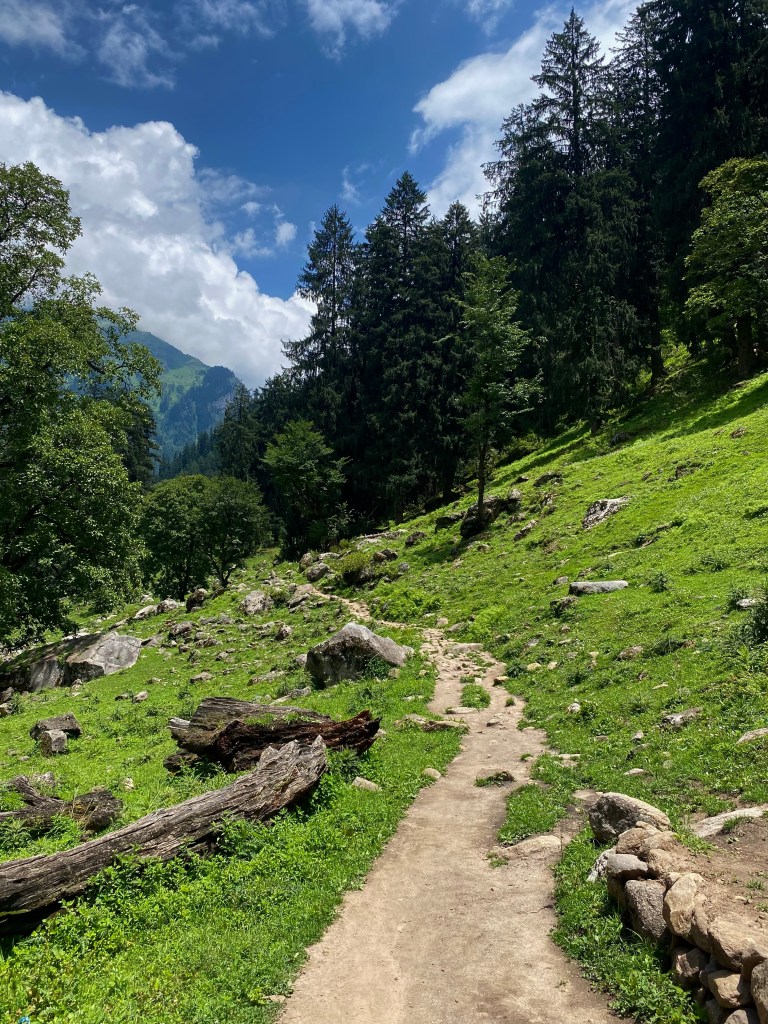
Kheer is a sweet rice pudding and the Ganga is the holiest river in India. Legend has it that Kartikeya, son of Shiva and Parvati, spent his thousand-year meditation in a cave here. Parvati was so impressed with his dedication that she cooked kheer for him in the hot springs. A river of kheer flowed forth until the gods turned it into water to prevent quarrels among the humans. To this day, the waters are considered sacred.

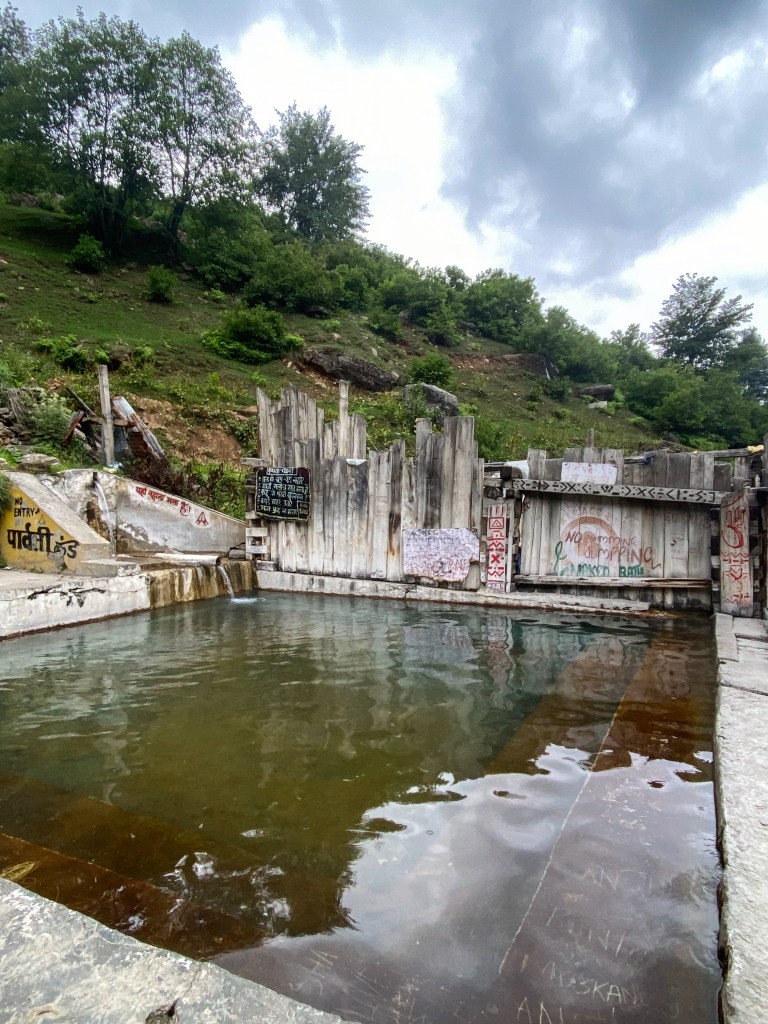
A hot spring bubbles up next to the Shiva temple at the top of the hill. As late as last year, there was a tank of steamy water where you could soak your muscles and unwind after the trek. Unfortunately, visitors were treating the holy waters like a jacuzzi party and the Brahmans got angry.
After I visited last year, the holy men drained the tank to stop the blasphemy. Hot water still flows from a set of pipes further down the hill, so it’s possible to bathe, but there’ll be no soaking.
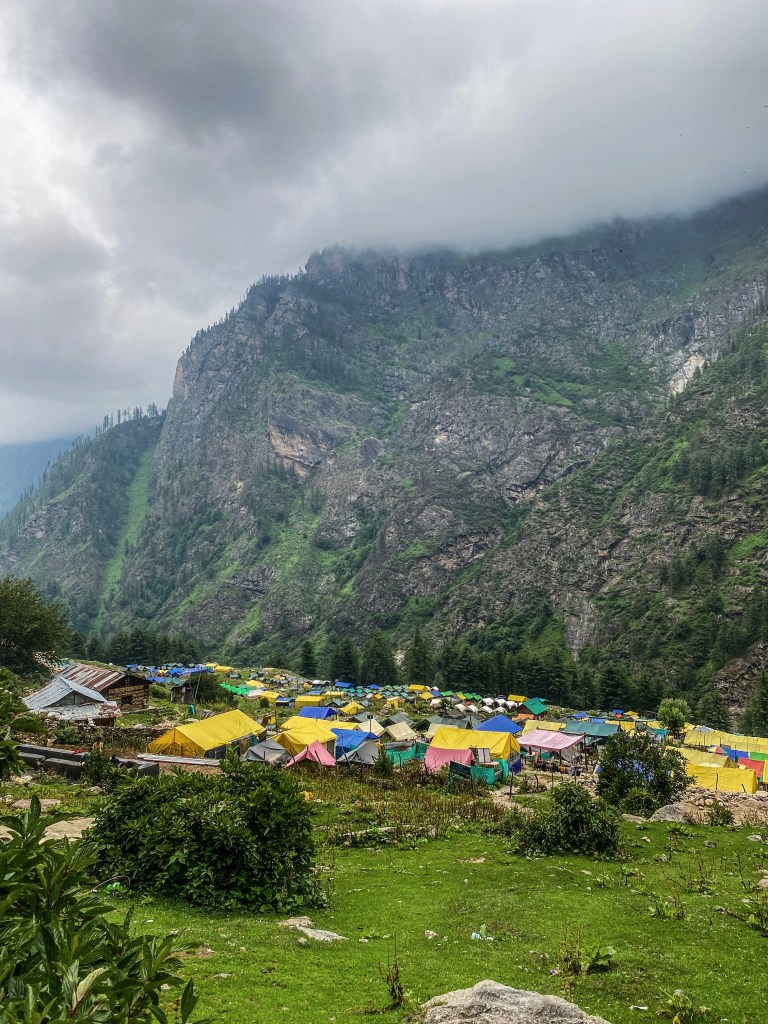
A tent Kheerganga is 400 INR ($5) per night for a single person. The tents are large and equipped with mattresses and lots of blankets. Most campsites have cafes attached, but prices for everything rise in proportion with the altitude.
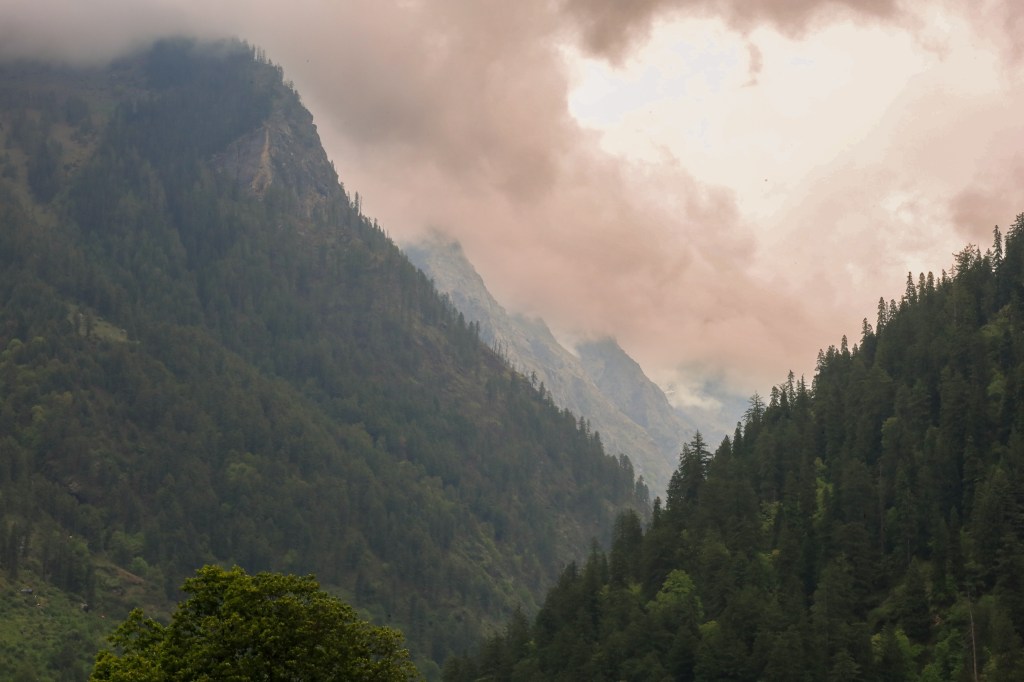
Should you have clear weather, the star gazing is incredible, but I’ve never seen weather change so quickly as it does in the Parvati Valley. Blue skies overhead mean nothing to the clouds planning an assault just over the ridge. On my first visit to Kheerganga, I awoke to clear blue that turned steely gray over a few sips of coffee. The clouds rolled in like a smokescreen from every direction until everything was wrapped in mist.
It was a wet walk back.
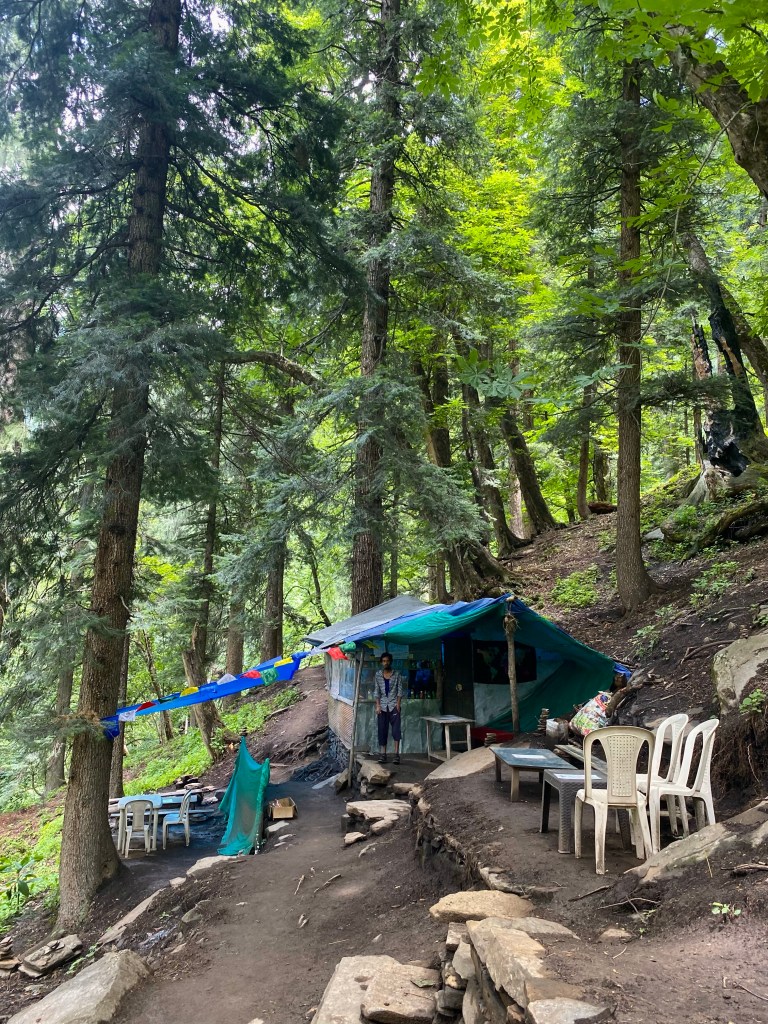
It’s possible to trek all of the way from Kheerganga to Spiti Valley on the eastern side of Himachal, but too much rain on my first trip and too much snow on my second hampered my plans. It’s on my bucket list.
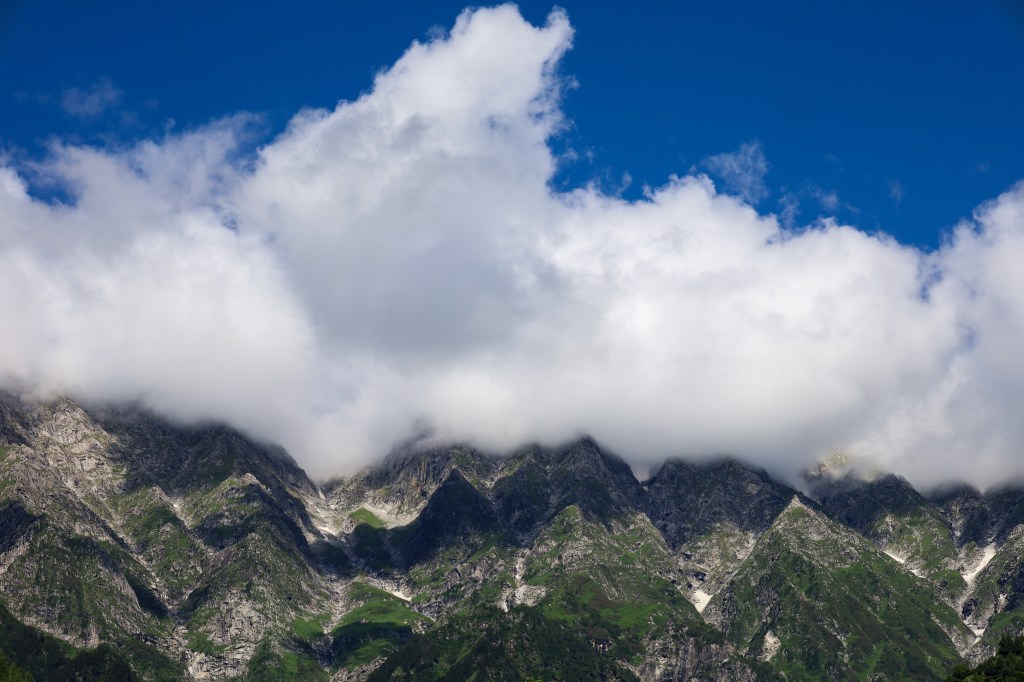
The Parvati Valley is a completely improbable place. It’s an Indian Narnia. From the point where the Parvati River and the Beas flow together, reality is left behind.
Colorful villages, fringed with cannabis, cling to misty mountainsides. Shepherds guide herds over meandering trails in the shade of giant pines. Devotees flock to the temple at Manikaran, backpackers kick back in smoky cafes, and porters trudge impossibly large loads of supplies ever upwards. Below it all, the Parvati rumbles under blanket of mist as it carves its way through the stone of this little wrinkle in the Himalayas.
Check out this gallery for all of my favorite clicks
 Christopher’s Travels
This is a beautifully written and captivating article about the mystical and enchanting Parvati Valley. The author does an
founder of balance thy life https://balancethylife.com
The wonderful photography surpassed only by the exquisite accompanying narrative.
Incredible Christopher! The juxtaposition of your amazing photos and compelling narrative lead me to believe that I’m also on the journey….